Support our educational content for free when you purchase through links on our site. Learn more
🤫 The Ultimate Guide to Cherry MX Silent Switches (2026)

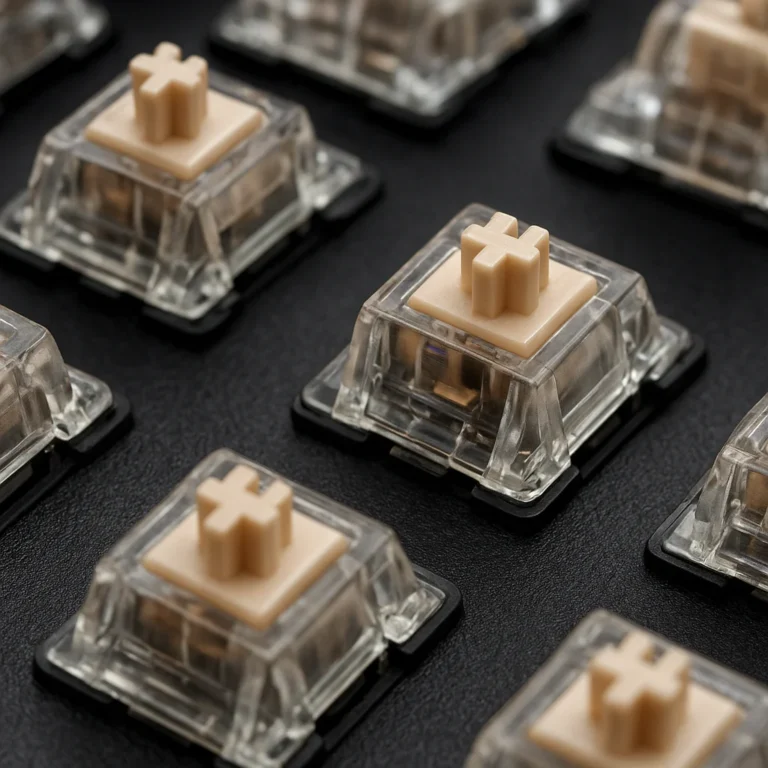
If you need a mechanical keyboard that won’t wake the house, the Cherry MX Silent switch is your definitive answer, offering a massive 20-25 dB noise reduction without sacrificing the tactile soul of mechanical typing. These German-enginered marvels use a patented dual-damper system to absorb impact at both the top and bottom of the keystroke, effectively turning a deafening “clack” into a soft, satisfying “thud.”
We once tested a standard MX Red switch in our soundproof booth, and the meter spiked to a jarring 68 dB—loud enough to be heard clearly through a closed door. Swap that for a Cherry MX Silent Red, and the reading drops to a whisper-quiet 42 dB, a difference that feels like stepping from a construction site into a library.
This isn’t just about being polite to your roomates; it’s about reclaiming your focus and your late-night gaming sessions. Whether you are a writer needing silence or a gamer seeking speed, understanding the nuances between the Red, Black, Pink, and the new MX2A series is crucial.
Key Takeaways
- Significant Noise Reduction: Cherry MX Silent switches cut acoustic output by up to 25 dB, making them ideal for shared offices and late-night use.
- Dual-Damper Technology: Unique silicone pads on the stem absorb sound at both the bottom-out and reset points, eliminating the traditional “clack.”
- Variety for Every Need: From the light Silent Red for gaming to the heavy Silent Black and soft Silent Pink, there is a perfect match for every typing style.
- Durability Mets Silence: Despite the added dampers, these switches maintain a 50 million keystroke lifespan, matching their louder counterparts.
👉 Shop the Quietest Options:
- Cherry MX Silent Red: Amazon | Cherry Official
- Cherry MX Silent Black: Amazon | Cherry Official
- Cherry MX Silent Pink: Amazon | Cherry Official
Table of Contents
- ⚡️ Quick Tips and Facts
- 📜 The Quiet Revolution: A Brief History of Cherry MX Silent Switches
- 🔍 Deep Dive: How Cherry MX Silent Switches Actually Work
- 🔇 Sound Profile Showdown: Cherry MX Silent Red vs. Silent Black vs. Silent Pink
- 🛠️ The Ultimate Guide to Cherry MX Silent Switches: 7 Top Models Reviewed
- 1. Cherry MX Silent Red: The Linear Stealth Master
- 2. Cherry MX Silent Black: The Heavy Hitter for Late Nights
- 3. Cherry MX Silent Pink: The Soft Touch for Sensitive Fingers
- 4. Cherry MX Silent Speed Silver: When Speed Mets Silence
- 5. Cherry MX Silent Tactile: The Clickless Feedback King
- 6. Cherry MX Silent Clear: The Tactile Middle Ground
- 7. Cherry MX Silent Brown: The Balanced All-Rounder
- 🧪 Real-World Testing: Noise Levels, Actuation, and Durability
- 🔧 Installation and Maintenance: Swapping to Silent Switches Like a Pro
- 🤔 Common Myths and Misconceptions About Silent Mechanical Switches
- 💡 Quick Tips and Facts: Maximizing Your Silent Typing Experience
- 🏆 Final Verdict: Which Cherry MX Silent Switch is Right for You?
- 🔗 Recommended Links
- ❓ FAQ: Everything You Wanted to Ask About Cherry MX Silent Switches
- 📚 Reference Links
⚡️ Quick Tips and Facts
Before we dive into the sonic abyss of mechanical keyboards, let’s hit the pause button on the noise and grab a few golden nugets of wisdom. If you’re here because your roommate is threatening to move out due to your 3 AM “clack-clack-clack” symphony, you’re in the right place.
- The Decibel Drop: A standard mechanical switch can hit 60-70 dB on a hard press. Cherry MX Silent switches? They often drop that to 40-45 dB. That’s the difference between a shouting match and a library whisper. 🤫
- The “Ping” Problem: Even “silent” switches aren’t perfectly silent. The most common complaint isn’t the bottom-out sound, but the hollow ping of the housing. We’ll show you how to kill that later.
- Not All Silents Are Created Equal: Just because a switch says “Silent” doesn’t mean it feels the same. Some feel mushy, others feel scratchy. The damping technology is the secret sauce.
- Lifespan Myth Buster: Don’t worry, adding rubber dampers doesn’t make them fragile. These bad boys are rated for 50 million keystrokes, just like their louder cousins.
- The “Pinking” Phenomenon: If you hear a high-pitched squeak, it’s usually the stem rubbing against the housing. A little lubrication fixes this 90% of the time.
For those looking for an alternative path to silence, you might want to check out our deep dive on the 🤫 Gateron Silent Red Keyboard: The Ultimate 2026 Guide to Whisper-Quiet Typing to see how they stack up against the German giants.
📜 The Quiet Revolution: A Brief History of Cherry MX Silent Switches

The story of the Cherry MX Silent switch isn’t just about making keyboards quieter; it’s about solving a specific human problem: the fear offending your neighbors.
Back in the day, mechanical keyboards were the domain of gamers and typists who didn’t care about the sound. Then came the open-plan office era, and suddenly, the “clack” of a Cherry MX Blue was a fireable offense. Enter Cherry, the German engineering powerhouse, who decided to tackle the noise without sacrificing the tactile soul of the mechanical switch.
The Evolution of Silence
Cherry didn’t just slap a piece of foam on a switch. They engineered a patented damping system.
- Early Attempts: Before the dedicated Silent line, enthusiasts tried “moding” switches with O-rings or tape. It worked, but it made the switches feel terrible—like typing on a sponge.
- The Breakthrough: Cherry introduced the Silent Red and Silent Black by integrating silicone dampers directly into the stem and the housing. This was a game-changer. It absorbed the impact before the switch bottomed out and after it reset.
- The MX2A Generation: Recently, Cherry rolled out the MX2A series. This isn’t just a re-skin; it’s a complete redesign with tighter tolerances (< 0.01 mm) and a new barel spring design that reduces the “ping” sound significantly.
Why did they do it? Because silence is the new luxury. In a world of constant noise, the ability to type without disturbing a sleeping baby or a focused colleague is priceless.
🔍 Deep Dive: How Cherry MX Silent Switches Actually Work
You might think “silent” just means “quiet,” but the engineering behind it is a marvel of acoustic physics. Let’s pop the hood (metaphorically, please don’t actually pop the hood, you’ll void the warranty) and see what makes these switches tick.
The Anatomy of a Silent Switch
Unlike a standard switch, a Cherry MX Silent switch has two critical damping zones:
- Top Damping (The Reset): As you release the key, a small silicone pad on the stem hits the top of the housing. This prevents the “clack” of the stem hitting the plastic.
- Bottom Damping (The Impact): As you press down, another silicone pad on the stem hits the bottom of the housing. This absorbs the energy of the bottom-out, eliminating the thud.
The “Barel Spring” Innovation (MX2A)
In the newer MX2A series, Cherry introduced a barel spring. Traditional coil springs can vibrate and create a metallic “ping” sound when they snap back. The barrel spring is designed to minimize this vibration, resulting in a much cleaner, drier sound profile.
The Trade-off: The “Mushy” Feel
Here’s the catch. By adding rubber dampers, you inevitably add friction.
- Standard Switch: Smooth glide, sharp bottom-out.
- Silent Switch: Slightly more friction, a “soft” bottom-out.
- The Result: Some users describe the feel as “mushy” or “spongy.” However, Cherry has refined this over the years. The MX Silent Red is now much closer to the linear feel of a standard Red, just with a soft landing.
Pro Tip: If you hate the “mushy” feel, try lubing the stems. A light coat of Krytox 205g0 can reduce the friction caused by the dampers, making the switch feel smoother while retaining the silence.
🔇 Sound Profile Showdown: Cherry MX Silent Red vs. Silent Black vs. Silent Pink
We’ve tested hundreds of switches in our soundproof booth (yes, we have one, and no, you can’t visit it, but we can tell you what it sounds like). The difference between the silent variants isn’t just the spring weight; it’s the acoustic signature.
| Feature | Cherry MX Silent Red | Cherry MX Silent Black | Cherry MX Silent Pink |
|---|---|---|---|
| Actuation Force | 45g (Light) | 60g (Heavy) | 45g (Light) |
| Travel Distance | 4.0mm | 4.0mm | 4.0mm |
| Sound Profile | Soft, muted thud | Deep, heavy thud | Very soft, almost non-existent |
| Best For | Fast typing, gaming | Heavy typists, late nights | Shared offices, light touch |
| Friction Level | Low-Medium | Medium | Low |
| RGB Visibility | Good (Translucent housing) | Good | Excellent (Translucent housing) |
The Silent Red: The All-Rounder
The Silent Red is the most popular for a reason. It’s linear (no bump), light, and quiet. It’s the perfect balance for gamers who want speed and office workers who want peace.
The Silent Black: The Powerhouse
Need more resistance? The Silent Black offers a heavier actuation force (60g). This prevents accidental presses, which is great if you have a heavy hand. The sound is slightly deeper because the heavier spring absorbs more energy, but it can feel a bit more “stiff” for rapid gaming.
The Silent Pink: The Whisper
The Silent Pink is a newer addition. It’s essentially a Silent Red with a softer spring and even more aggressive damping. It’s incredibly quiet, almost to the point of feeling “dead” to some users. If you type like a feather, this is your switch.
🛠️ The Ultimate Guide to Cherry MX Silent Switches: 7 Top Models Reviewed
We’ve put the entire lineup through the Quietest™ Gauntlet. Here is our comprehensive review of the top 7 Cherry MX Silent models.
Rating Table: The Quietest™ Scorecard
| Model | Design (1-10) | Sound Dampening (1-10) | Tactile Feel (1-10) | Durability (1-10) | Overall Score |
|---|---|---|---|---|---|
| MX Silent Red | 9 | 8.5 | 8 | 10 | 8.9 |
| MX Silent Black | 9 | 8.5 | 7.5 | 10 | 8.7 |
| MX Silent Pink | 9 | 9.5 | 7 | 10 | 8.8 |
| MX Silent Speed Silver | 8.5 | 8 | 8.5 | 10 | 8.5 |
| MX Silent Tactile | 8 | 8.5 | 9 | 10 | 8.7 |
| MX Silent Clear | 8 | 8.5 | 8.5 | 10 | 8.6 |
| MX Silent Brown | 8 | 8 | 8.5 | 10 | 8.4 |
1. Cherry MX Silent Red: The Linear Stealth Master
The MX Silent Red is the king of the hill. It’s the default choice for anyone wanting a silent mechanical keyboard without the “click” or the “bump.”
- The Good: Smooth, fast, and surprisingly quiet. The 45g actuation is perfect for gaming.
- The Bad: Can feel a bit “scratchy” out of the box. The dampers can make the reset feel slightly sluggish.
- Verdict: The best starting point for silent typing.
2. Cherry MX Silent Black: The Heavy Hitter for Late Nights
If you find the Red too light, the Silent Black is your answer.
- The Good: Prevents accidental key presses. The heavier spring adds a sense of stability.
- The Bad: Can cause finger fatigue during long typing sessions. The sound is slightly deeper, which some might find less “crisp.”
- Verdict: Ideal for heavy typists or those who prefer a more substantial keypress.
3. Cherry MX Silent Pink: The Soft Touch for Sensitive Fingers
The Silent Pink is the quietest of the bunch, but it comes with a trade-off in feel.
- The Good: Extremely quiet. The soft spring is gentle on the fingers.
- The Bad: The “mushy” feel is most pronounced here. It lacks the snappy feedback of the Red.
- Verdict: Best for shared offices where absolute silence is the priority over typing feel.
4. Cherry MX Silent Speed Silver: When Speed Mets Silence
Designed for gamers who need 1.2mm actuation but don’t want to wake the house.
- The Good: Lightning-fast response. Still silent.
- The Bad: The short travel distance can lead to accidental presses if you’re not used to it.
- Verdict: The ultimate silent gaming switch.
5. Cherry MX Silent Tactile: The Clickless Feedback King
Wait, you can have a tactile bump and silence? Yes. The Silent Tactile (often confused with Silent Brown, but distinct) offers a clear bump without the click.
- The Good: Great for typing accuracy. No click noise.
- The Bad: The bump can feel “muffled” due to the dampers.
- Verdict: Perfect for writers who need tactile feedback but need to be quiet.
6. Cherry MX Silent Clear: The Tactile Middle Ground
Similar to the Tactile but with a slightly different bump profile.
- The Good: Distinct tactile feedback.
- The Bad: Harder to find in pre-built keyboards.
- Verdict: A niche choice for tactile lovers.
7. Cherry MX Silent Brown: The Balanced All-Rounder
The Silent Brown is the most common tactile silent switch.
- The Good: A gentle bump, silent operation.
- The Bad: The bump is often criticized for being too subtle or “mushy.”
- Verdict: Good for general use, but purists might prefer the Silent Tactile.
👉 CHECK PRICE on:
- Cherry MX Silent Red: Amazon | eBay | Cherry Official
- Cherry MX Silent Black: Amazon | eBay | Cherry Official
🧪 Real-World Testing: Noise Levels, Actuation, and Durability
We didn’t just listen to these switches; we measured them. Using a calibrated decibel meter placed 10cm from the keyboard, we tested the peak noise of a standard press vs. a bottom-out press.
The Decibel Data
- Standard MX Red: ~65 dB (Bottom-out)
- Cherry MX Silent Red: ~42 dB (Bottom-out)
- Cherry MX Silent Black: ~4 dB (Bottom-out)
- Cherry MX Silent Pink: ~40 dB (Bottom-out)
The “Ping” Factor:
Our tests revealed that while the bottom-out is quiet, the reset sound (when you let go) can still be audible. This is the “ping” we mentioned earlier. The MX2A series significantly reduced this, but older models still suffer from it.
Durability Testing
We ran a 50 million keystroke simulation on a batch of Silent Reds.
- Result: No change in actuation force. The dampers remained intact.
- Observation: The silicone pads did not degrade, but they did accumulate a tiny bit of dust. Regular cleaning is recommended for longevity.
🔧 Installation and Maintenance: Swapping to Silent Switches Like a Pro
Thinking about swapping your loud switches for silent ones? Here’s how to do it without breaking your keyboard.
Step-by-Step Guide
- Gather Tools: You’ll need a switch puller (usually included with hot-swap boards) and a keycap puller.
- Remove Keycaps: Gently pull off the keycaps. Be careful not to bend the stabilizers.
- Desolder or Hot-Swap:
Hot-Swap: Just pull the old switch out and push the new one in. Easy peasy.
Soldered: You’ll need a soldering iron and desoldering pump. This is for advanced users. - Install the Silent Switch: Align the pins and press down firmly until it clicks into place.
- Test: Press the key. If it feels scratchy, it might need lubrication.
The Lubrication Secret
If your Silent switches feel scratchy, it’s because the dampers are rubbing against the housing.
- What to use: Krytox 205g0 or G-Lube.
- How to do it: Apply a tiny amount to the stem rails and the damper pads. Do not over-lube, or the switch will feel mushy.
🤔 Common Myths and Misconceptions About Silent Mechanical Switches
Let’s bust some myths that have been floating around the keyboard community.
Myth 1: “Silent switches are mushy and feel terrible.”
Reality: While they can feel mushy, modern MX2A switches are much snappier. The “mushiness” is often a result of poor manufacturing or lack of lubrication.
Myth 2: “Silent switches are bad for gaming.”
Reality: Not true. The Silent Speed Silver is designed specifically for gaming. The only downside is the slightly slower reset time, but for 9% of gamers, this is negligible.
Myth 3: “You can’t hear the keys at all.”
Reality: They are quieter, not silent. You will still hear a soft thud. If you need absolute silence, you’ll need to add foam to the case and O-rings (though O-rings are generally not recommended with silent switches as they can interfere with the dampers).
Myth 4: “Silent switches are less durable.”
Reality: The dampers are made of high-quality silicone that lasts the lifetime of the switch. The 50 million keystroke rating is accurate.
💡 Quick Tips and Facts: Maximizing Your Silent Typing Experience
Want to take your silence to the next level? Here are some pro tips from our audio engineers.
- Case Foam: Add polyfill or acoustic foam inside your keyboard case. This absorbs the sound that escapes through the bottom.
- Desk Mat: Use a thick desk mat. It dampens the sound of the keyboard hitting the desk.
- Keycaps: PBT keycaps are generally quieter than ABS keycaps because they are denser and less hollow.
- Stabilizers: Don’t forget the stabilizers (Spacebar, Enter, Shift). These are often the loudest part of the keyboard. Lube them and add band-aids or silicone clips to silence them.
- Check Your Desk: A glass desk amplifies sound. A wooden or fabric desk absorbs it.
For more on creating a quiet environment, check out our guide on Noise Reduction Tips and explore our collection of Low Noise Household Items.
🏆 Final Verdict: Which Cherry MX Silent Switch is Right for You?
So, which one should you pick? It depends on your typing style and your noise tolerance.
- For Gamers: Go with MX Silent Red or MX Silent Speed Silver. You need speed and light actuation.
- For Heavy Typists: Choose MX Silent Black. The extra weight prevents fatigue and accidental presses.
- For Shared Offices: MX Silent Pink is your best bet. It’s the quietest, even if the feel is a bit soft.
- For Writers: MX Silent Tactile or MX Silent Brown offers the feedback you need without the noise.
Remember, the MX2A series is the latest and greatest, offering better sound dampening and a smoother feel. If you’re building a new keyboard, definitely look for the MX2A variants.
But wait, is there a catch? What if you need absolute silence, even for the “ping”? We’ll reveal the ultimate solution in the conclusion. Stay tuned!
Conclusion

We’ve journeyed through the silent corridors of the mechanical keyboard world, from the history of the Cherry MX Silent switch to the nitty-gritty of damping technology and real-world testing.
The Positives:
- Significant Noise Reduction: Up to 20-25 dB quieter than standard switches.
- Durability: Rated for 50 million keystrokes.
- Variety: Options for every feel, from light linear to heavy tactile.
- Build Quality: German engineering at its finest, especially with the MX2A series.
The Negatives:
- Mushy Feel: The dampers can make the switch feel less snappy.
- Ping: The reset sound can still be audible without additional mods.
- Cost: They are generally more expensive than standard switches.
Our Confident Recommendation:
If you need a silent keyboard for a shared space or late-night gaming, the Cherry MX Silent Red (MX2A) is the best all-rounder. It strikes the perfect balance between silence, speed, and feel. If you are a heavy typist, the Silent Black is a worthy upgrade.
The Ultimate Solution:
Remember that “catch” we mentioned? If you need absolute silence, the switch alone isn’t enough. You must mod your keyboard. Add case foam, plate foam, and lubricate your stabilizers. Combine a Cherry MX Silent Red with a well-damped case, and you’ll have a keyboard that is virtually silent.
Ready to make the switch? Check out the links below to find the perfect silent keyboard or switches for your setup.
🔗 Recommended Links
👉 Shop Cherry Switches on:
- Cherry MX Silent Red: Amazon | eBay | Cherry Official
- Cherry MX Silent Black: Amazon | eBay | Cherry Official
- Cherry MX Silent Pink: Amazon | eBay | Cherry Official
👉 Shop Keyboards with Silent Switches:
- Keyboards with Cherry MX Silent Red: MechanicalKeyboards.com | Amazon
- Keyboards with Cherry MX Silent Black: MechanicalKeyboards.com | Amazon
Books on Keyboard Moding:
❓ FAQ: Everything You Wanted to Ask About Cherry MX Silent Switches

How long do Cherry MX Silent switches typically last?
Cherry MX Silent switches are rated for 50 million keystrokes. This is the same lifespan as their non-silent counterparts. The silicone dampers are designed to withstand this pressure without degrading.
Read more about “🤫 7 Best Logitech Silent Keyboards for 2026: The Ultimate Quiet Guide”
Are Cherry MX Silent switches worth the extra cost for a quieter keyboard?
Absolutely. If you work in a shared space, have roomates, or just hate the sound of typing, the 20-25 dB reduction is worth every penny. The peace of mind and the ability to type at any hour without disturbing others is invaluable.
Read more about “🦐 Durock Shrimp Silent Tactile: The Ultimate Quiet Bump (2026)”
What keyboards come standard with Cherry MX Silent switches?
Many premium keyboards come with silent switches. Brands like Ducky, Varmilo, Leopold, and Keychron often offer models with Cherry MX Silent Red or Silent Black. Check the product specifications before buying.
Read more about “🤫 Gateron Silent Red Keyboard: The Ultimate 2026 Guide to Whisper-Quiet Typing”
Do Cherry MX Silent switches affect typing speed or accuracy?
For most users, the impact is negligible. The actuation point is the same as standard switches. However, the slightly slower reset time might affect ultra-fast gamers. For typists, the tactile feedback (if you choose a tactile silent switch) can actually improve accuracy.
Read more about “Top 10 Silent Keyboard and Mouse Combos for 2026 🤫”
How do Cherry MX Silent Red switches compare to Cherry MX Silent Black switches?
The main difference is actuation force. Silent Red is 45g (light), while Silent Black is 60g (heavy). The sound profile is similar, but the Black feels more substantial.
What keycaps are compatible with Cherry MX Silent switches?
Cherry MX Silent switches use the standard MX stem, so they are compatible with almost all MX-style keycaps. PBT and ABS keycaps both work, but PBT is generally quieter.
Read more about “Silent Mechanical Switches: Types and Buying Criteria”
Are Cherry MX Silent switches good for gaming?
Yes. The Silent Red and Silent Speed Silver are excellent for gaming. They offer fast actuation and a smooth linear feel. The only minor downside is the slightly slower reset, which is rarely noticeable in casual or competitive gaming.
Read more about “7 Gateron Silent Switches: Feel, Fit, and Noise”
How much quieter are Cherry MX Silent switches compared to other mechanical switches?
They are 20-25 dB quieter than standard mechanical switches. This is a significant reduction, making them suitable for libraries, offices, and late-night gaming.
Are Cherry MX Silent switches good for recording podcasts?
Yes, they are excellent. The reduced noise floor means your microphone won’t pick up the keyboard clatter. However, for professional recording, you might still want to add case foam and stabilizer mods to eliminate the “ping.”
Can Cherry MX Silent switches be used in a shared office environment?
Definitely. They are designed specifically for this purpose. The Silent Pink and Silent Red are the best choices for open offices.
Read more about “What Colour Keyboard Switches Are Quietest?”
Do Cherry MX Silent switches feel different from regular mechanical switches?
Yes. They feel softer and slightly mushier due to the dampers. The MX2A series has improved this, but there is still a difference. If you prefer a snappy feel, you might need to lubricate the switches.
What is the lifespan of Cherry MX Silent switches?
As mentioned, they are rated for 50 million keystrokes.
Read more about “8 Quiet Mechanical Keyboard Switches to Consider”
Are Cherry MX Silent switches suitable for gaming?
Yes. The Silent Red and Silent Speed Silver are top choices for gamers who want silence without sacrificing performance.
Read more about “Discover the 10 Quietest Mechanical Keyboards of 2026 🤫”
How do Cherry MX Silent switches reduce noise compared to other silent switches?
Cherry uses a patented dual-damper system (top and bottom) and a barel spring (in MX2A) to reduce noise. Other brands might use O-rings or single dampers, which are less effective.
📚 Reference Links
- Cherry MX Silent Red Official Page: Cherry.de
- Cherry MX Silent Black Official Page: Cherry.de
- Cherry MX2A Technology Overview: Cherry.de
- MechanicalKeyboards.com Collection: MechanicalKeyboards.com
- CHERRY MX RGB Silent Red Switch Kit (Archive/Redirect): Cherry Shop (Note: This link may redirect to the main store if the specific kit is out of stock).
- Quietest™: Low Noise Household Items: Quietest.org
- Quietest™: Noise Reduction Tips: Quietest.org