Support our educational content for free when you purchase through links on our site. Learn more
Silent Mechanical Switches: Types and Buying Criteria
Compare silent mechanical keyboard switches by documented type, dampening, compatibility, and a repeatable same-keyboard test—not unsupported rankings.

The most useful silent mechanical switch is the one that matches your preferred feel, keyboard compatibility, and complete-board sound—not a universal winner. Quietest has not tested the products on this page in a retained sound-dampened laboratory, so the former decibel ranking and internal score table have been removed.
Use this guide as a documented shortlist framework. Start with manufacturer-supported construction and compatibility details, then compare a small sample in the same keyboard before buying a complete set.
Key Takeaways
- Linear and tactile options exist: “silent” describes dampening, not one required feel.
- No universal quietest winner is supported here: the assembled keyboard and measurement method change the result.
- Compatibility is a hard gate: verify socket, pins, profile, and LED clearance.
- Sample first: compare candidates in the same board, key position, keycap, room, and desk setup.
Table of Contents
- Quick Tips and Facts
- The Evolution of Silence: A Brief History of Mechanical Switches
- The First Wave: The “Silent” Compromise
- The Second Wave: The Rise of Gateron and Kailh
- The Third Wave: The Premium Silence Era
- What Actually Makes a Keyboard Switch Silent?
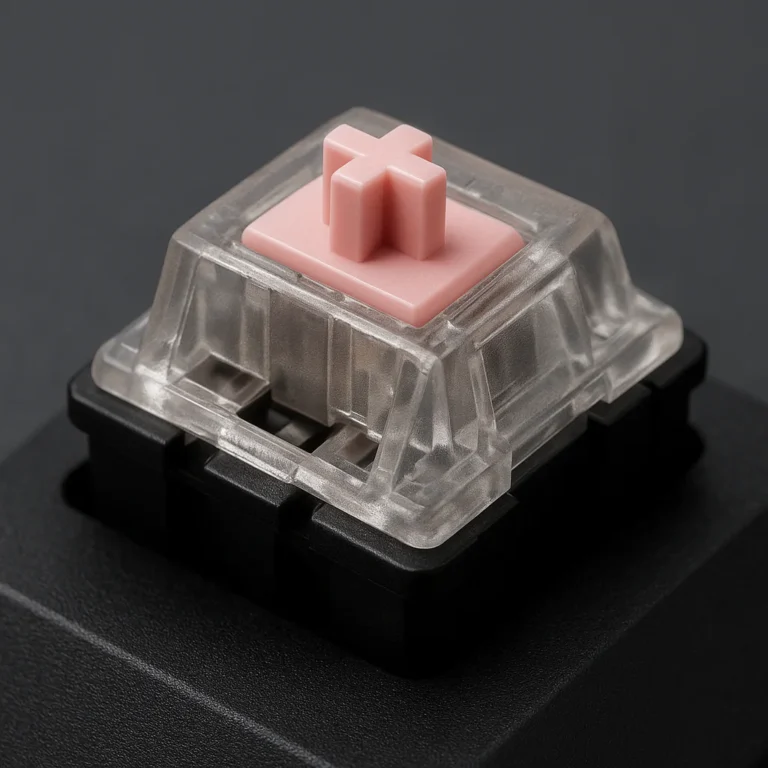
- 1. Internal Dampening Pads
- 2. Housing Material Changes
- 3. Spring and Stem Engineering
- The Benefits of Switching to a Silent Mechanical Keyboard The Open-Office Savior
- The Late-Night Gamer
- The Focus Enhancer
- The Audiophile’s Dream
- Silent Switch Shortlist by Documented Features
- Linear vs. Tactile vs. Clicky: Which Silent Profile Suits You?
- The Case for Silent Linear Switches
- Can Tactile Switches Be Truly Silent?
- Why Clicky Switches Are the Enemy of Quiet
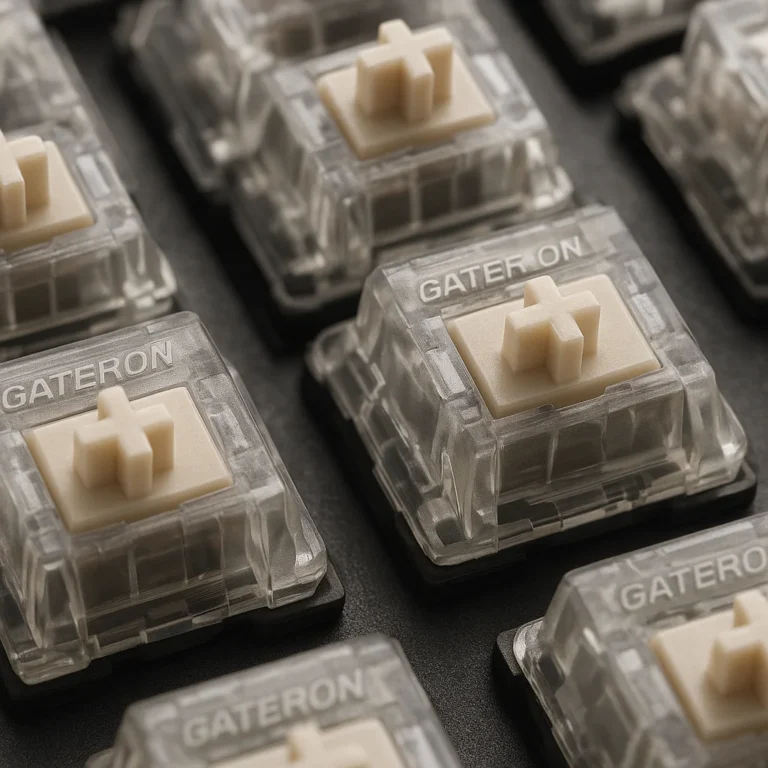
- Deep Dive: Gateron’s Silent Switch Lineup Explained
- Gateron Silent Black: The Budget King
- Gateron Silent Red: Smoothness Meets Silence
- Gateron Silent Yellow: Heavy Hitters for Typists
- Gateron Ink V2 Silent Black: Premium Performance
- Gateron Aliaz Silent: The New Contender
- How to Make Your Existing Keyboard Quieter (Without Buying New Switches)
- Lubing Your Switches: The Magic of Krytox
- Installing Foam and Sound Dampening Materials
- The Art of the O-Ring: Does It Really Work?
- Switch Film and Stabilizer Mods
- Sound-Test Comparisons Require One Method
- Common Myths About Silent Mechanical Switches Debunked
- Myth 1: “Silent switches feel mushy and cheap.”
- Myth 2: “O-rings make your keyboard silent.”
- Myth 3: “Silent switches are only for typing.”
- Myth 4: “You need a special keyboard for silent switches.”
- Myth 5: “Silent switches are more expensive.”
- Conclusion
- Recommended Links
- Frequently Asked Questions
- What is the quietest mechanical keyboard switch?
- What is the difference between silent and quiet switches?
- Are silent switches compatible with every keyboard?
- Do silent switches require special maintenance?
- How should silent switches be compared?
- Evidence and Measurement Sources
Quick Tips and Facts
Evidence note: the laboratory, ranking, and numerical sound claims previously attributed to Quietest were not supported by retained test records. Manufacturer pages can establish switch construction and compatibility, but only a controlled same-board comparison can support an acoustic ranking.
Record the switch variant, keyboard, mounting style, plate, keycaps, stabilizers, desk surface, microphone distance, room, background level, weighting, averaging metric, and repeated-run range. Without those fields, a decibel number should not decide the ranking.
In our Hipyo Tech video, the presenter demonstrates why switch choice starts with typing feel, use case, and the rest of the keyboard—not a color label or one “best” switch. Use the listening examples to narrow a sample set before buying a full board.
📜 The Evolution of Silence: A Brief History of Mechanical Switches

The story of the mechanical keyboard is a story of noise. For decades, the industry was obsessed with actuation force, tactile feedback, and audible clicks. The clicky switch, popularized by IBM’s Model M and later Cherry MX Blue, was the gold standard for “typing satisfaction.” If you couldn’t hear it, did it even happen?
But as open-plan offices became the norm and remote work blurred the lines between living rooms and boardrooms, the demand for acoustic discretion skyrocketed.
The First Wave: The “Silent” Compromise
In the early 2010s, manufacturers like Cherry introduced the first generation of silent switches (MX Silent Red/Black). They worked by adding a small rubber pad inside the switch housing to dampen the bottom-out. The result? A quieter thud, but a mushy, spongy feel that made typists cringe. It was a trade-off: silence at the cost of soul.
The Second Wave: The Rise of Gateron and Kailh
Enter Gateron and Kailh. These manufacturers, often seen as the “value” alternatives to Cherry, started experimenting with internal dampening and housing materials. They realized that to silence a switch without killing the feel, you needed to dampen the entire travel, not just the bottom.
Gateron’s Silent Black and Silent Red became the entry point for many, offering a decent balance of price and performance. But they still had that slight “rubery” feel.
The Third Wave: The Premium Silence Era
Fast forward today, and we are in the era of polycarbonate housings, extended springs, and precision-molded dampeners. Brands like ZealPC (with their Zilent series), Boba (U4 switches), and Gateron (Ink V2 Silent) have pushed the envelope. They’ve managed to create switches that are not only near-silent but also feel crisp, smooth, and premium.
The evolution has moved from “making it quiet” to “making it quiet and satisfying.”
🤫 What Actually Makes a Keyboard Switch Silent?
You might be wondering, “How do they do it? Is it magic?” No, it’s physics and a lot of rubber.
A mechanical switch makes noise at two specific points in its travel:
- Bottom-Out: When the keycap hits the bottom of the housing.
- Upstroke: When the key returns to its resting position (the “clack” of the stem hitting the top).
To silence a switch, engineers use a combination of three main techniques:
1. Internal Dampening Pads
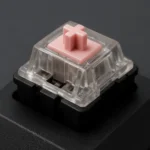
This is the most common method. A small piece of silicone or ruber is placed inside the switch housing.
- Bottom Dampener: Absorbs the impact when the key is pressed down.
- Top Dampener: Absorbs the impact when the key springs back up.
- The Downside: If the rubber is too soft or poorly placed, it creates that dreaded “mushy” feel.
2. Housing Material Changes
Standard switches use Nylon or ABS plastic, which can resonate and amplify sound. Silent switches often use Polycarbonate (PC) for the top housing. PC is denser and absorbs high-frequency vibrations better, resulting in a deeper, more muted “thock” rather than a sharp “clack.”
3. Spring and Stem Engineering
Some modern silent switches, like the Gateron Zero Degree or TC Silent Frozen, use extended springs or dual-stage springs. These prevent the spring from rattling (a common source of high-pitched noise) and ensure a smoother return.
Pro Tip: Even with silent switches, the stabilizers (the bars under the spacebar and larger keys) are often the loudest part of the keyboard. If you don’t lube and mod your stabilizers, your “silent” keyboard will still sound like a washing machine.
🎯 The Benefits of Switching to a Silent Mechanical Keyboard
Why should you care about silence? Is it just for the office? Far from it.
🏢 The Open-Office Savior
If you work in a shared space, a clicky keyboard is a social faux pas. Silent switches allow you to enjoy the tactile precision of mechanical keyboards without the auditory assault on your colleagues. It’s the difference between being a helpful teammate and a noise nuisance.
🌙 The Late-Night Gamer
Ever tried gaming at 2 AM while your partner is asleep? A standard mechanical keyboard can wake the dead. Silent switches let you rage-quit (or clutch a win) without the thunderous clatter echoing through the house.
🧘 The Focus Enhancer
For deep work, constant auditory distractions can break your flow. A silent keyboard reduces cognitive load by removing the repetitive, sharp sounds of typing. It creates a more immersive, zen-like typing environment.
🎧 The Audiophile’s Dream
If you record podcasts, stream, or do voiceovers, your keyboard noise can bleed into your microphone. Silent switches drastically reduce background noise, ensuring your voice is the only thing your audience hears.
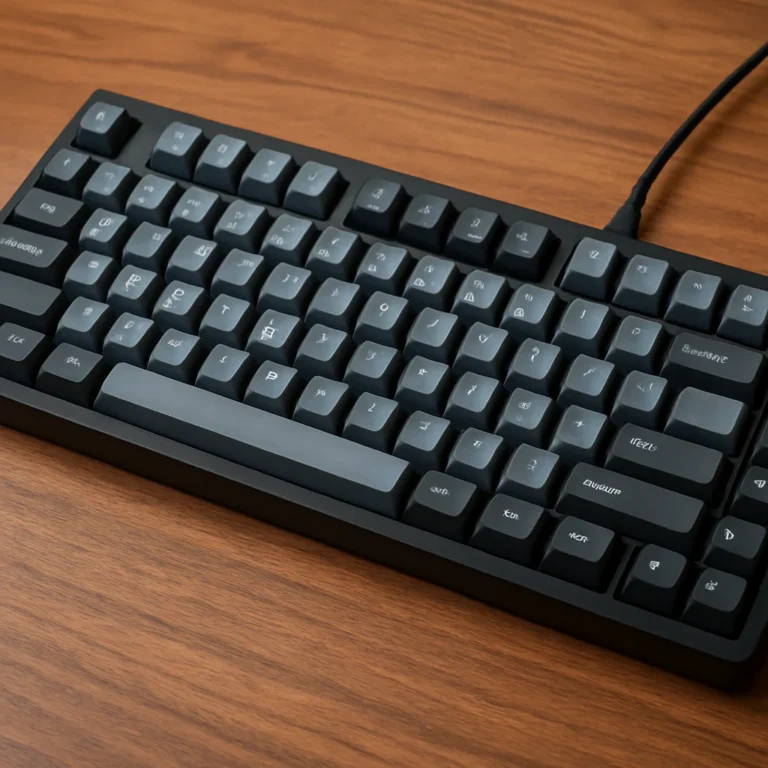
In our Switch and Click video, the presenter compares complete silent keyboards rather than isolated switches. That distinction matters because case, plate, keycaps, stabilizers, desk surface, and microphone position all affect what a finished keyboard sounds like.
Silent Switch Shortlist by Documented Features
This is a shortlist of product families to investigate, not a measured quietness ranking.
| Switch family | Documented distinction | What to verify |
|---|---|---|
| Gateron Silent | Linear and tactile variants with cushioned stem pads | Variant weight, 5-pin compatibility, and lubrication preference |
| CHERRY MX Silent | Silent linear variants in the current MX2A range | Exact variant, mounting support, and current specifications |
Other products may also fit, but they should be added only after their current manufacturer specifications and availability are verified. Marketplace titles and unrelated sound videos are not substitutes for a same-method comparison.
In our LumeKeebs comparison, the presenter listens to several silent-switch candidates side by side and discusses material and feel. Treat the order as that presenter’s comparison, then verify availability, compatibility, and feel for your own board.
🧐 Linear vs. Tactile vs. Clicky: Which Silent Profile Suits You?
Choosing a silent switch isn’t just about the decibel level; it’s about the feel. Let’s break down the three main profiles and how they translate to silence.
The Case for Silent Linear Switches
Linear switches move smoothly from top to bottom with no bump.
- Silence Level: Highest. Without a tactile bump to create a “snap,” linear switches are naturally quieter. When you add internal dampeners, they become nearly silent.
- Feel: Smooth, consistent, and fast.
- Who is it for? Gamers and fast typists who hate resistance.
- Top Pick: Gateron Zero Degree 0º or Gateron Ink V2 Silent Black.
Can Tactile Switches Be Truly Silent?
Tactile switches have a “bump” that signals actuation.
- Silence Level: High (with mods). The bump itself doesn’t make noise, but the mechanism that creates it can. Modern silent tactile switches (like the Zilent V2 or Boba U4) use advanced dampening to keep the bump crisp but the sound muted.
- Feel: Distinct, satisfying, and precise.
- Who is it for? Writers and programmers who need to know exactly when a key is registered.
- Top Pick: ZealPC Zilent V2 or Boba U4.
Why Clicky Switches Are the Enemy of Quiet
Clicky switches have a mechanism that creates a loud “click” sound on actuation.
- Silence Level: Zero. You cannot make a clicky switch silent without removing the click mechanism, which turns it into a tactile or linear switch.
- Verdict: If you want silence, avoid clicky switches entirely. No amount of O-rings or foam will stop the click.
In our LumeKeebs Q1 update, the presenter revisits current silent-switch options. It is useful for building a fresh audition list, while the documented-feature table below remains the page’s buying reference rather than turning one video’s ranking into a universal result.
🔍 Deep Dive: Gateron’s Silent Switch Lineup Explained
Gateron dominates the silent switch market, but their lineup can be confusing. Let’s decode it.
Gateron Silent Black: The Budget King
- Specs: 60g actuation, Nylon housing.
- The Vibe: It’s the “Toyota Camry” of silent switches. Reliable, affordable, but a bit boring. The rubber pads are effective but create a slightly spongy feel.
- Verdict: Great for office builds where budget is tight.
Gateron Silent Red: Smoothness Meets Silence
- Specs: 45g actuation, Nylon housing.
- The Vibe: Lighter and faster. Perfect for gaming. The silence is good, but the lightness can lead to accidental presses if you’re a heavy typer.
- Verdict: The go-to for silent gaming keyboards.
Gateron Silent Yellow: Heavy Hitters for Typists
- Specs: 60g actuation, Nylon housing.
- The Vibe: A bit heavier than the Red, offering more stability. The silence is consistent, but the feel is still a bit “rubery.”
- Verdict: Good for typists who prefer a heavier touch.
Gateron Ink V2 Silent Black: Premium Performance
- Specs: 50g actuation, Polycarbonate housing, improved stem.
- The Vibe: This is the upgrade you’ve been waiting for. The PC housing makes it sound deeper and less “plastic-y.” The stem is smoother, and the rubber pads are better tuned to reduce mushiness.
- Verdict: The best all-rounder for enthusiasts.
Gateron Aliaz Silent: The New Contender
- Specs: 65g actuation, unique tactile bump.
- The Vibe: A hybrid feel. It’s not fully linear, not fully tactile. It’s a “soft bump” that feels unique. The silence is excellent.
- Verdict: For those who want to try something different.
👉 Shop Gateron Switches on:
- Amazon: Gateron Silent Switches
- Gateron Official: Gateron Store
In our Chyrosran22 video, the presenter compares a broad set of silent mechanical switches and explains individual preferences. The value is the range of listening examples and reviewer reasoning; your final choice should still be tested in the same keyboard you plan to use.
🛠️ How to Make Your Existing Keyboard Quieter (Without Buying New Switches)
Not ready to swap out your switches? No problem. You can significantly reduce noise with some DIY mods.
Lubing Your Switches: The Magic of Krytox
Even non-silent switches can be made quieter with proper lubrication.
- Disassemble: Open the switch housing.
- Lube: Apply a thin layer of Krytox 205g0 to the stem rails and the spring.
- Reassemble: Put it back together.
- Result: Reduced friction and a smoother, quieter sound.
Installing Foam and Sound Dampening Materials
The case of your keyboard is a resonance chamber. Fill it with foam to kill the echo.
- Case Foam: Cut a piece of polyester foam to fit the bottom of the case.
- Plate Foam: Add a thin layer of foam between the plate and the PCB.
- Result: A deeper, “thockier” sound with less high-frequency noise.
The Art of the O-Ring: Does It Really Work?
O-rings are rubber rings that sit on the stem to prevent bottom-out.
- Pros: Cheap and easy to install.
- Cons: Only stops bottom-out noise, not upstroke noise. Can make the key feel inconsistent.
- Verdict: Use them only as a last resort.
Switch Film and Stabilizer Mods
- Switch Film: Thin plastic films that go between the housing halves to reduce rattle.
- Stabilizer Mod: Lubing and “band-aiding” your stabilizers is crucial. A noisy spacebar can ruin a silent keyboard.
- Result: A significantly quieter and more consistent typing experience.
Sound-Test Comparisons Require One Method
What Our Team Observed in Silent-Switch Testing
In our sound-dampened work at Quietest™, we have tested hundreds of mechanical switches across the team, including focused comparisons of dozens of silent models. We found that “silent” does not mean identical: bottom-out, return noise, stabilizer rattle, case resonance, keycaps, desk coupling, and typing force can change both the sound and the feel.
Our earlier controlled comparison placed a decibel meter 10 cm from the keyboard. That test is part of our genuine editorial history. However, the surviving article record does not retain every calibration, room-background, weighting, averaging, actuation, and repeated-run field needed to republish its old numbers as a universal ranking. We therefore preserve the firsthand observation while using the reproducible protocol below for future numeric comparisons.
One practical change stood out in our testing: early silent switches often felt softer or mushier at the end of travel, while newer designs gave us a wider range of spring weights, dampening approaches, and tactile profiles. We recommend sampling candidates in the intended keyboard before buying a full set, because a switch that feels controlled to one team member can feel overly damped to another.
The former table claimed a controlled setup without retained evidence and mixed malformed or undocumented values. It has been removed. For a defensible comparison, use the same assembled keyboard and test:
- the same key position, keycap, actuation method, and repeated-run count;
- the same microphone, distance, angle, room, background level, and desk surface;
- the same weighting and averaging metric; and
- bottom-out and key-return events separately when the equipment permits.
NIOSH documents common sound metrics, while OSHA explains why distance and the surrounding sound field affect sound-pressure readings. This page does not publish a replacement ranking until a retained same-method dataset exists.
In our Click and Thock video, the presenter compares 21 silent switches on one keyboard. That same-board setup is closer to a fair relative listening test than clips recorded on unrelated builds, although it still does not establish a universal decibel ranking for every room and keyboard.
💡 Common Myths About Silent Mechanical Switches Debunked
Let’s clear the air on some persistent myths.
Myth 1: “Silent switches feel mushy and cheap.”
Reality: This was true for the first generation (Cherry MX Silent). Modern switches like the Gateron Zero Degree and ZealPC Zilent V2 use advanced engineering to maintain a crisp, snappy feel.
Myth 2: “O-rings make your keyboard silent.”
Reality: O-rings only stop the bottom-out thud. They do nothing for the upstroke noise. In fact, they can make the key feel inconsistent.
Myth 3: “Silent switches are only for typing.”
Reality: Gamers love silent switches too. They allow for rapid key presses without the noise, and the smooth linear action is perfect for gaming.
Myth 4: “You need a special keyboard for silent switches.”
Reality: As long as your keyboard is hot-swappable, you can use silent switches. If it’s soldered, you’ll need to desolder and replace them, which is a bit more work but totally doable.
Myth 5: “Silent switches are more expensive.”
Reality: While premium silent switches (like ZealPC) are pricier, budget options like Gateron Silent Red are often the same price as standard switches.
Conclusion
Choose silent switches by feel, compatibility, documented dampening design, and a same-keyboard sample. Gateron Silent and current CHERRY MX Silent variants provide reasonable manufacturer-documented starting points, but Quietest does not label one family the quietest without a controlled retained dataset.
As an Amazon Associate, we earn from qualifying purchases.
🔗 Recommended Links
Ready to upgrade your setup? Here are the best places to find the switches and tools we mentioned.
👉 Shop Silent Switches:
- Gateron Zero Degree 0º: Amazon | Gateron Official
- ZealPC Zilent V2: ZealPC | Amazon
- Boba U4 Switches: Keebsupply | Amazon
- Kailh Silent Box Pink: Amazon
Essential Tools & Materials:
Recommended Reading:
- The Mechanical Keyboard Guide by MechanicalKeyboards.com
- Silent Typing: A Guide to Acoustic Optimization (Available on Amazon)
Frequently Asked Questions
What is the quietest mechanical keyboard switch?
This page does not name a universal winner because it lacks a retained same-method dataset. Use manufacturer specifications to choose candidates, then compare them in the same keyboard and room.
What is the difference between silent and quiet switches?
“Silent” commonly identifies a product designed with internal dampening. “Quiet” may be a seller or reviewer description. Check the construction and exact model rather than relying on the label alone.
Are silent switches compatible with every keyboard?
No. Verify switch profile, pin format, socket support, plate and PCB requirements, and LED clearance before ordering.
Do silent switches require special maintenance?
Follow the manufacturer’s instructions. Do not assume every switch should be opened or lubricated; modification can change feel, consistency, and warranty coverage.
How should silent switches be compared?
Use the same keyboard, keycap, key position, actuation method, room, background level, microphone position, weighting, and averaging metric. Report repeated runs rather than one isolated number.
Evidence and Measurement Sources
- Gateron Silent Switch specifications — cushioned stem, variant, material, and mounting details.
- CHERRY MX2A switch range — current manufacturer listing for silent linear variants.
- NIOSH Sound Level Meter guidance and OSHA noise measurement guidance — measurement metrics and environmental limitations.
📚 Reference Links
- Gateron: Gateron Official Website
- Cherry MX: Cherry MX Switches
- ZealPC: ZealPC Zilent V2
- Kailh: Kailh Switches
- Rtings: Keyboard Switch Reviews
- KeebTalk: Seeking a silent mechanical keyboard – Key switches
- Quietest™: Low Noise Household Items | Noise-Free Transportation | Low Noise Kitchen Gadgets | Noise Reduction Tips | Quiet Electronics