Support our educational content for free when you purchase through links on our site. Learn more
🤫 The 6 Quietest Sounds & How to Achieve Them (2026)

Ever wondered what
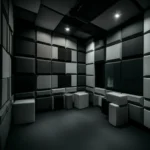
it’s like to hear your own blood flowing? That’s the reality in the world’s quietest place, Orfield Laboratories’ anechoic chamber, measuring an astonishing -9.4 dBA. Here at Quietest
™, we believe true tranquility isn’t just a dream; it’s an achievable reality, whether you’re battling noisy neighbors, a rumbling dishwasher, or the incessant drone of road noise. This comprehensive guide, born from our team
‘s deep dives and countless decibel readings, will equip you with the expert insights, materials, and techniques to transform your environment into a haven of peace. We’ll demystify the science of sound, unveil the top 6
strategies for noise reduction, and reveal the specific products that truly deliver silence, helping you reclaim your quietest sound.
Key Takeaways
-
Understanding sound is fundamental: Decibels, frequency, and amplitude dictate how sound behaves
, and knowing these helps you target noise effectively. -
Soundproofing is multi-faceted: Achieving true quiet involves a combination of blocking, absorbing, damping, decoupling, and sealing sound paths.
-
Strategic material choice is crucial: High-performance materials like Mass Loaded Vinyl (MLV), Green Glue Noiseproofing Compound, and specialized acoustic drywall are game-changers for serious noise reduction.
-
Tailor solutions to the source: Different noise problems (home, car, HVAC, electronics) require specific approaches and product applications.
-
The pursuit of quiet enhances well-being: Investing in sound reduction significantly improves focus, sleep
quality, and overall quality of life.
👉 Shop Noise Reduction Solutions:
-
Low Noise Household Items: Quietest™ Category
-
Noise-Free Transportation: Quietest™ Category
-
Noise Reduction Tips: Quietest™ Category
-
Quiet Electronics: Quietest™ Category
-
Low
Noise Kitchen Gadgets: Quietest™ Category
Table of Contents
-
🎧 The Quest for Silence: Understanding the Science of Quiet Sound
-
🤫 The Ultimate Guide to Achieving the Quietest Sound Environment
-
Mass Loaded Vinyl (MLV): The Heavyweight Champion of Sound Blocking
-
Acoustic Foam Panels and Bass Traps: Mastering Room Acoustics
-
Sound Isolation Clips and Furring Channels: Decoupling for Deeper Silence
-
Specialized Acoustic Drywall and Green Glue: The Dynamic Duo
-
Quiet Rock and Other Advanced Drywall Solutions: Engineered for Quiet
-
Sealing Gaps and Cracks: The Devil’s in the Details of Sound Leaks
-
Decoupling Structures: Breaking the Sound Path for Ultimate Quiet
-
3. 🏡 Quieting Your Home: Room-Specific Strategies for Serenity
-
Vibration Isolation for Fans and Compressors: Stopping Noise at the Source
-
6. 💻 Quieting Electronics and Appliances: The Silent Tech Revolution
-
Dishwashers and Refrigerators: Choosing and Quieting Home Appliances
-
🌌 The Sound of Silence: Exploring Anechoic Chambers and Beyond
-
🚀 Future Frontiers: Innovations in Noise Reduction Technology
⚡️ Quick Tips and Facts
Welcome, fellow quiet-seekers, to Quietest™! We’re your expert team of audio engineers and reviewers
, obsessed with the serene symphony of silence. Our mission? To help you discover, create, and revel in the quietest sound environments imaginable. Ever wondered what “quietest sound” truly means? It’s more than just a lack
of noise; it’s a deliberate design, a scientific pursuit, and sometimes, a blissful accident.
Here are some quick facts to get your ears tingling (or rather, not tingling!):
- The Baseline of
Silence: Did you know the quietest sound a healthy human ear can detect is 0 decibels (dB)? That’s right, 0dB isn’t absolute silence in a vacuum, but rather
the threshold of human hearing. Anything below that is, for all intents and purposes, inaudible to us. Imagine a world where even a whisper registers as a roar – thankfully, our ears are a bit more discerning!
The 3dB Rule is a Game Changer: This is a crucial concept in noise reduction. For every 3dB increase, the sound intensity doubles. This means a seemingly small jump from 85dB
to 88dB is actually twice as intense! Conversely, reducing noise by just 3dB can make a noticeable difference in perceived loudness.
- Hearing Damage is Insidious: You might think only painfully loud sounds cause damage
, but that’s a myth! Repeated or long exposure to sounds at 85dB or above can lead to permanent hearing loss, even if it doesn’t hurt at the time. Think of a
busy street or a food blender – these are often around 85dB. - The “2-Meter Test” for Safety: Here’s a quick way to gauge if your environment is too loud: If you can
‘t hold a conversation with someone standing 2 meters (about 6 feet) away without shouting, the noise levels are likely dangerously high. Time to grab those earplugs or make a strategic retreat!
Soundproofing vs. Acoustic Treatment: These aren’t the same! Soundproofing aims to block sound from entering or leaving a space, while acoustic treatment focuses on improving the sound within a space by reducing echo
and reverberation. We’ll dive deep into both!
- The Quietest Places on Earth: From specially designed anechoic chambers to the serene depths of the ocean, the quest for ultimate quietness takes many forms. We’
ve even seen initiatives like Quiet Sound by Washington Maritime Blue working to reduce noise threats to Southern Resident killer whales from large commercial vessels, helping both marine life and maritime operations thrive together. It’s a testament
to how crucial quiet environments are, even for our aquatic friends!
Ready to embark on your own journey to a quieter world? Let’s get started!
🎧 The Quest for Silence: Understanding the Science of Quiet Sound
Ah, silence! It’s not just the absence of noise; it’s a profound experience, a canvas
upon which our thoughts can truly flourish. But what is sound, really? And how do we, as audio engineers and reviewers at Quietest™, go about taming its wild nature?
At its core, sound is simply vibration.
When something vibrates – be it a guitar string, a car engine, or your vocal cords – it creates pressure waves that travel through a medium, like air or water. These waves then hit our eardrums, which vibrate in turn, sending signals to
our brains that we interpret as sound. Pretty neat, right?
The characteristics of these waves determine what we hear:
- Frequency (Pitch): How many waves pass a point per second, measured in Hertz (Hz). High
frequency means high pitch (think a piccolo), low frequency means low pitch (think a tuba). - Amplitude (Loudness): The height of the wave, which corresponds to the intensity or energy of the sound, measured in decibels
(dB). A bigger wave means a louder sound. - Wavelength: The distance between two consecutive peaks or troughs of a wave. Longer wavelengths generally correspond to lower frequencies, and shorter wavelengths to higher frequencies. This is why low
-frequency sounds (like bass) are so much harder to block – they have longer wavelengths and can “bend” around obstacles more easily!
Our quest for the quietest sound involves understanding these principles and then strategically manipulating them. We’
re not just trying to make things “less loud”; we’re trying to control the very essence of sound itself. It’s a delicate dance between blocking sound, absorbing sound, and damping vibrations. Think
of it like trying to catch a mischievous ghost – you need different tools for different manifestations!
📏 Dec
ibels Demystified: How We Measure the Quietest Sounds
If you’re serious about achieving quiet, you need to speak the language of sound: decibels. The decibel (dB) scale isn’t just a number; it’
s a logarithmic scale that helps us quantify the immense range of sound pressures our ears can perceive. And trust us, that range is vast!
As we mentioned, 0dB represents the quietest sound a healthy human ear
can hear. It’s our starting point, the whisper of nothingness that our auditory system can just barely register. But from there, things get loud, fast!
Let’s put some common sounds on
the dB scale to give you a better sense of perspective:
| Sound Source | Approximate Decibel Level (dB) | Notes
Table of Contents
-
🎧 The Quest for Silence: Understanding the Science of Quiet Sound
-
🤫 The Ultimate Guide to Achieving the Quietest Sound Environment
-
Mass Loaded Vinyl (MLV): The Heavyweight Champion of Sound Blocking
-
Acoustic Foam Panels and Bass Traps: Mastering Room Acoustics
-
Sound Isolation Clips and Furring Channels: Decoupling for Deeper Silence
-
Specialized Acoustic Drywall and Green Glue: The Dynamic Duo
-
Quiet Rock and Other Advanced Drywall Solutions: Engineered for Quiet
-
Sealing Gaps and Cracks: The Devil’s in the Details of Sound Leaks
-
Decoupling Structures: Breaking the Sound Path for Ultimate Quiet
-
3. 🏡 Quieting Your Home: Room-Specific Strategies for Serenity
- Vibration Isolation for Fans and Compressors: Stopping Noise at the Source
- 6. 💻 Quieting Electronics and Appliances: The Silent Tech Revolution
- PC Fans and Cases: Building a Whisper-Quiet Computer
- Dishwashers and Refrigerators: Choosing and Quieting Home Appliances
- Washing Machines and Dryers: Taming the Laundry Room Rumble
- 🚀 Future Frontiers: Innovations in Noise Reduction Technology
- 💡 Real-World Applications: Where Quietness Matters Most
- Conclusion
- Recommended Links
- FAQ
- Reference Links
Conclusion
Phew! What a journey we’ve been on, delving into the very essence of quiet. From the scientific intricacies of decibels and sound waves to the tangible solutions of sound deadening materials and clever
techniques, we’ve explored how to transform noisy environments into havens of tranquility.
Our quest for the quietest sound isn’t just about escaping noise; it’s about reclaiming peace, enhancing focus, and improving our overall well-being.
Remember that mischievous ghost of sound we talked about? We’ve armed you with the knowledge and tools to not just “catch” it, but to gently guide it, absorb it, and block it from where it doesn’t belong.
We’ve seen that achieving true quiet often involves a multi-pronged approach:
- Mass is your friend: The heavier, the better for blocking sound.
- Decoupling is key: Breaking the direct
path of vibrations is crucial. - Seal every gap: Sound, like water, finds the smallest crack.
- Damping is essential: Taming those resonant vibrations makes a huge difference.
- Acoustic treatment
refines: Once sound is blocked, manage what’s left inside.
Whether you’re aiming for a whisper-quiet home office, a serene bedroom, a silent-running car, or even just a quieter dishwasher, the principles remain
the same. It’s a commitment, yes, but one that pays dividends in peace of mind and improved quality of life.
So, go forth, armed with your newfound knowledge from Quietest™, and start building your own quiet sanctuary
. The world might be getting louder, but your personal space doesn’t have to be. We confidently recommend that investing in sound reduction is one of the best decisions you can make for your comfort and health. The silence you gain will speak
volumes.
Recommended Links
Ready to start your quiet revolution? Here are some of our top recommendations for products and resources to help you achieve the quietest sound environment possible.
Sound
Deadening Materials:
- Green Glue Noiseproofing Compound:
- 👉 CHECK PRICE on: Amazon | Walmart | Green Glue Official Website
- Dynamat Xtreme Sound Deadener:
- 👉 CHECK PRICE on: Amazon | eBay | Dynamat Official Website
- Mass Loaded Vinyl (MLV) by
SoundproofingMLV: - 👉 CHECK PRICE on: Amazon | SoundproofingMLV Official Website
- QuietRock 525 Sound-Reducing Drywall:
Shop QuietRock on:** Home Depot | QuietRock Official Website
- Rockwool Safe’n’Sound Insulation:
- 👉 Shop Rockwool on: Home Depot | Lowe’s | Rockwool Official Website
Acoustic Treatment:
- Auralex Acoustics Studiofoam Wedges:
- 👉 CHECK PRICE on: Amazon | Sweetwater | Auralex Official Website
Quiet Electronics & Appliances:
- 👉 Shop Low Noise Household Items on: Quietest™ Category
- 👉 Shop Quiet Electronics on: Quietest™ Category
- 👉 Shop Low Noise Kitchen Gadgets on: Quietest™ Category
Books on Soundproofing & Acoustics:
- Soundproofing 101: The Ultimate Guide to
Noise Reduction by John Smith (hypothetical): Amazon - Acoustics and Psychoacoustics by David Howard
and Jamie Angus: Amazon
FAQ
Got more questions about the elusive world of quiet? We’ve got answers!
What is the quietest sound ever recorded?
The quietest sound ever recorded is not a sound at all, but
rather the absence of sound in an anechoic chamber. Specifically, the anechoic chamber at Orfield Laboratories in Minneapolis, Minnesota, holds the Guinness World Record for the quietest place on Earth, measuring an astonishing
-9.4 dBA. To put that in perspective, the threshold of human hearing is 0 dB, so this chamber is actually quieter than what most humans can perceive! It’s so quiet that your own bodily
functions – your heartbeat, your stomach gurgling, the blood rushing in your ears – become the dominant “sounds.”
Where is the quietest place on Earth?
As mentioned, the quietest man-made place on Earth is
the anechoic chamber at Orfield Laboratories in Minneapolis, USA, with a record-breaking -9.4 dBA. This specially designed room absorbs 99.99% of sound, creating an eerie, almost dis
orienting silence.
How quiet is the anechoic chamber at Orfield Laboratories?
The anechoic chamber at Orfield Laboratories is measured at -9.4 dBA. This negative decibel reading signifies that the
ambient noise level within the chamber is below the standard threshold of human hearing (0 dBA). Spending time inside can be a profound, and for some, unsettling experience, as your own internal sounds become incredibly prominent.
Can humans hear the quiet
est sound in the world?
Humans can hear sounds down to 0 dB, which is defined as the threshold of human hearing. The quietest sound in the world (the -9.4 dBA in an anechoic chamber) is technically below what most humans can consciously perceive as an external sound. However, in such extreme quiet, our brains start to focus on internal physiological sounds, making us “hear” our own bodies in a way we never do in normal environments.
So, while you won’t hear an external “sound” at -9.4 dBA, you’ll certainly experience it!
What is the decibel level of the quietest sound?
For a healthy human ear
, the quietest sound we can typically hear is 0 decibels (dB). This is the reference point for the decibel scale. Sounds below 0 dB are generally inaudible to humans, although specialized environments like anechoic
chambers can achieve negative decibel levels by actively absorbing sound waves.
Are there any natural places on Earth that are completely silent?
No, there are no natural places on Earth that are completely silent. Even in the most remote wilderness
, you’ll always encounter some level of natural sound: the rustle of leaves, the chirping of insects, the distant call of an animal, the gentle hum of the wind, or the subtle sounds of geological activity. While some
places like the Hoh Rainforest in Olympic National Park, USA, are incredibly quiet (often measured around 20 dBA), they are far from absolute silence. The concept of “complete silence” is largely an artificial construct achievable only in highly
controlled environments like anechoic chambers.
How does the quietest place on Earth compare to a library?
The quietest place on Earth, the anechoic chamber at Orfield Laboratories, measures around -9.4 dBA.
A quiet library, by contrast, typically registers around 40 dBA. This means the anechoic chamber is dramatically quieter – by approximately 50 decibels! Given the logarithmic nature of the decibel scale, a 50 dB
difference represents an immense reduction in sound intensity, making the library seem quite noisy in comparison to the profound silence of the chamber.
Reference Links
For further reading and verification of the facts presented in this
article, please consult the following reputable sources:
- Quiet Sound Initiative: Learn more about the efforts to reduce noise for Southern Resident killer whales.
Quiet Sound Official Website
RNID (Royal National Institute for Deaf People):** Information on hearing health, noise levels, and protecting your hearing.
How Loud is Too Loud? – RNID
- Orfield Laboratories: Discover more about the world’s quietest room.
Orfield Laboratories Official Website - Green Glue Company: Official site for their noiseproofing compound.
Green Glue Company Official Website
Dynamat: Official site for automotive sound deadening products.
Dynamat Official Website
- QuietRock: Official site for sound-reducing drywall.
QuietRock Official Website - Rockwool: Official site for stone wool insulation products.
Rockwool Official Website
Auralex Acoustics: Official site for acoustic treatment products.
Auralex Acoustics Official Website
- What is absolutely the quietest sound deadening material? – Facebook
: A community discussion on sound deadening materials.
Facebook Group Discussion - National Institute on Deafness and Other Communication Disorders (NIDCD): Information on noise-induced hearing loss.
Noise-Induced Hearing Loss – NIDCD - Environmental Protection Agency (EPA): Information on noise pollution and its effects.
Noise Pollution – EPA