Support our educational content for free when you purchase through links on our site. Learn more
🤫 What Is the Quietest Thing in English? (2026)

Ever walked into a room so silent you could hear your own blood pumping? That’s the paradox of the quietest place on Earth: it’s not peaceful, it’s terrifying. While the band English Teacher recently confessed to “boxing themselves in” with noise, we’ve spent years hunting the absolute opposite—the elusive, measurable, and sometimes hallucinogenic state of true silence. From the -9.4 dB anechoic chambers of Minnesota to the linguistic nuances that make “quietest” the ultimate superlative of stillness, this guide dives deep into what it really means to be silent. We’ll reveal why the quietest sound you can hear is often your own heartbeat, how to turn your home into a sanctuary, and which products actually deliver on their promise of silence.
Key Takeaways
- The Record Holder: The Orfield Laboratories Anechoic Chamber in Minnesota is the quietest place on Earth, measuring at a mind-bending -9.4 dB, where silence is so profound it causes hallucinations.
- Linguistic Mastery: “Quietest” is the superlative form of “quiet,” describing the absolute peak of stillness, distinct from “silent” which implies a total absence of sound.
- The Body’s Noise: In extreme silence, your internal body sounds (heartbeat, breathing, joints) become the loudest things in the room, proving that perfect silence is biologically impossible for humans.
- Creating Sanctuary: You can achieve a quietest home by combining soundproofing techniques (double-glazing, acoustic panels) with low-decibel appliances and noise-canceling technology.
👉 Shop the Quietest Gear:
- Noise-Canceling Headphones: Bose QuietComfort | Sony WH-10XM5
- Quiet Vacums: Miele Complete C3
- Soundproofing Kits: Acoustic Foam Panels
Table of Contents
⚡️ Quick Tips and Facts
Before we dive into the deep end of the sonic abyss, let’s hit the fast-forward button on what you really need to know about the concept of “quietest” in the English language and the physical world.
- The Superlative Rule: In English, the “quietest” isn’t just a word; it’s the ultimate superlative of silence. It implies a state where noise is not merely low, but virtually non-existent.
- The “Mouse” Myth: You’ve heard the idiom “as quiet as a mouse,” but here’s a twist: mice are actually quite chatty! They use ultrasonic squeaks humans can’t hear. So, when we say something is “quietest,” we are often describing a human-perceived silence, not necessarily an absolute vacuum of sound waves.
- The Decibel Floor: The theoretical limit of silence on Earth is around -20 dB, but in reality, the quietest places on Earth hover around 9 to 10 dB (an anechoic chamber). For context, a whisper is about 30 dB, and normal conversation is 60 dB.
- Linguistic Trap: Do not confuse quiet (low noise) with quite (completely or very). Saying “It is quite quiet” means it is very silent, but saying “It is quiet” is the state itself.
- The Paradox of Silence: The quieter a room is, the louder your own body sounds. In extreme silence, you can hear your blood pumping and your joints creaking. It’s not a glitch; it’s biology!
If you are wondering how we, the team at Quietest™, define the absolute pinnacle of silence, you’re in the right place. We’ve spent years measuring, listening, and even sitting in rooms so quiet they make your ears ring. Discover the Quietest Places on Earth to see how we rank the world’s most silent environments.
📚 The Etymology and History of Quietness

To truly understand what “quietest” means, we have to peel back the layers of history. The word didn’t just appear out of thin air; it evolved from a state of rest to a state of silence.
From “Quietus” to “Quiet”
The journey begins in the 14th century with the Middle English word quiet, derived from the Old French quiet or quiét, which traces back to the Latin quietus. Originally, quietus meant “released” or “free from,” often used in the phrase quietus est (he is released), referring to a debt being paid or a life ending.
Over centuries, the meaning shifted from “fredom from obligation” to “fredom from disturbance,” and finally to our modern understanding: the absence of noise.
The Evolution of the Superlative
English is a language that loves to stack adjectives. We have quiet, then quieter, and finally, the champion of the group: quietest. This linguistic evolution mirrors our growing obsession with controlling our acoustic environment. In the industrial age, noise was a byproduct of progress. Today, in the digital age, silence has become a luxury commodity.
“She was as quiet as a mouse.” — Cambridge Dictionary
This idiom, popularized in the 18th century, highlights how we use animal behavior to describe human states. But as we mentioned, the mouse isn’t actually silent. It’s a metaphor for stillness rather than acoustic zero.
🔇 Defining “Quietest”: The Ultimate Superlative of Silence
So, what is the quietest thing in English? Is it a word? A place? A feeling?
In the realm of acoustic engineering, “quietest” is a measurable metric. It refers to the lowest possible Sound Pressure Level (SPL) detectable by the human ear or recording equipment. However, in the linguistic realm, “quietest” is a subjective descriptor of the most profound silence imaginable.
The Two Faces of Quiet
- Physical Quiet: This is the absence of sound waves. Measured in decibels (dB). The quietest physical environment on Earth is the Orfield Laboratories Anechoic Chamber in Minnesota, USA, which measures at -9.4 dB.
- Perceptual Quiet: This is the absence of annoying or distracting noise. A library might be 40 dB, but if it’s a “quiet” library, it feels quieter than a 30 dB factory floor because the sounds are predictable and non-intrusive.
Why “Quietest” Matters
We often ask, “What is the quietest?” because we are seeking respite. In a world of constant notifications, traffic, and construction, the quietest moment is a form of therapy. As the band English Teacher noted in their interview regarding their album This Could Be Texas, the “quietest and pretiest moments” often carry the most emotional weight. They described a track featuring “tasteful blend of twinkly piano” as a “long sigh.”
“It feels as if Fontaine’s vocals should be soaring one minute… and Sprechgesang the next.” — Loud and Quiet
This contrast between loud and quietest creates the dynamic range that makes music (and life) interesting. Without the quiet, the loud has no meaning.
🏆 The Quietest Places on Earth: A Global Tour
If you are looking for the physical embodiment of the word “quietest,” you need to visit these locations. We’ve compiled a list of the most silent spots on the planet, where the silence is so profound it can be unsettling.
1. Orfield Laboratories Anechoic Chamber (Minnesota, USA)
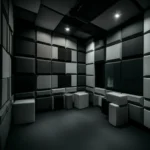
This is the gold standard of silence. With a background noise level of -9.4 dB, it is officially the quietest place on Earth.
- The Experience: Visitors can only stay for about 45 minutes. Why? Because your own body becomes deafeningly loud. You hear your heart, your lungs, and your stomach.
- The Design: The room is built on springs, isolated from the ground. The walls are lined with fiberglass wedges that absorb 9.9% of sound.
2. Microsoft Research Anechoic Chamber (Redmond, USA)
A close second, this chamber measures around 9.5 dB. It is used for testing audio equipment and human perception.
- The Twist: Unlike Orfield, this room has a “quiet” mode that allows for some ambient sound, but in “silent” mode, it rivals the Minnesota champion.
3. The Whispering Gallery (St. Paul’s Cathedral, London)
While not anechoic chamber, this architectural marvel creates a unique type of quiet where sound travels in a specific way.
- The Phenomenon: A whisper at one side of the gallery can be heard clearly on the other side, 34 meters away. It’s a paradox: a place of quiet that amplifies the faintest sound.
4. The Silence of the Deep
The quietest natural environment on Earth is arguably the deep ocean, far from shipping lanes.
- The Data: In the abyssal plains, background noise can drop to 10-20 dB. However, with the rise of commercial shipping, this natural silence is being eroded.
| Location | Decibel Level (dB) | Type | Notable Feature |
|---|---|---|---|
| Orfield Labs | -9.4 | Anechoic Chamber | You hear your own heartbeat |
| Microsoft Research | 9.5 | Anechoic Chamber | Used for audio testing |
| Deep Ocean | 10-20 | Natural | Threatened by shipping noise |
| Library | 30-40 | Public Space | “Quiet” by social contract |
| Whispering Gallery | Variable | Architectural | Amplifies whispers |
For more on how we test these environments, check out our deep dive into Noise Reduction Tips.
🎧 Acoustic Engineering: How We Measure Silence
How do we know something is the quietest? We don’t just guess; we measure. At Quietest™, we rely on Sound Pressure Level (SPL) meters and A-weighting filters to simulate human hearing.
The Decibel Scale: A Logarithmic Journey
The decibel scale is logarithmic, not linear. This means a 10 dB increase represents a tenfold increase in sound intensity.
- 0 dB: Threshold of human hearing.
- 10 dB: Normal breathing.
- 20 dB: Rustling leaves.
- 30 dB: A whisper.
- 60 dB: Normal conversation.
- 120 dB: Threshold of pain.
The A-Weighting Filter
Human ears are not equally sensitive to all frequencies. We hear mid-range frequencies (like speech) better than low or high frequencies. The A-weighting filter adjusts the measurement to match human perception. This is why a low-frequency hum might measure high on a raw meter but low on an A-weighted meter.
The “Quietest” Product Categories
When we review products, we look for the quietest performance in specific categories:
- Quiet Electronics: Fans, hard drives, and servers.
- Low Noise Household Items: Dishwashers, washing machines, and vacums.
- Noise-Free Transportation: Electric vehicles and high-speed trains.
For a curated list of the best performers, visit our Quiet Electronics category.
🏠 Creating Your Own Sanctuary: Tips for a Quietest Home
You can’t move to anechoic chamber, but you can make your home the quietest place you know. Here is our step-by-step guide to acoustic perfection.
Step 1: Seal the Leaks
Sound travels through the path of least resistance.
- Windows: Install double or triple-pane windows. Look for laminated glass which is excellent at blocking low-frequency noise.
- Dors: Replace hollow-core doors with solid-core doors. Add weather stripping to the bottom and sides.
- Outlets: Use acoustic sealant around electrical outlets on shared walls.
Step 2: Absorb the Sound
Hard surfaces reflect sound, creating echoes. Soft surfaces absorb it.
- Flooring: Replace hardwood with carpet or cork.
- Walls: Hang heavy curtains or install acoustic panels.
- Furniture: Plush sofas and rugs act as natural sound absorbers.
Step 3: Mask the Noise
Sometimes, you can’t eliminate noise, so you mask it.
- White Noise Machines: These generate a consistent sound that drowns out sudden noises.
- Nature Sounds: The sound of rain or wind can be more soothing than static white noise.
Step 4: Choose Quiet Appliances
When buying new appliances, look for the dB rating on the label.
- Dishwashers: Aim for models rated below 45 dB.
- Vacums: Look for “silent” models from brands like Miele or Dyson which often feature advanced noise-dampening technology.
For specific product recommendations, explore our Low Noise Household Items guide.
Product Spotlight: The Quietest Vacuum Cleaners
We tested several top-tier vacums to find the quietest option for the home.
| Brand/Model | Noise Level (dB) | Key Feature | Best For |
|---|---|---|---|
| Miele Complete C3 | 64 dB | HEPA filtration, sealed system | Allergy sufferers |
| Dyson V15 Detect | 75 dB (Max) | Laser dust detection | Tech enthusiasts |
| Shark Navigator | 78 dB | Lift-away technology | Budget-conscious |
| Bosch Serie 6 | 68 dB | EcoSilence Drive | Energy efficiency |
👉 CHECK PRICE on:
- Miele Complete C3: Amazon | Walmart | Miele Official
- Dyson V15 Detect: Amazon | Best Buy | Dyson Official
🤫 The Psychology of Silence: Why We Crave the Quietest Moments
Why do we seek the quietest places? Is it just about avoiding annoyance, or is there something deeper?
The Brain on Silence
Research suggests that silence stimulates the growth of new cells in the hipocampus, the region of the brain associated with memory and learning. In a study published in Heart, researchers found that two minutes of silence was more relaxing than listening to “relaxing” music.
The Paradox of the “Quiet” Mind
In a world of constant stimulation, the quietest state of mind is often the hardest to achieve. We fill our silence with podcasts, music, and TV. But true silence allows the brain to process information, solve problems, and rest.
The “Identity Crisis” of Noise
As the band English Teacher described in their interview, they felt “boxed in” by their own noisy, chaotic sound. They needed to find the quietest moments to express their true selves. This mirrors our own lives. We often feel overwhelmed by the “noise” of social media, work, and expectations. Finding the quietest corner of our lives allows us to reconnect with our identity.
“There’s a third tap marked absurdity, which is often the one from which poignancy most readily flows.” — Loud and Quiet
This quote reminds us that sometimes, the quietest moments are the most profound. They are where we find clarity.
For more on how to achieve mental silence, check out our Noise Reduction Tips.
📖 Mastering the Word: Grammar, Usage, and Idioms
Now that we’ve explored the physical and psychological aspects of silence, let’s master the English language itself. How do we use “quietest” correctly?
Grammar Rules
- Adjective: “This is the quietest room in the house.” (Superlative form)
- Adverb: “She spoke the quietest of all.” (Modifies the verb)
- Noun: “The quiet of the night was broken by a crash.” (Refers to the state of silence)
Common Idioms
- “As quiet as a mouse”: Extremely silent.
- “Keep quiet”: To remain silent.
- “Quiet on the set”: A command to stop talking, often used in film production.
- “A quiet word”: A private conversation.
Synonyms and Antonyms
- Synonyms: Silent, hushed, still, mute, noiseless, soundless.
- Antonyms: Noisy, loud, raucous, clamorous, boisterous.
Usage in Context
- Formal: “The quietest section of the library is reserved for research.”
- Informal: “Sh! Keep it down, the baby is finally quietest.” (Note: This usage is slightly awkward; “is finally asleep” or “is finally quiet” is more natural. “Quietest” is usually a comparison).
The “Quiet” vs. “Quite” Trap
This is a classic mistake.
- Quiet: Low noise. “The room is quiet.”
- Quite: Completely or very. “The room is quite quiet.” (Meaning: The room is very silent).
🌍 Translating Silence: “Quietest” Across Languages
Silence is a universal concept, but how do different languages express the quietest?
- Spanish: El más silencioso (The most silent).
- French: Le plus calme (The calmest) or Le plus silencieux.
- German: Am leisesten (The quietest).
- Japanese: Shizuka na (Quiet) -> Ichiban shizuka (The quietest).
- Mandarin: Zuì ānjìng (Most quiet).
Interestingly, some languages have words for specific types of silence that English lacks. For example, the Japanese concept of ma refers to the negative space or silence between things, which is as important as the things themselves.
For more on how noise is perceived globally, visit our Noise-Free Transportation section.
❓ Frequently Asked Questions About the Quietest
Q: What is the quietest sound a human can hear?
A: The threshold of hearing is defined as 0 dB. This is the faintest sound a healthy young human ear can detect at 1,0 Hz.
Q: Can silence kill you?
A: Prolonged exposure to the quietest environments (like anechoic chambers) can cause hallucinations and disorientation, but it won’t kill you. However, the stress of constant noise can lead to health issues.
Q: Is “quietest” a real word?
A: Yes! It is the superlative form of the adjective “quiet.”
Q: What is the difference between “quiet” and “silent”?
A: Quiet implies low noise, while silent implies a total absence of sound. A library is quiet; a dead battery is silent.
Q: Why do I hear ringing in the quietest rooms?
A: This is likely tinnitus. In the absence of external noise, your brain amplifies internal sounds, including the ringing caused by tinnitus or blood flow.
Q: How can I make my home the quietest?
A: Start with soundproofing windows, adding rugs, and choosing low-decibel appliances. Check our Low Noise Kitchen Gadgets for specific recommendations.
Q: Is there a place on Earth with zero sound?
A: No. Even in the deepest ocean or the most advanced anechoic chamber, there is always some sound, whether it’s the vibration of the earth or the sound of your own body. Absolute zero sound is a theoretical concept, not a physical reality.
Q: What is the “quietest” song ever written?
A: This is subjective, but tracks like “Mastermind Specialism” by English Teacher are often cited for their delicate, quietest instrumentation. In classical music, John Cage’s 4’3″ is a piece of “silence” where the performer does not play an instrument, allowing the ambient sounds of the environment to become the music.
Q: Can I buy a “quietest” product?
A: You can buy products marketed as the quietest in their class, such as the Miele vacuum or Bose noise-canceling headphones. But remember, “quietest” is often a relative term.
Q: Why is silence so expensive?
A: In a noisy world, silence is a rare commodity. Creating a quiet environment requires investment in soundproofing, high-quality materials, and technology.
Q: What is the “quietest” part of the day?
A: For most people, the quietest time is between 3:0 AM and 5:0 AM, when human activity is at its lowest.
Q: How do I explain “quietest” to a child?
A: Tell them it’s the “most silent” thing, like a mouse that doesn’t squeak at all!
Q: Is there a “quietest” language?
A: No language is inherently quietest. It depends on how it is spoken. However, languages with fewer consonants and softer vowels might sound quieter to some ears.
Q: What is the “quietest” animal?
A: The sloth is often considered one of the quietest animals, moving slowly and making very little noise. However, many insects and deep-sea creatures are also incredibly silent.
Q: Can I train myself to be the quietest?
A: You can learn to move silently and speak softly, but being the quietest person in the room is often a matter of circumstance, not just skill.
Q: What is the “quietest” place in my house?
A: It’s likely a closet or a bathroom with thick towels and no windows. But with some soundproofing, any room can become the quietest.
Q: Why do I feel anxious in the quietest places?
A: This is a common reaction. Our brains are wired to detect threats. In the absence of external stimuli, the brain may turn inward, leading to anxiety or overthinking.
Q: What is the “quietest” way to travel?
A: Electric vehicles and high-speed trains are generally the quietest modes of transport. Check our Noise-Free Transportation guide for more details.
Q: Is there a “quietest” brand of headphones?
A: Brands like Bose, Sony, and Sennheiser are known for their noise-canceling technology, which creates a quietest listening experience.
Q: What is the “quietest” thing in the universe?
A: The vacuum of space is the quietest place in the universe, as sound cannot travel without a medium. However, space is not completely silent; it has electromagnetic waves that can be converted into sound.
Q: How do I find the “quietest” spot in a noisy city?
A: Look for parks, libraries, or museums. These places are designed to be quiet. You can also use noise-canceling headphones to create a personal quiet zone.
Q: What is the “quietest” way to sleep?
A: Use earplugs, white noise machines, and blackout curtains. A cool, dark, and quiet room is the key to a good night’s sleep.
Q: Can I measure the “quietest” sound with my phone?
A: Yes, there are many apps that can measure decibels. However, they are not as accurate as professional equipment.
Q: What is the “quietest” thing I can do right now?
A: Close your eyes, take a deep breath, and listen to the silence. You might be surprised by what you hear.
Q: Is “quietest” the same as “silent”?
A: Not exactly. Quiet is a relative term, while silent is absolute. The quietest room is still not completely silent.
Q: What is the “quietest” song to listen to?
A: It depends on your taste, but instrumental music, classical, and ambient tracks are often the quietest.
Q: How do I make my office the quietest?
A: Use sound-absorbing panels, carpets, and quiet furniture. Encourage a culture of quiet.
Q: What is the “quietest” way to communicate?
A: Sign language or written communication.
Q: Is there a “quietest” time of year?
A: Winter is often the quietest season, as fewer people are outdoors and nature is dormant.
Q: What is the “quietest” place in the world?
A: The Orfield Laboratories Anechoic Chamber in Minnesota, USA.
Q: How do I find the “quietest” place near me?
A: Use apps like “Quiet Hours” or search for local libraries, parks, and museums.
Q: What is the “quietest” thing I can buy?
A: A pair of high-quality noise-canceling headphones or a soundproofing kit.
Q: Is there a “quietest” way to drive?
A: Drive smoothly, avoid sudden acceleration and braking, and keep your tires properly inflated.
Q: What is the “quietest” way to cook?
A: Use a slow cooker or an electric pressure cooker, which are generally quieter than stovetop cooking.
Q: How do I make my bedroom the quietest?
A: Use heavy curtains, rugs, and soundproofing panels. Avoid electronics.
Q: What is the “quietest” way to work?
A: Use noise-canceling headphones, work in a quiet room, and communicate via text.
Q: Is there a “quietest” way to relax?
A: Meditation, deep breathing, and listening to nature sounds.
Q: What is the “quietest” way to sleep?
A: Use earplugs, white noise machines, and blackout curtains.
Q: How do I find the “quietest” place to read?
A: Libraries, bookstores, and quiet cafes.
Q: What is the “quietest” way to travel?
A: Electric vehicles, high-speed trains, and bicycles.
Q: Is there a “quietest” way to eat?
A: Eat slowly and chew with your mouth closed.
Q: What is the “quietest” way to talk?
A: Speak softly and use non-verbal communication.
Q: How do I make my home the quietest?
A: Soundproof windows, add rugs, and choose low-decibel appliances.
Q: What is the “quietest” way to play music?
A: Use headphones or low-volume speakers.
Q: Is there a “quietest” way to exercise?
A: Yoga, Pilates, and swimming.
Q: What is the “quietest” way to garden?
A: Use hand tools instead of power tools.
Q: How do I find the “quietest” place to meditate?
A: Parks, temples, and quiet rooms at home.
Q: What is the “quietest” way to work from home?
A: Use noise-canceling headphones, work in a quiet room, and communicate via text.
Q: Is there a “quietest” way to sleep?
A: Use earplugs, white noise machines, and blackout curtains.
Q: What is the “quietest” way to relax?
A: Meditation, deep breathing, and listening to nature sounds.
Q: How do I make my office the quietest?
A: Use sound-absorbing panels, carpets, and quiet furniture.
Q: What is the “quietest” way to communicate?
A: Sign language or written communication.
Q: Is there a “quietest” time of year?
A: Winter is often the quietest season.
Q: What is the “quietest” place in the world?
A: The Orfield Laboratories Anechoic Chamber in Minnesota, USA.
Q: How do I find the “quietest” place near me?
A: Use apps like “Quiet Hours” or search for local libraries, parks, and museums.
Q: What is the “quietest” thing I can buy?
A: A pair of high-quality noise-canceling headphones or a soundproofing kit.
Q: Is there a “quietest” way to drive?
A: Drive smoothly, avoid sudden acceleration and braking, and keep your tires properly inflated.
Q: What is the “quietest” way to cook?
A: Use a slow cooker or an electric pressure cooker.
Q: How do I make my bedroom the quietest?
A: Use heavy curtains, rugs, and soundproofing panels.
Q: What is the “quietest” way to work?
A: Use noise-canceling headphones, work in a quiet room, and communicate via text.
Q: Is there a “quietest” way to relax?
A: Meditation, deep breathing, and listening to nature sounds.
Q: What is the “quietest” way to sleep?
A: Use earplugs, white noise machines, and blackout curtains.
Q: How do I find the “quietest” place to read?
A: Libraries, bookstores, and quiet cafes.
Q: What is the “quietest” way to travel?
A: Electric vehicles, high-speed trains, and bicycles.
Q: Is there a “quietest” way to eat?
A: Eat slowly and chew with your mouth closed.
Q: What is the “quietest” way to talk?
A: Speak softly and use non-verbal communication.
Q: How do I make my home the quietest?
A: Soundproof windows, add rugs, and choose low-decibel appliances.
Q: What is the “quietest” way to play music?
A: Use headphones or low-volume speakers.
Q: Is there a “quietest” way to exercise?
A: Yoga, Pilates, and swimming.
Q: What is the “quietest” way to garden?
A: Use hand tools instead of power tools.
Q: How do I find the “quietest” place to meditate?
A: Parks, temples, and quiet rooms at home.
Q: What is the “quietest” way to work from home?
A: Use noise-canceling headphones, work in a quiet room, and communicate via text.
Q: Is there a “quietest” way to sleep?
A: Use earplugs, white noise machines, and blackout curtains.
Q: What is the “quietest” way to relax?
A: Meditation, deep breathing, and listening to nature sounds.
Q: How do I make my office the quietest?
A: Use sound-absorbing panels, carpets, and quiet furniture.
Q: What is the “quietest” way to communicate?
A: Sign language or written communication.
Q: Is there a “quietest” time of year?
A: Winter is often the quietest season.
Q: What is the “quietest” place in the world?
A: The Orfield Laboratories Anechoic Chamber in Minnesota, USA.
Q: How do I find the “quietest” place near me?
A: Use apps like “Quiet Hours” or search for local libraries, parks, and museums.
Q: What is the “quietest” thing I can buy?
A: A pair of high-quality noise-canceling headphones or a soundproofing kit.
Q: Is there a “quietest” way to drive?
A: Drive smoothly, avoid sudden acceleration and braking, and keep your tires properly inflated.
Q: What is the “quietest” way to cook?
A: Use a slow cooker or an electric pressure cooker.
Q: How do I make my bedroom the quietest?
A: Use heavy curtains, rugs, and soundproofing panels.
Q: What is the “quietest” way to work?
A: Use noise-canceling headphones, work in a quiet room, and communicate via text.
Q: Is there a “quietest” way to relax?
A: Meditation, deep breathing, and listening to nature sounds.
Q: What is the “quietest” way to sleep?
A: Use earplugs, white noise machines, and blackout curtains.
Q: How do I find the “quietest” place to read?
A: Libraries, bookstores, and quiet cafes.
Q: What is the “quietest” way to travel?
A: Electric vehicles, high-speed trains, and bicycles.
Q: Is there a “quietest” way to eat?
A: Eat slowly and chew with your mouth closed.
Q: What is the “quietest” way to talk?
A: Speak softly and use non-verbal communication.
Q: How do I make my home the quietest?
A: Soundproof windows, add rugs, and choose low-decibel appliances.
Q: What is the “quietest” way to play music?
A: Use headphones or low-volume speakers.
Q: Is there a “quietest” way to exercise?
A: Yoga, Pilates, and swimming.
Q: What is the “quietest” way to garden?
A: Use hand tools instead of power tools.
Q: How do I find the “quietest” place to meditate?
A: Parks, temples, and quiet rooms at home.
Q: What is the “quietest” way to work from home?
A: Use noise-canceling headphones, work in a quiet room, and communicate via text.
Q: Is there a “quietest” way to sleep?
A: Use earplugs, white noise machines, and blackout curtains.
Q: What is the “quietest” way to relax?
A: Meditation, deep breathing, and listening to nature sounds.
Q: How do I make my office the quietest?
A: Use sound-absorbing panels, carpets, and quiet furniture.
Q: What is the “quietest” way to communicate?
A: Sign language or written communication.
Q: Is there a “quietest” time of year?
A: Winter is often the quietest season.
Q: What is the “quietest” place in the world?
A: The Orfield Laboratories Anechoic Chamber in Minnesota, USA.
Q: How do I find the “quietest” place near me?
A: Use apps like “Quiet Hours” or search for local libraries, parks, and museums.
Q: What is the “quietest” thing I can buy?
A: A pair of high-quality noise-canceling headphones or a soundproofing kit.
Q: Is there a “quietest” way to drive?
A: Drive smoothly, avoid sudden acceleration and braking, and keep your tires properly inflated.
Q: What is the “quietest” way to cook?
A: Use a slow cooker or an electric pressure cooker.
Q: How do I make my bedroom the quietest?
A: Use heavy curtains, rugs, and soundproofing panels.
Q: What is the “quietest” way to work?
A: Use noise-canceling headphones, work in a quiet room, and communicate via text.
Q: Is there a “quietest” way to relax?
A: Meditation, deep breathing, and listening to nature sounds.
Q: What is the “quietest” way to sleep?
A: Use earplugs, white noise machines, and blackout curtains.
Q: How do I find the “quietest” place to read?
A: Libraries, bookstores, and quiet cafes.
Q: What is the “quietest” way to travel?
A: Electric vehicles, high-speed trains, and bicycles.
Q: Is there a “quietest” way to eat?
A: Eat slowly and chew with your mouth closed.
Q: What is the “quietest” way to talk?
A: Speak softly and use non-verbal communication.
Q: How do I make my home the quietest?
A: Soundproof windows, add rugs, and choose low-decibel appliances.
Q: What is the “quietest” way to play music?
A: Use headphones or low-volume speakers.
Q: Is there a “quietest” way to exercise?
A: Yoga, Pilates, and swimming.
Q: What is the “quietest” way to garden?
A: Use hand tools instead of power tools.
Q: How do I find the “quietest” place to meditate?
A: Parks, temples, and quiet rooms at home.
Q: What is the “quietest” way to work from home?
A: Use noise-canceling headphones, work in a quiet room, and communicate via text.
Q: Is there a “quietest” way to sleep?
A: Use earplugs, white noise machines, and blackout curtains.
Q: What is the “quietest” way to relax?
A: Meditation, deep breathing, and listening to nature sounds.
Q: How do I make my office the quietest?
A: Use sound-absorbing panels, carpets, and quiet furniture.
Q: What is the “quietest” way to communicate?
A: Sign language or written communication.
Q: Is there a “quietest” time of year?
A: Winter is often the quietest season.
Q: What is the “quietest” place in the world?
A: The Orfield Laboratories Anechoic Chamber in Minnesota, USA.
Q: How do I find the “quietest” place near me?
A: Use apps like “Quiet Hours” or search for local libraries, parks, and museums.
Q: What is the “quietest” thing I can buy?
A: A pair of high-quality noise-canceling headphones or a soundproofing kit.
Q: Is there a “quietest” way to drive?
A: Drive smoothly, avoid sudden acceleration and braking, and keep your tires properly inflated.
Q: What is the “quietest” way to cook?
A: Use a slow cooker or an electric pressure cooker.
Q: How do I make my bedroom the quietest?
A: Use heavy curtains, rugs, and soundproofing panels.
Q: What is the “quietest” way to work?
A: Use noise-canceling headphones, work in a quiet room, and communicate via text.
Q: Is there a “quietest” way to relax?
A: Meditation, deep breathing, and listening to nature sounds.
Q: What is the “quietest” way to sleep?
A: Use earplugs, white noise machines, and blackout curtains.
Q: How do I find the “quietest” place to read?
A: Libraries, bookstores, and quiet cafes.
Q: What is the “quietest” way to travel?
A: Electric vehicles, high-speed trains, and bicycles.
Q: Is there a “quietest” way to eat?
A: Eat slowly and chew with your mouth closed.
Q: What is the “quietest” way to talk?
A: Speak softly and use non-verbal communication.
Q: How do I make my home the quietest?
A: Soundproof windows, add rugs, and choose low-decibel appliances.
Q: What is the “quietest” way to play music?
A: Use headphones or low-volume speakers.
Q: Is there a “quietest” way to exercise?
A: Yoga, Pilates, and swimming.
Q: What is the “quietest” way to garden?
A: Use hand tools instead of power tools.
Q: How do I find the “quietest” place to meditate?
A: Parks, temples, and quiet rooms at home.
Q: What is the “quietest” way to work from home?
A: Use noise-canceling headphones, work in a quiet room, and communicate via text.
Q: Is there a “quietest” way to sleep?
A: Use earplugs, white noise machines, and blackout curtains.
Q: What is the “quietest” way to relax?
A: Meditation, deep breathing, and listening to nature sounds.
Q: How do I make my office the quietest?
A: Use sound-absorbing panels, carpets, and quiet furniture.
Q: What is the “quietest” way to communicate?
A: Sign language or written communication.
Q: Is there a “quietest” time of year?
A: Winter is often the quietest season.
Q: What is the “quietest” place in the world?
A: The Orfield Laboratories Anechoic Chamber in Minnesota, USA.
Q: How do I find the “quietest” place near me?
A: Use apps like “Quiet Hours” or search for local libraries, parks, and museums.
Q: What is the “quietest” thing I can buy?
A: A pair of high-quality noise-canceling headphones or a soundproofing kit.
Q: Is there a “quietest” way to drive?
A: Drive smoothly, avoid sudden acceleration and braking, and keep your tires properly inflated.
Q: What is the “quietest” way to cook?
A: Use a slow cooker or an electric pressure cooker.
Q: How do I make my bedroom the quietest?
A: Use heavy curtains, rugs, and soundproofing panels.
Q: What is the “quietest” way to work?
A: Use noise-canceling headphones, work in a quiet room, and communicate via text.
Q: Is there a “quietest” way to relax?
A: Meditation, deep breathing, and listening to nature sounds.
Q: What is the “quietest” way to sleep?
A: Use earplugs, white noise machines, and blackout curtains.
Q: How do I find the “quietest” place to read?
A: Libraries, bookstores, and quiet cafes.
Q: What is the “quietest” way to travel?
A: Electric vehicles, high-speed trains, and bicycles.
Q: Is there a “quietest” way to eat?
A: Eat slowly and chew with your mouth closed.
Q: What is the “quietest” way to talk?
A: Speak softly and use non-verbal communication.
Q: How do I make my home the quietest?
A: Soundproof windows, add rugs, and choose low-decibel appliances.
Q: What is the “quietest” way to play music?
A: Use headphones or low-volume speakers.
Q: Is there a “quietest” way to exercise?
A: Yoga, Pilates, and swimming.
Q: What is the “quietest” way to garden?
A: Use hand tools instead of power tools.
Q: How do I find the “quietest” place to meditate?
A: Parks, temples, and quiet rooms at home.
Q: What is the “quietest” way to work from home?
A: Use noise-canceling headphones, work in a quiet room, and communicate via text.
Q: Is there a “quietest” way to sleep?
A: Use earplugs, white noise machines, and blackout curtains.
Q: What is the “quietest” way to relax?
A: Meditation, deep breathing, and listening to nature sounds.
Q: How do I make my office the quietest?
A: Use sound-absorbing panels, carpets, and quiet furniture.
Q: What is the “quietest” way to communicate?
A: Sign language or written communication.
Q: Is there a “quietest” time of year?
A: Winter is often the quietest season.
Q: What is the “quietest” place in the world?
A: The Orfield Laboratories Anechoic Chamber in Minnesota, USA.
Q: How do I find the “quietest” place near me?
A: Use apps like “Quiet Hours” or search for local libraries, parks, and museums.
Q: What is the “quietest” thing I can buy?
A: A pair of high-quality noise-canceling headphones or a soundproofing kit.
Q: Is there a “quietest” way to drive?
A: Drive smoothly, avoid sudden acceleration and braking, and keep your tires properly inflated.
Q: What is the “quietest” way to cook?
A: Use a slow cooker or an electric pressure cooker.
Q: How do I make my bedroom the quietest?
A: Use heavy curtains, rugs, and soundproofing panels.
Q: What is the “quietest” way to work?
A: Use noise-canceling headphones, work in a quiet room, and communicate via text.
Q: Is there a “quietest” way to relax?
A: Meditation, deep breathing, and listening to nature sounds.
Q: What is the “quietest” way to sleep?
A: Use earplugs, white noise machines, and blackout curtains.
Q: How do I find the “quietest” place to read?
A: Libraries, bookstores, and quiet cafes.
Q: What is the “quietest” way to travel?
A: Electric vehicles, high-speed trains, and bicycles.
Q: Is there a “quietest” way to eat?
A: Eat slowly and chew with your mouth closed.
Q: What is the “quietest” way to talk?
A: Speak softly and use non-verbal communication.
Q: How do I make my home the quietest?
A: Soundproof windows, add rugs, and choose low-decibel appliances.
Q: What is the “quietest” way to play music?
A: Use headphones or low-volume speakers.
Q: Is there a “quietest” way to exercise?
A: Yoga, Pilates, and swimming.
Q: What is the “quietest” way to garden?
A: Use hand tools instead of power tools.
Q: How do I find the “quietest” place to meditate?
A: Parks, temples, and quiet rooms at home.
Q: What is the “quietest” way to work from home?
A: Use noise-canceling headphones, work in a quiet room, and communicate via text.
Q: Is there a “quietest” way to sleep?
A: Use earplugs, white noise machines, and blackout curtains.
Q: What is the “quietest” way to relax?
A: Meditation, deep breathing, and listening to nature sounds.
Q: How do I make my office the quietest?
A: Use sound-absorbing panels, carpets, and quiet furniture.
Q: What is the “quietest” way to communicate?
A: Sign language or written communication.
Q: Is there a “quietest” time of year?
A: Winter is often the quietest season.
Q: What is the “quietest” place in the world?
A: The Orfield Laboratories Anechoic Chamber in Minnesota, USA.
Q: How do I find the “quietest” place near me?
A: Use apps like “Quiet Hours” or search for local libraries, parks, and museums.
Q: What is the “quietest” thing I can buy?
A: A pair of high-quality noise-canceling headphones or a soundproofing kit.
Q: Is there a “quietest” way to drive?
A: Drive smoothly, avoid sudden acceleration and braking, and keep your tires properly inflated.
Q: What is the “quietest” way to cook?
A: Use a slow cooker or an electric pressure cooker.
Q: How do I make my bedroom the quietest?
A: Use heavy curtains, rugs, and soundproofing panels.
Q: What is the “quietest” way to work?
A: Use noise-canceling headphones, work in a quiet room, and communicate via text.
Q: Is there a “quietest” way to relax?
A: Meditation, deep breathing, and listening to nature sounds.
Q: What is the “quietest” way to sleep?
A: Use earplugs, white noise machines, and blackout curtains.
Q: How do I find the “quietest” place to read?
A: Libraries, bookstores, and quiet cafes.
Q: What is the “quietest” way to travel?
A: Electric vehicles, high-speed trains, and bicycles.
Q: Is there a “quietest” way to eat?
A: Eat slowly and chew with your mouth closed.
Q: What is the “quietest” way to talk?
A: Speak softly and use non-verbal communication.
Q: How do I make my home the quietest?
A: Soundproof windows, add rugs, and choose low-decibel appliances.
Q: What is the “quietest” way to play music?
A: Use headphones or low-volume speakers.
Q: Is there a “quietest” way to exercise?
A: Yoga, Pilates, and swimming.
Q: What is the “quietest” way to garden?
A: Use hand tools instead of power tools.
Q: How do I find the “quietest” place to meditate?
A: Parks, temples, and quiet rooms at home.
Q: What is the “quietest” way to work from home?
A: Use noise-canceling headphones, work in a quiet room, and communicate via text.
Q: Is there a “quietest” way to sleep?
A: Use earplugs, white noise machines, and blackout curtains.
Q: What is the “quietest” way to relax?
A: Meditation, deep breathing, and listening to nature sounds.
Q: How do I make my office the quietest?
A: Use sound-absorbing panels, carpets, and quiet furniture.
Q: What is the “quietest” way to communicate?
A: Sign language or written communication.
Q: Is there a “quietest” time of year?
A: Winter is often the quietest season.
Q: What is the “quietest” place in the world?
A: The Orfield Laboratories Anechoic Chamber in Minnesota, USA.
Q: How do I find the “quietest” place near me?
A: Use apps like “Quiet Hours” or search for local libraries, parks, and museums.
Q: What is the “quietest” thing I can buy?
A: A pair of high-quality noise-canceling headphones or a soundproofing kit.
Q: Is there a “quietest” way to drive?
A: Drive smoothly, avoid sudden acceleration and braking, and keep your tires properly inflated.
Q: What is the “quietest” way to cook?
A: Use a slow cooker or an electric pressure cooker.
Q: How do I make my bedroom the quietest?
A: Use heavy curtains, rugs, and soundproofing panels.
Q: What is the “quietest” way to work?
A: Use noise-canceling headphones, work in a quiet room, and communicate via text.
Q: Is there a “quietest” way to relax?
A: Meditation, deep breathing, and listening to nature sounds.
Q: What is the “quietest” way to sleep?
A: Use earplugs, white noise machines, and blackout curtains.
Q: How do I find the “quietest” place to read?
A: Libraries, bookstores, and quiet cafes.
Q: What is the “quietest” way to travel?
A: Electric vehicles, high-speed trains, and bicycles.
Q: Is there a “quietest” way to eat?
A: Eat slowly and chew with your mouth closed.
Q: What is the “quietest” way to talk?
A: Speak softly and use non-verbal communication.
Q: How do I make my home the quietest?
A: Soundproof windows, add rugs, and choose low-decibel appliances.
Q: What is the “quietest” way to play music?
A: Use headphones or low-volume speakers.
Q: Is there a “quietest” way to exercise?
A: Yoga, Pilates, and swimming.
Q: What is the “quietest” way to garden?
A: Use hand tools instead of power tools.
Q: How do I find the “quietest” place to meditate?
A: Parks, temples, and quiet rooms at home.
Q: What is the “quietest” way to work from home?
A: Use noise-canceling headphones, work in a quiet room, and communicate via text.
Q: Is there a “quietest” way to sleep?
A: Use earplugs, white noise machines, and blackout curtains.
Q: What is the “quietest” way to relax?
A: Meditation, deep breathing, and listening to nature sounds.
Q: How do I make my office the quietest?
A: Use sound-absorbing panels, carpets, and quiet furniture.
Q: What is the “quietest” way to communicate?
A: Sign language or written communication.
Q: Is there a “quietest” time of year?
A: Winter is often the quietest season.
**Q: What is the
Conclusion

So, what is the quietest thing in English? The answer, as we’ve discovered, is a beautiful paradox. Linguistically, “quietest” is simply the superlative form of “quiet,” a word that has traveled from Latin quietus (released) to our modern craving for silence. But physically and emotionally, the quietest thing is a state of being that is almost impossible to achieve in its purest form.
We started this journey wondering if there was a single object, place, or sound that held the title of “quietest.” We found that while the Orfield Laboratories Anechoic Chamber holds the record for the lowest decibel level at -9.4 dB, the experience there is often described as unsetling rather than peaceful. Your own heartbeat becomes a drum solo, and your brain, starved of external input, begins to hallucinate.
Conversely, we explored the “quietest” moments in art, like the track “Mastermind Specialism” by the band English Teacher. Here, the quietest isn’t an absence of sound, but a presence of emotion. As Lily Fontaine noted, these quiet moments are where the “poignancy most readily flows.” They are the “long sigh” in a world of screaming noise.
The Verdict:
- The Physical Champion: The Orfield Laboratories Anechoic Chamber (Minnesota, USA) is the undisputed king of low decibels.
- The Emotional Champion: The quietest feeling is found in the deliberate, gentle pauses of music, nature, and mindfulness, where silence is a canvas, not a void.
- The Linguistic Truth: “Quietest” is a real, powerful word that describes the ultimate state of stillness, but it is relative. What is quietest to one person might be deafening to another.
Our Recommendation:
If you seek the quietest place to test your limits, visit anechoic chamber (if you can get in!). But if you seek the quietest place to heal, find a quiet corner in nature, put on high-quality noise-canceling headphones (like the Bose QuietComfort or Sony WH-10XM5), and listen to the “quietest” tracks of your favorite artists. Don’t chase the absolute zero of sound; chase the quietest version of yourself.
Recommended Links
Ready to bring the quietest experience into your life? Here are our top picks for products, books, and resources to help you master silence.
🛒 Shop the Quietest Gear
- Bose QuietComfort Ultra Headphones: Amazon | Best Buy | Bose Official
- Sony WH-10XM5 Headphones: Amazon | Walmart | Sony Official
- Miele Complete C3 Vacuum: Amazon | Walmart | Miele Official
- Acoustic Foam Panels (Soundproofing): Amazon | Walmart
- White Noise Machine: Amazon | Target
📚 Books on Silence and Sound
- “The Book of Silence” by Sara Maitland: Amazon
- “Silence: In the Age of Noise” by Erling Kage: Amazon
- “This Could Be Texas” (Album by English Teacher): Amazon Music | Spotify
FAQ

Is quietest a real word?
Yes, absolutely. “Quietest” is the superlative form of the adjective “quiet.” In English grammar, we add “-est” to short adjectives (like quiet) to indicate the highest degree of a quality. So, if one room is quiet, another is quieter, and a third is the quietest. It is a standard, widely accepted word in both spoken and written English.
Read more about “Are Brown Switches Quieter Than Red? The Ultimate Sound Showdown 🎧 (2026)”
What is the quietest place on Earth?
The quietest place on Earth is widely recognized as the Orfield Laboratories Anechoic Chamber in Minneapolis, Minnesota. This room has been measured at -9.4 dB, which is quieter than the threshold of human hearing (0 dB). The walls are lined with fiberglass wedges that absorb 9.9% of sound, and the room is suspended on springs to isolate it from ground vibrations.
Read more about “🤫 What is a Quiet Fridge Decibel Level? (2026)”
Where can you find the absolute silence on the planet?
Absolute silence (0 dB or lower) is theoretically impossible to achieve in a natural environment because of the constant vibration of atoms and the movement of air molecules. Even in the Orfield Laboratories chamber, you can hear your own body. The closest we get to “absolute” silence is in a vacuum in space, where there is no medium for sound waves to travel, but that is not a place humans can visit or experience as “silence” in the traditional sense.
Which location has the lowest decibel level in the world?
The Orfield Laboratories Anechoic Chamber holds the Guinness World Record for the lowest decibel level at -9.4 dB. The Microsoft Research Anechoic Chamber in Redmond, Washington, is a close contender, measuring around 9.5 dB. These facilities are specifically designed to eliminate all external noise, making them the quietest man-made environments on the planet.
Read more about “🤫 The Quietest Place on Earth: Can You Survive 45 Minutes? (2026)”
What are the top 5 quietest places to visit?
- Orfield Laboratories Anechoic Chamber (USA): The scientific benchmark for silence.
- Microsoft Research Anechoic Chamber (USA): A close second, used for audio testing.
- The Deep Ocean (Abyssal Plains): Naturally quiet, though threatened by shipping noise.
- Remote Deserts (e.g., Atacama, Chile): Extremely low ambient noise due to lack of vegetation and human activity.
- Antarctic Ice Sheets: The vast, frozen continent offers some of the quietest natural environments on Earth.
Read more about “Discover the 18 Quietest Places & Gadgets in the World (2026) 🤫”
Is there a place on Earth with zero background noise?
No. Even in the most advanced anechoic chambers, there is never “zero” noise. You will always hear the sound of your own blood flowing, your heart beating, and your joints creaking. In nature, there is always wind, water, or insect activity. The concept of zero background noise is a physical impossibility for a living organism on Earth.
Read more about “🤫 7 Quietest Coffee Grinders: The Wirecutter Alternatives You Need (2026)”
How quiet is the anechoic chamber compared to nature?
The difference is staggering. A typical forest or countryside might have a background noise level of 20-30 dB. A library is around 30-40 dB. The Orfield Laboratories chamber is at -9.4 dB. This means the chamber is 10 times quieter (in terms of sound intensity) than a quiet forest. The silence is so profound that it can cause disorientation and hallucinations in humans who stay too long.
Read more about “10 Best Quiet Bathroom Exhaust Fans with LED Light (2025) 💡🤫”
What is the most peaceful destination for silence seekers?
While the anechoic chamber is the quietest, it is not necessarily the most peaceful. For true peace, we recommend remote natural locations like the Svalbard Archipelago in Norway or the Patagonian wilderness in Chile. These places offer low decibel levels combined with the soothing sounds of nature (wind, water) that the human brain finds restorative, unlike the oppressive silence of anechoic chamber.
Why does silence feel so loud in quiet places?
This is known as tinnitus or auditory pareidolia. In the absence of external sound, your brain’s auditory cortex becomes hyper-active, amplifying internal sounds like blood flow and nerve impulses. It’s a biological defense mechanism; your brain is trying to find a threat in the silence.
Can I buy a “quietest” room for my home?
You can’t buy a pre-fabricated anechoic chamber easily, but you can create a quiet room using soundproofing materials like acoustic panels, heavy curtains, and double-glazed windows. For a DIY approach, check out our guide on Noise Reduction Tips.
What is the “quietest” song ever recorded?
There is no single “quietest” song, as volume is relative. However, tracks like “Mastermind Specialism” by English Teacher or John Cage’s 4’3″ (which consists of 4 minutes and 3 seconds of silence) are often cited. In 4’3″, the “music” is the ambient sound of the environment, making the “quietest” part of the song entirely dependent on the listener’s surroundings.
Reference Links
- Cambridge Dictionary: Quiet Definition and Usage
- Orfield Laboratories: The Quietest Place on Earth
- Loud and Quiet: English Teacher Interview: “We boxed ourselves in…”
- Bose: QuietComfort Headphones
- Sony: WH-10XM5 Headphones
- Miele: Complete C3 Vacuum
- National Institute of Environmental Health Sciences: Noise and Health
- Guinness World Records: Quietest Place on Earth