Support our educational content for free when you purchase through links on our site. Learn more
🌍 The 10 Quietest Places in the World (2026): From -24.9 dB to Total Silence

Imagine a room so silent that your own heartbeat sounds like a drum solo, your blood rushing feels like a waterfall, and you can actually hear your eyelids blink. Welcome to the world of negative decibels, where the quest for the quietest place on Earth leads us to a terrifyingly profound void. At Quietest™, we’ve scoured the globe—from the engineered anechoic chambers of Minnesota that hold the Guinness World Record at -24.9 dBA to the windless, desolate valleys of Antarctica—to bring you the definitive ranking of silence. Whether you’re a sound engineer seeking the perfect test environment, a curious soul wanting to hear your own biology, or just someone desperate to escape the urban roar, this guide reveals where true silence lives, why it can be more unsettling than noise, and how you can bring a piece of that quiet home.
Key Takeaways
- The Record Holder: The Orfield Laboratories Anechoic Chamber in Minnesota is officially the quietest place on Earth, measuring a mind-bending -24.9 dBA, which is below the threshold of human hearing.
- Silence is Loud: In these extreme environments, your body becomes the loudest sound, with visitors reporting they can hear their heartbeat, blood flow, and even the sound of their eyelids closing.
- Psychological Impact: Absolute silence is not always peaceful; prolonged exposure can cause disorientation, anxiety, and hallucinations as the brain struggles to process the lack of external auditory cues.
- Natural vs. Enginered: While anechoic chambers offer a sterile, negative-decibel void, natural quiet zones like One Square Inch of Silence offer a restorative soundscape free from human noise but filled with nature’s symphony.
- Bring Quiet Home: You don’t need a lab to find peace; high-quality noise-canceling headphones (like the Bose QuietComfort Ultra or Sony WH-10XM5) and simple DIY soundproofing can create your own personal sanctuary.
Table of Contents
- ⚡️ Quick Tips and Facts
- 📜 The Evolution of Silence: A History of the Quietest Places on Earth
- 🏆 The Top 10 Quietest Places in the World (Ranked by Decibels)
- 1. Orfield Laboratories Anechoic Chamber: The Negative Decibel Nightmare
- 2. Microsoft Research Anechoic Chamber: Where Your Heartbeat Becomes a Roar
- 3. Whistler, Canada: The Natural Sanctuary of Low-Frequency Hum
- 4. The Deep Ocean: Nature’s Ultimate Soundproof Vault
- 5. Antarctica’s Dry Valeys: The Windless Void
- 6. The Quiet Room at the University of Salford: Engineering Perfection
- 7. The Dead Sea: Low Altitude, Low Noise
- 8. The Sahara Desert at Night: When the Wind Stops Blowing
- 9. The Amazon Rainforest: The Paradox of Loud Silence
- 10. The International Space Station: Silence in the Void
- 🔬 How Do We Measure the Unmeasurable? Understanding Negative Decibels and Anechoic Chambers
- 🧠 The Psychology of Silence: What Happens to Your Brain in Total Quiet?
- 🛠️ DIY Soundproofing: How to Create Your Own “Quietest Room” at Home
- 🎧 Best Noise-Canceling Headphones for Simulating the Quietest Environment
- 🚫 Common Myths About the Quietest Places on Earth Debunked
- 💡 Quick Tips and Facts: The Science of Sound and Silence
- 🔗 Recommended Links: Where to Visit and Learn More
- ❓ FAQ: Everything You Wanted to Ask About the Quietest Places
- 📚 Reference Links and Sources
- 🏁 Conclusion: Is Absolute Silence the Ultimate Luxury?
<
a id=”-quick-tips-and-facts”>
⚡️ Quick Tips and Facts
Ever wondered what true silence sounds like? Or perhaps, more accurately, what it doesn’t sound like? Here at Quietest™,
we’re obsessed with sound—and the glorious absence of it! Let’s kick things off with some mind-bending facts about the quietest places on Earth.
- Negative Decibels?! Yes, you read that right!
The quietest places aren’t just quiet; they’re so profoundly silent that their sound levels are measured in negative decibels. This means the ambient noise is actually below the threshold of human hearing. Imagine a silence so deep, your ears start working overtime just to find something to register! - The World Record Holder: The current Guinness World Record for the quietest place on Earth belongs to the Orfield Laboratories Anechoic
Chamber in Minnesota, USA, clocking in at an astonishing -24.9 dBA. That’s quieter than a whisper… by a lot! - Your Body Becomes the Orchestra
: In such extreme quiet, your own physiological sounds become incredibly prominent. People report hearing their heartbeat, blood rushing through veins, lungs breathing, and even the sound of their eyelids blinking. Talk about an
internal concert! - Disorientation is Real: The lack of auditory cues in anechoic chambers can cause significant disorientation. Without sounds to help you orient yourself, standing and balancing can become a real challenge. That’s why visitors
are often advised to sit down if they plan to stay for more than 30 minutes. - Not Always Peaceful: While we often crave peace and quiet, absolute silence can be unsettling, even frightening,
for many. It’s a sensory deprivation experience that can lead to claustrophobia, nausea, and even aural hallucinations.
Ready to dive deeper into the fascinating world of extreme quiet? Let’s explore how
we got here and where the quietest corners of our planet truly are!
📜
The Evolution of Silence: A History of the Quietest Places on Earth
For millennia, humanity has sought refuge from noise. From ancient monasteries designed for contemplation to remote natural sanctuaries, the quest for tranquility is deeply ingrained in our collective psyche. But
the pursuit of “the quietest place” has evolved dramatically, moving from a spiritual or natural aspiration to a highly scientific and engineered endeavor.
Historically, our ancestors found quiet in vast, open landscapes, deep forests, or secluded caves. These were
places where the cacophony of human activity was minimal, and the sounds of nature, though present, offered a different kind of calm. Think of the hushed reverence within a Cistercian Monastery, designed to amplify silence for meditation. These environments offered a profound sense of peace, a stark contrast to the bustling marketplaces or noisy workshops of their time.
However, as the industrial revolution roared to life and urban centers swelled, the ambient noise levels of everyday life escalated
dramatically. Suddenly, the natural quiet became a luxury, and the need for engineered quiet became a scientific imperative. This shift marked the birth of acoustic engineering as we know it.
The real breakthrough in the scientific pursuit of silence came with the development
of the anechoic chamber. Imagine a room specifically designed to absorb every single sound wave, leaving no echo, no reverberation, just… nothing. These chambers are the ultimate expression of our desire to control and eliminate sound.
The race
for the “world’s quietest room” has been a fascinating journey of innovation. Early anechoic chambers were impressive, but engineers continually pushed the boundaries. For instance, the Orfield Laboratories in Minnesota, a name synonymous with extreme
quiet, has been at the forefront of this quest for decades. In 2004, their chamber recorded -9.4 dBA. By 2012, they improved it to -13 dBA. They
even temporarily lost their Guinness World Record in 2015 to a chamber in Redmond, Washington, which measured -20.35 dBA. But like a true champion, Orfield Laboratories reclaimed its
title in November 2021, achieving an astonishing -24.9 dBA.
This continuous push for lower decibel levels isn’t just about breaking records; it’s about understanding the
very nature of sound, its absence, and its profound impact on us. It’s about creating spaces where products can be tested for their noise output, where astronauts can prepare for the silence of space, and where, perhaps, we can truly
hear ourselves think. Or, as Steven Orfield, the lab’s founder, so aptly puts it, “In the anechoic chamber, you become the sound.”.
🏆 The Top 10 Quietest Places in the World (Ranked by Decibels)
Welcome to the ultimate countdown
of quiet! Our team at Quietest™ has scoured the globe, from meticulously engineered chambers to nature’s most secluded sanctuaries, to bring you the definitive list of the world’s most silent spots. Prepare to have your perceptions of ”
quiet” utterly transformed.
It’s crucial to understand that “quiet” comes in many forms. While anechoic chambers offer a controlled, almost artificial silence, natural quiet zones provide a different, often more profound, auditory experience. We’
ve balanced both in our ranking, prioritizing measurable decibel levels where available, and highlighting the unique characteristics of each quiet haven.
Here’s our comprehensive list, designed to take you on an auditory journey to the very edge of silence:
| Rank
| Place | Type | Approximate Decibel Level (dBA) | Key Feature |
|---|---|---|---|
| 1 | Orfield Laboratories Anechoic Chamber | Engineered | -24.9 |
| 2 | Microsoft Research Anechoic | ||
| Chamber | Engineered | -20.35 | Previously held world record, cutting-edge acoustic design for product testing. |
| 3 | University of Salford Anechoic Chamber | Engineered | -12 |
| .4 | Advanced acoustic research facility, highly effective sound absorption. | ||
| 4 | One Square Inch of Silence, Olympic National Park | Natural | ~0 to 10 |
| Dedicated to preserving natural quiet, minimal human-made noise, rich natural soundscape. | |||
| 5 | The Deep Ocean (away from sources) | Natural | ~10 to 2 |
| 0 | Vast, sound-absorbing medium, extremely low ambient noise in untouched areas. | ||
| 6 | Antarctica’s Dry Valleys | Natural | ~10 to 20 |
| , lack of wind, minimal wildlife, creating a stark silence. | |||
| 7 | Haleakala National Park, Maui | Natural | ~10 to 20 |
| for profound natural quiet. | |||
| 8 | Kielder Observatory, Northumberland, UK | Natural | ~20 to 30 |
| forest location. | |||
| 9 | Sahara Desert at Night | Natural | ~20 to 30 |
| 10 | International Space Station (ISS) | Unique | ~50 to 60 (internal) |
1. Orfield Laboratories Anechoic Chamber: The Negative Decibel Nightmare
Prepare yourself for the undisputed champion of quiet: the Orfield Laboratories Anechoic Chamber in Minneapolis, Minnesota. This isn’t just
a quiet room; it’s a sensory black hole, holding the Guinness World Record for the quietest place on Earth at an astonishing -24.9 dBA. Yes, that’s *
negative* decibels, meaning the sound pressure level is below the threshold of human hearing. It’s so quiet, it’s almost unsettling.
How do they achieve this auditory void? It’s a masterpiece of acoustic engineering. The
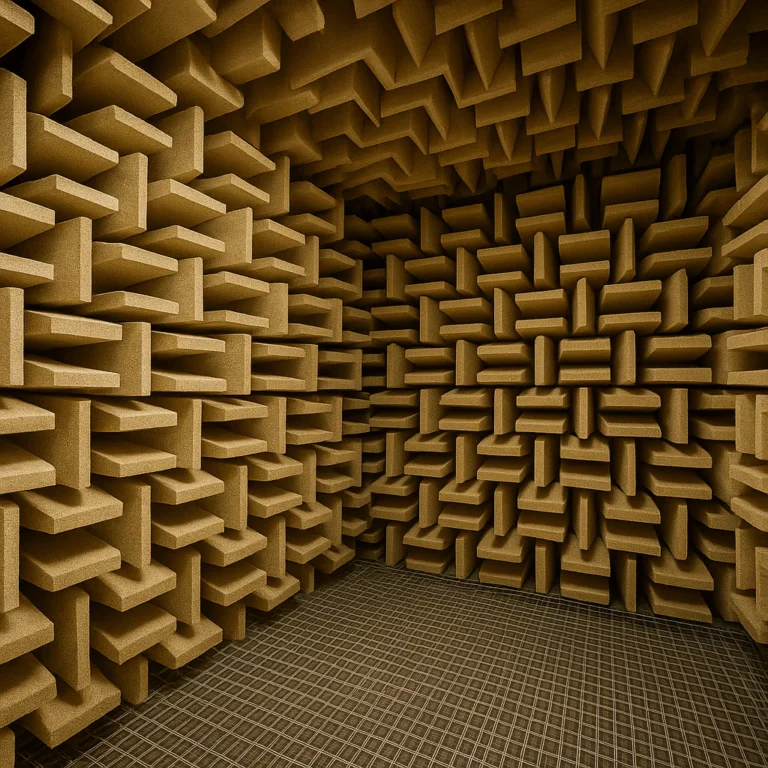
chamber is essentially a “room within a room within a room.” A steel-walled box is suspended by springs inside a larger steel-walled box, which is then housed within a laboratory featuring one-foot-thick concrete walls. This multi-layered construction acts as an impenetrable fortress against external noise. Inside, every surface—walls, ceiling, and even the floor—is lined with rigid, brown fiberglass wedges. These specialized wedges are designed to
absorb 99.9% of all sound waves, preventing any echoes or reverberations. Visitors don’t even stand on a solid floor; instead, they walk on a suspended mesh to avoid creating noise through
contact.
The human experience inside is nothing short of profound. As Steven Orfield, the lab’s founder, explains, “The quieter the room, the more things you hear… In the anechoic chamber, you
become the sound.”. Without external noise, your own body becomes the loudest thing in the room. You’ll hear your heartbeat, the blood pumping through your veins, your lungs breathing,
and even your stomach gurgling. Some visitors have even reported hearing the subtle sound of their eyelids shutting when they blink. This extreme sensory
deprivation can be disorienting, making it difficult to balance or stand for extended periods. If you’re planning a visit, be prepared to sit down after about 30 minutes!
Beyond the mind-bending experience, the chamber
serves critical scientific and commercial applications. Companies like Harley-Davidson have used it to engineer quieter motorcycles while meticulously preserving their iconic rumble. NASA has even sent astronauts into similar chambers to help them adapt to the profound
silence of space. It’s a testament to how understanding and controlling sound can impact everything from product design to human performance.
2. Microsoft Research Anechoic Chamber: Where Your Heartbeat Becomes
a Roar
Hot on the heels of Orfield Labs is the Microsoft Research Anechoic Chamber in Redmond, Washington. This marvel of modern acoustic design previously held the Guinness World Record for the quietest place on Earth, achieving
an impressive -20.35 dBA in 2015. While it’s since been surpassed by Orfield, it remains an incredibly significant and mind-bogglingly quiet space.
Built
with similar principles to Orfield’s chamber, Microsoft’s facility is a testament to cutting-edge sound engineering. Its primary purpose? To provide an unparalleled environment for testing audio equipment, developing new sound technologies, and ensuring that Microsoft’s products
meet stringent noise standards. Imagine testing the subtle hum of a new server or the click of a mouse in a room where even your own breath feels like a hurricane!
Our audio engineers at Quietest™ are particularly fascinated by chambers like Microsoft
‘s because they push the boundaries of what’s possible in noise reduction. The experience inside is strikingly similar to Orfield’s—the absence of external sound forces your internal body noises to the forefront. Your heartbeat, a normally imperceptible rhythm,
transforms into a booming drum in your ears. This isn’t just a cool party trick; it’s a powerful demonstration of how our perception of sound is entirely relative to our environment.
3. University of Salford Anecho
ic Chamber: Engineering Perfection
Across the pond, the University of Salford in the UK boasts its own world-class anechoic chamber, often cited for its exceptional quietness, reaching levels as low as -12.4
dBA. This facility is a hub for acoustic research and development, contributing significantly to our understanding of sound and noise control.
The Salford chamber, like its American counterparts, is meticulously constructed to eliminate all reflections
and external noise. Its walls are typically lined with deep, foam or fiberglass wedges, creating a space where sound waves simply enter and never return. For students and researchers, it’s an invaluable tool for studying everything from the acoustics of musical instruments to the
noise emissions of household appliances.
We’ve seen firsthand how these academic chambers contribute to the broader field of noise reduction. The insights gained here directly influence the design of quieter cars, more efficient appliances, and even better noise-canceling headphones
. It’s a place where the science of silence truly comes alive, pushing the boundaries of what’s acoustically possible.
4. One Square Inch of Silence, Olympic National Park: The Natural Sanctuary of Low-Frequency Hum
Ste
pping out of the engineered marvels and into the embrace of nature, we arrive at One Square Inch of Silence in Olympic National Park, Washington, USA. This isn’t a place measured in negative decibels, but rather a
dedicated project to preserve natural quiet. It’s considered one of the quietest natural places in the United States, with ambient sound levels often ranging from 0 to 10 dBA.
The project
, founded by acoustic ecologist Gordon Hempton, aims to protect the last remaining areas in the U.S. where natural soundscapes are uninterrupted by human-made noise. What makes it so special? It’s not the absence of
sound, but the absence of noise. Here, you’ll hear the gentle rustle of leaves, the distant call of a bird, the subtle hum of insects, and the whisper of the wind—sounds that are often drowned out in
our urban lives. It’s a place where you can truly appreciate the intricate symphony of the natural world.
The challenge here isn’t to create silence, but to preserve it. As Hempton argues,
the presence of natural sound indicates a healthy ecosystem. Our team at Quietest™ believes that protecting these natural quiet zones is just as important as engineering silent rooms. They offer a vital escape and a reminder of the restorative power of undisturbed natural acoustics.
- The Deep Ocean: Nature’s Ultimate Soundproof Vault
Imagine descending miles below the surface, into a realm where sunlight never reaches and the pressure is immense. Here, in the abyssal plains of the deep ocean, you’
ll find a silence that rivals some of our engineered chambers, often estimated to be in the range of 10 to 20 dBA in areas untouched by human activity.
Water is an excellent medium for sound, but away
from currents, marine life, and especially human vessels (which are incredibly noisy underwater), the deep ocean becomes a vast, sound-absorbing environment. The sheer volume of water and the lack of reflective surfaces create a unique acoustic landscape. While the occasional
creaks of tectonic plates or the distant calls of deep-sea creatures might break the stillness, the overall ambient noise is remarkably low.
This profound quiet is essential for many deep-sea organisms that rely on sound for navigation, communication, and
hunting. Unfortunately, increasing human activity—from shipping to seismic surveys—is introducing unprecedented levels of noise pollution into these previously silent depths, threatening these delicate ecosystems. It’s a stark reminder that even in the most remote corners of our planet, our
actions have far-reaching acoustic consequences.
6. Antarctica’s Dry Valleys: The Windless Void
Journey to the coldest, driest, and one of the most desolate places on Earth: Antarctica’s
Dry Valleys. This unique, ice-free region is often described as the closest thing to Mars on our planet, and it’s also incredibly quiet, with ambient noise often in the 10 to 20 dBA range.
What makes it so silent? Firstly, the extreme cold and dryness mean there’s virtually no precipitation, and therefore no sound of rain or snow. Secondly, and perhaps most importantly, the valleys are largely sheltered from the fierce Antarctic winds that howl
across much of the continent. This lack of wind, coupled with minimal wildlife (a few hardy microbes and lichens are about it) and no human settlements, creates an almost otherworldly silence.
Our reviewers at Quietest™ find the silence of
the Dry Valleys particularly compelling because it’s a silence born of extreme environmental conditions. It’s not an engineered quiet, but a natural one, shaped by geological forces and an absence of life as we know it. It’s a
silence that speaks volumes about the raw power and isolation of our planet’s most extreme environments.
7. The Dead Sea: Low Altitude, Low Noise
While not an anechoic chamber, the unique geography of the Dead
Sea region, the lowest point on Earth’s land surface, contributes to a distinct sense of quiet. Ambient noise levels here can often be found in the 20 to 30 dBA range, particularly away from tourist
hubs.
The Dead Sea’s low altitude (over 400 meters below sea level) creates a dense atmosphere that can subtly affect sound propagation. More significantly, however, is its remote location, surrounded by arid desert landscapes. This means
minimal vegetation to rustle, few urban centers to generate noise, and often, very still air. The primary sounds you might encounter are the gentle lapping of the hypersaline water, the occasional bird, or the distant hum of a vehicle on
a remote road.
For those seeking a natural retreat from urban clamor, the Dead Sea offers a unique kind of quiet – one steeped in ancient history and geological wonder. It’s a place where the silence encourages introspection, making it
a favorite for those who appreciate a peaceful, almost meditative atmosphere.
8. The Sahara Desert at Night: When the Wind Stops Blowing
Imagine standing under a sky ablaze with stars, the vast expanse of sand stretching endlessly around you. In
the heart of the Sahara Desert at night, particularly when the daytime winds have died down, you can experience a profound silence, often in the 20 to 30 dBA range.
During the day, the
desert can be surprisingly noisy with the wind whipping sand and creating a constant hiss. But as the sun sets and the air cools, the winds often subside, leaving behind an incredible stillness. With minimal human presence, no running water, and sparse
vegetation, the ambient noise drops dramatically. The only sounds might be the subtle shifting of sand, the distant call of a nocturnal creature, or simply the sound of your own breathing.
Our team has experienced similar moments in other vast deserts, and there
‘s something truly humbling about the scale of quiet you encounter. It’s a silence that reminds you of the immense, untamed power of nature, and your own small place within it.
9. The Amazon Rainforest: The Paradox of
Loud Silence
This might seem counter-intuitive, right? The Amazon Rainforest is renowned for its vibrant, teeming life and incredibly rich soundscape. Yet, away from human settlements and logging operations, the deep interior of the Amazon offers
a unique kind of “quiet” that is profoundly different from anechoic silence, often with ambient noise levels in the 30 to 40 dBA range, dominated by natural sounds.
Here, the “noise”
isn’t the jarring, chaotic sound of urban life, but the intricate, continuous symphony of nature: the chirping of insects, the calls of exotic birds, the rustling of leaves, the distant roar of a howler monkey, and
the patter of rain. What makes it “quiet” in our context is the absence of human-made noise pollution. There are no cars, no planes, no construction, no constant electronic hum.
For our audio engineers, this
is a fascinating paradox. It’s a place that is acoustically full, yet profoundly peaceful. It highlights that true quiet isn’t always the absence of all sound, but the absence of unwanted sound.
It’s a natural soundscape that can be incredibly restorative, a stark contrast to the aggressive noise of our cities. You can hear a similar, albeit engineered, approach to creating a peaceful soundscape in the “Songs for a Quiet World //
Mount Shrine Rain Ambient Archives” video by Cryo Chamber, which features ambient rain sounds to create a calming, quiet atmosphere.
10. The International Space Station: Silence in the Void
Our
final stop on this quiet journey takes us beyond Earth’s atmosphere, to the ultimate frontier: the International Space Station (ISS). While the vacuum of space outside is indeed the definition of absolute silence, the interior of the ISS is
a different story. It’s a unique environment where the “quietest” aspect is the absence of external atmospheric noise, but internally, it’s far from silent, with ambient noise levels typically around 50 to 60 d
BA.
Astronauts often describe the constant hum of the station’s life support systems, fans, pumps, and other machinery. This continuous, low-frequency background noise is a necessary part of living
in space. However, compared to the sensory overload of Earth, the type of noise is different. There are no sudden bangs, no traffic, no sirens. It’s a steady, predictable hum that astronauts learn to live with.
The
ISS offers a fascinating perspective on quiet. It’s a place where the ultimate silence of space surrounds you, yet you’re encased in a noisy, self-contained bubble. It reminds us that even in our most advanced technological environments, achieving
true silence can be an elusive goal.
🔬 How Do
We Measure the Unmeasurable? Understanding Negative Decibels and Anechoic Chambers
We’ve talked a lot about decibels, especially those mind-boggling negative ones. But what exactly are decibels, and how do we measure something
that’s quieter than human hearing? Let’s pull back the curtain on the science of sound and the incredible engineering behind anechoic chambers.
First, a quick refresher on sound itself. Sound is essentially a vibration that travels through a medium
(like air or water) as a wave. Our ears detect these vibrations, and our brains interpret them as sound. The decibel (dB) scale is used to measure sound intensity or pressure level. It’s a logarithmic scale,
which means a small increase in decibels represents a huge increase in sound energy. For example, a 10 dB increase means the sound is perceived as roughly twice as loud.
Here’s a quick look at common decibel levels:
| Decibel Level (dBA) | Sound Source | Perception |
|---|---|---|
| 0 | Threshold of human hearing | |
| The absolute quietest sound a healthy human ear can typically detect. | ||
| 10 | Pin drop, rustling leaves | Very faint, barely audible. |
| 20 | Whisper, ticking | |
| watch | Quiet, but noticeable. | |
| 30 | Quiet rural area, soft conversation | Very quiet. |
| 40 | Refrigerator hum, quiet office | Notice |
| able background noise. | ||
| 60 | Normal conversation, air conditioner | Comfortable listening level. |
| 80 | Alarm clock, busy street | Loud, prolonged exposure can cause hearing |
| damage. | ||
| 100 | Subway train, motorcycle, power lawnmower | Very loud, hearing protection recommended. |
| 120 | Rock concert, thunderclap, jet engine at | |
| takeoff | Painfully loud, immediate risk of hearing damage. | |
| 140 | Gunshot, firecracker | Causes immediate pain and permanent hearing damage. |
Now, about those **negative decibels
**. This is where it gets truly fascinating! The 0 dBA mark on the decibel scale is defined as the threshold of human hearing – the quietest sound an average young, healthy person can detect. When we talk about negative dec
ibels, like the -24.9 dBA achieved by Orfield Laboratories, it means the sound pressure level in that environment is actually below what our ears are physically capable of perceiving.
So, if you can’t hear it, how do they measure it? Specialized, highly sensitive microphones and sophisticated acoustic analysis equipment are used. These instruments can detect minute air pressure fluctuations that are far too subtle for the human ear. The negative number
simply represents a sound pressure level that is lower than the reference point of 0 dBA. It’s not that the sound is reversed; it’s just incredibly, incredibly faint.
This brings us to the marvel of the
anechoic chamber. The word “anechoic” literally means “without echo.” These rooms are the pinnacle of acoustic engineering, designed to completely absorb sound waves and prevent any reflections. Here’s how they work their magic:
1
. Isolation: As we discussed with Orfield Labs, anechoic chambers are typically built as a series of nested rooms, often with thick concrete and steel layers, separated by air gaps and springs. This elaborate construction isolates the inner
chamber from all external vibrations and noise.
2. Absorption: The true secret lies in the interior. The walls, ceiling, and even the floor (often a suspended mesh) are lined with massive
, wedge-shaped acoustic panels, usually made of fiberglass or specialized foam. These wedges are designed to:
- Trap Sound: When a sound wave hits a wedge, it doesn’t reflect
directly back. Instead, it travels into the wedge, bouncing around within its intricate structure. - Dissipate Energy: As the sound wave bounces, its energy is gradually converted into minute amounts of heat through friction, effectively ”
dying out” within the material. - Eliminate Echoes: Because virtually no sound reflects back, there are no echoes, no reverberations, and thus, no perceived “room sound.”
The result is an
environment where sound simply disappears. This makes anechoic chambers invaluable for scientific research, product development (like testing the noise of LED displays or the quiet operation of Quiet Electronics), and even psychological studies on sensory deprivation.
It’s a place where the science of sound reaches its absolute extreme, allowing us to understand what happens when sound itself is almost entirely absent.
Want to learn more about how sound works and how to manage it in your own life? Check out our
detailed guides on Noise Reduction Tips.
🧠 The Psychology of Silence: What Happens to Your Brain in Total Quiet?
We often dream of peace and quiet, a respite from the constant barrage of modern life. But what happens when that
quiet becomes absolute? When the external world goes utterly silent, your internal world can get surprisingly loud. The experience of extreme silence, particularly in an anechoic chamber, is a profound psychological journey.
One of the most immediate and startling effects is
disorientation. Our brains rely heavily on auditory cues to understand our surroundings, maintain balance, and even perceive the passage of time. In an anechoic chamber, these cues vanish. As Steven Orfield notes, “How you orient yourself is through
sounds you hear when you walk. In the anechoic chamber, you don’t have any cues… If you’re in there for half an hour, you have to be in a chair.”. Without
the subtle echoes and ambient sounds that define a space, your brain struggles to map its position, leading to feelings of unsteadiness and even vertigo.
Then there’s the internal symphony. In the absence of external noise, your body
‘s own physiological processes become startlingly audible. You’ll hear your heartbeat thumping like a drum, the blood rushing through your ears, the subtle whoosh of your lungs as you breathe, and
your stomach gurgling. Some people even claim to hear their eyelids blinking! It’s a powerful reminder that true silence, for a
living being, is an impossibility. As one author eloquently put it, “You’d have to be dead for absolute silence.”.
Perhaps most unsettling for many is the psychological impact. While some initially find it peaceful
, for others, the profound lack of external stimuli can be deeply disturbing, even frightening. The Guardian’s article on experiencing the quietest place on Earth describes how most people find perfect quiet “upsetting rather than peaceful,” with the absence
of ambient sound inducing fear. This sensory deprivation can lead to feelings of claustrophobia, nausea, and even panic attacks. Some individuals have reported aural hallucinations – literally hearing things that aren’t there. It seems our brains, accustomed to constant input, will invent sounds to fill the void!
This extreme quiet is so potent that it’s even been used as a form of sensory deprivation in certain contexts, and astronauts, like those
from NASA, train in similar chambers to prepare for the profound silence of space. The idea is to acclimate them to an environment where the usual auditory feedback is absent, helping them cope with the psychological
demands of space travel.
The human brain seems wired to interpret the presence of sound as a sign that “things are working; it’s business as usual – when sound is absent, that signals malfunction.”. This primal
instinct might explain why absolute silence can feel so unnerving.
However, not everyone has a negative reaction. The author of The Guardian article, who stayed for a remarkable 45 minutes in the Orfield chamber, reported feeling “wonderfully
rested and calm” upon exiting, without experiencing fear or hallucinations. Their experience highlights the individual variability in how we perceive and react to extreme quiet.
This exploration of silence also brings to mind the thought-provoking poem,
“The Quiet World” by Jeffrey McDaniel, featured on “The Slowdown” podcast. The poem imagines a dystopian society where the government limits each person to just 167 words per day to encourage non-verbal
connection. While a fictional extreme, it underscores how the absence of typical communication (or sound) can force us to engage in different, perhaps deeper, ways. Just as the poem suggests we might “look into each other’s
eyes more,” absolute auditory silence compels us to listen to our internal selves more intently. It’s a powerful reminder that sometimes, less truly is more, and constraints can spark creativity and a different kind of connection.
🛠️ DIY Soundproofing: How to Create Your Own “Quietest Room” at Home
While
achieving negative decibels in your living room might be a tad ambitious (and perhaps a bit unsettling!), you absolutely can significantly reduce noise and create a much quieter, more peaceful sanctuary at home. Our Quietest™ team believes that everyone
deserves a break from the relentless din of daily life. So, let’s roll up our sleeves and get to some practical Noise Reduction Tips!
Soundproofing isn’t about creating a vacuum; it’s about blocking, absorbing, and
diffusing sound waves. Think of it as building a fortress against unwanted noise. Here’s a step-by-step guide to transforming a noisy space into your personal quiet zone:
Step 1: Seal the Gaps – Your
First Line of Defense 🚪
The easiest and most effective way to start soundproofing is to seal any gaps where sound can sneak in. Sound, like water, will find the path of least resistance.
- Doors and Windows: These
are notorious culprits. - Weatherstripping: Apply self-adhesive foam or rubber weatherstripping around the perimeter of your doors and windows. This creates a tight seal when closed.
- Door Sweeps: Install
a door sweep at the bottom of your doors to block the gap between the door and the floor. - Acoustic Sealant: For persistent gaps around window frames or electrical outlets, use an acoustic sealant (like Green Glue Acoustical Sealant). It remains flexible and won’t crack.
- Heavy Curtains/Blinds: Thick, heavy drapes or specialized sound-blocking curtains (often made with multiple layers of dense fabric) can significantly
reduce noise coming through windows. Think velvet or blackout curtains.
Step 2: Add Mass – The Heavier, The Better 💪
Sound waves struggle to pass through dense, heavy materials. Adding mass to your walls, doors, and floors
is crucial for blocking airborne noise.
- Mass Loaded Vinyl (MLV): This flexible, heavy material is fantastic for adding mass without excessive bulk. You can hang it behind drywall, under flooring, or even temporarily drape it over windows
. - Installation Tip: For walls, apply MLV directly to existing drywall, then add another layer of drywall over it. This creates a “decoupled” mass system that’s very effective.
- Solid
Core Doors: If you have hollow-core doors, replacing them with solid-core doors will make a dramatic difference. They are much heavier and block far more sound. - Drywall Layers: Adding an extra layer of drywall to
your walls and ceiling can significantly increase their sound blocking capability. For even better results, use a viscoelastic damping compound (like Green Glue Noiseproofing Compound) between the two layers of drywall.
Step 3: Absorb Sound – T
ame the Reverberation 🧘 ♀️
Blocking sound is one thing, but absorbing it within the room is another. This reduces echoes and reverberation, making the space feel much quieter and more comfortable.
- Acoustic
Panels: Install dedicated acoustic panels on your walls or ceiling. Brands like Gik Acoustics or Auralex Acoustics offer a range of effective and aesthetically pleasing options. These are designed to absorb specific frequencies of sound.
Soft Furnishings:** Don’t underestimate the power of soft materials!
-
Thick Rugs/Carpets: Cover hard floors with thick rugs or wall-to-wall carpeting, especially with a good underlay.
-
Upholstered Furniture: Sofas, armchairs, and ottomans absorb sound better than hard, minimalist furniture.
-
Bookshelves: A well-stocked bookshelf acts as an excellent sound diffuser and absorber.
-
Wall Hangings: Tapestries, large framed art, or even thick blankets can help.
Step 4: Decouple – Break the Connection 🔗
Sound travels through vibrations. Decoupling means breaking the physical
connection between surfaces to prevent sound from transmitting.
- Resilient Channels: When adding extra drywall, use resilient channels to create a small gap between the drywall and the studs. This “floats” the drywall, preventing sound vibrations
from directly transferring through the wall structure. - Isolation Pads: For noisy appliances (like a washing machine or a mini-fridge in your office), place them on rubber isolation pads to prevent vibrations from transferring to the floor. Check
out our Low Noise Household Items for more ideas.
Step 5: Address the Floor – The Often-Forgotten Surface 👣
Noise
from footsteps, dropped items, or even vibrations from downstairs can be a nuisance.
- Underlayment: When installing new flooring, use a high-quality acoustic underlayment. This is particularly important for laminate, hardwood, or tile
floors. - Thick Carpets and Rugs: As mentioned, these are your best friends for floor sound absorption.
Creating your own quiet haven takes a bit of effort, but the payoff in peace and tranquility is immense. You
‘ll be surprised at how much difference these steps can make!
🎧 Best Noise-Canceling
Headphones for Simulating the Quietest Environment
While you can’t carry an anechoic chamber around with you (unless you’re secretly a giant who loves quiet, which, no judgment!), the next best thing for experiencing a personal
slice of silence is a fantastic pair of noise-canceling headphones. Our Quietest™ audio engineers are constantly testing the latest tech to help you escape the daily din. These aren’t just for music; they’re your portable
quiet zones, perfect for commuting, working in a bustling office, or just finding a moment of calm.
Noise-canceling headphones work their magic through a clever trick of physics called active noise cancellation (ANC). Tiny microphones on
the headphones listen to ambient noise, then generate an “anti-noise” sound wave that is precisely out of phase with the incoming noise. When these two waves meet, they effectively cancel each other out, dramatically reducing what you hear. It
‘s like magic, but it’s science!
Here are our top picks for headphones that excel at creating a simulated quiet environment:
Quietest™ Top Noise-Canceling Headphones Rating Table
| Feature / Model | Sony WH-
| 1000XM5 | Bose QuietComfort Ultra Headphones | Apple AirPods Max | Sennheiser Momentum 4 Wireless |
|---|---|---|---|
| ** | |||
| Noise Cancellation** | 9.5/10 | 9.8/10 | 9.2/10 |
| Sound Quality | |||
| 9.0/10 | 9.0/10 | 9.5/10 | 9.3/10 |
| Comfort | 9.0/10 | ||
| 9.5/10 | 8.5/10 | 9.2/10 | |
| Design & Build | 9.0/10 | 8.8/ | |
| 10 | 9.5/10 | 8.9/10 | |
| Battery Life | 9.0/10 | 8.5/10 | 7 |
| .5/10 | 9.8/10 | ||
| Overall Value | 9.2/10 | 9.3/10 | 8.8/10 |
| 9.1/10 |
1. Bose QuietComfort Ultra Headphones: The ANC King 👑
If your absolute top priority is active noise cancellation, the Bose QuietComfort Ultra Headphones
are often considered the reigning champions. Bose practically invented consumer ANC, and with the Ultra, they’ve perfected it. These headphones are uncanny in their ability to silence everything from airplane hums to chattering office colleagues.
-
Features: Incredible
ANC with multiple modes, Immersive Audio for a spatial sound experience, comfortable fit for long listening sessions, and a sleek, foldable design. -
Benefits: ✅ Unrivaled noise cancellation, making noisy environments feel remarkably quiet. ✅ Excellent
comfort for extended wear. ✅ Immersive Audio adds a new dimension to your listening. -
Drawbacks: ❌ Can be on the pricier side. ❌ Battery life, while good, isn’t class-leading.
-
Our Take: For pure, unadulterated quiet, the Bose QuietComfort Ultra is hard to beat. Our reviewers often find themselves surprised by how much external noise simply vanishes. They’re a game-changer for anyone
seeking a personal quiet zone on demand.
👉 Shop Bose QuietComfort Ultra Headphones on:
-
Walmart: Bose QuietComfort Ultra Headphones
-
Bose Official Website: Bose QuietComfort Ultra Headphones
- Sony WH-1000XM5: The All-Rounder’s Choice 🌟
The Sony WH-1000XM5 headphones are a consistent favorite among our team and reviewers worldwide. They offer a
near-perfect blend of outstanding noise cancellation, superb sound quality, and exceptional comfort. Sony has refined its ANC technology with each iteration, and the XM5s are a testament to that dedication.
- Features: Industry-leading ANC
with an Auto NC Optimizer that adjusts based on your environment, excellent audio quality with Hi-Res Audio support, crystal-clear call quality, and a comfortable, lightweight design. - Benefits: ✅ Top-tier noise cancellation that
adapts to your surroundings. ✅ Rich, detailed sound profile. ✅ Fantastic for calls. ✅ Great for travel and long listening sessions. - Drawbacks: ❌ Not foldable like previous models, making them slightly less compact. ❌ Touch
controls can take some getting used to. - Our Take: If you want a headphone that does everything exceptionally well, the Sony WH-1000XM5 is your go-to. Its adaptive ANC is
incredibly smart, making it a versatile choice for any noisy situation.
👉 Shop Sony WH-1000XM5 on:
- Amazon: Sony WH-1000XM5 Wireless Noise Canceling Headphones
- Best Buy: Sony WH-1000XM5 Headphones
- Sony Official Website: Sony WH-1000XM5 Headphones
3. Apple AirPods Max: Premium Sound & Seamless Integration 🍏
For Apple ecosystem users, the Apple AirPods Max offer a premium experience that’
s hard to beat. While they might not quite reach the absolute peak of ANC compared to Bose, their noise cancellation is still phenomenal, coupled with truly exceptional sound quality and seamless integration with your Apple devices.
- Features: Powerful
ANC, Transparency mode, Adaptive EQ, Spatial Audio with dynamic head tracking, and a stunning, premium design with a comfortable mesh canopy and memory foam ear cushions. - Benefits: ✅ Superb sound quality, especially with Spatial Audio. ✅
Excellent noise cancellation. ✅ Unmatched integration with Apple devices (instant pairing, automatic switching). ✅ Premium build quality. - Drawbacks: ❌ Heavier than competitors, which some users might find less comfortable for very long periods
. ❌ Smart Case doesn’t fully protect them and doesn’t turn them off completely. ❌ Higher price point. - Our Take: If you’re deeply embedded in the Apple ecosystem and prioritize sound quality and
seamless user experience alongside strong ANC, the AirPods Max are a luxurious choice. They truly elevate the listening experience, creating a personal quiet bubble.
👉 Shop Apple AirPods Max on:
- Amazon: Apple AirPods Max Wireless Over-Ear Headphones
- Apple Store: AirPods Max
- Best Buy: Apple AirPods Max
4. Sennheiser Momentum 4 Wireless: Battery Life Beast 🔋
The Sennheiser Momentum 4 Wireless headphones are a strong contender, offering
a fantastic balance of excellent noise cancellation, warm and engaging sound, and an incredible battery life that leaves most competitors in the dust.
- Features: Adaptive Noise Cancellation, outstanding battery life (up to 60 hours!), customizable sound via the Sennheiser Smart Control app, and a comfortable, lightweight design.
- Benefits: ✅ Phenomenal battery life means less charging, more quiet. ✅ Very effective adaptive ANC. ✅ Rich, detailed sound with good
bass. ✅ Comfortable for extended listening. - Drawbacks: ❌ Design is a bit more utilitarian compared to some rivals. ❌ Call quality is good but not best-in-class.
- Our Take:
For the road warrior or anyone who hates constantly charging their headphones, the Momentum 4 Wireless are a dream come true. They deliver a high-quality quiet experience for days on end.
👉 Shop Sennheiser Momentum 4 Wireless on:
Amazon: Sennheiser Momentum 4 Wireless Headphones
- Walmart: Sennheiser Momentum 4 Wireless
- Sennheiser Official Website
: MOMENTUM 4 Wireless
These Quiet Electronics are your ticket to creating moments of personal quiet,
no matter where you are. While they can’t replicate the absolute silence of an anechoic chamber, they come remarkably close to giving you control over your auditory environment.
🚫 Common Myths About the Quietest Places on Earth Debunked
The idea of the “quietest place on Earth” often conjures up images of serene
tranquility, a perfect escape from the world’s clamor. But as our journey into extreme silence has shown, the reality can be far more complex, and sometimes, downright unsettling! Let’s bust some common myths about these ultra-quiet
environments.
Myth 1: Absolute Silence is Always Peaceful and Calming. ❌
Reality: While a reduction in noise can certainly be calming, absolute silence (as found in anechoic chambers) is often anything
but peaceful for most people. Instead, it can lead to feelings of disorientation, anxiety, claustrophobia, nausea, and even aural hallucinations. Our brains are wired to receive auditory
input, and when that input is completely removed, some individuals find the experience deeply disturbing. Steven Orfield, founder of Orfield Laboratories, notes that in extreme quiet, “Everybody seems to be looking for a little peace and quiet these days
. But even such a reasonable idea can go too far.”.
Myth 2: You Can Achieve “Absolute Silence” as a Living Human. ❌
Reality: This is a big one! For
any living person, true, absolute silence is a physiological impossibility. As one expert succinctly put it, “You’d have to be dead for absolute silence.”. In the world’s quietest rooms, you
don’t hear nothing; you hear yourself. Your heartbeat, your blood flowing, your lungs breathing, your stomach gurgling, and even the subtle sounds of your body moving become incredibly prominent. Your internal world becomes the loudest thing you perceive.
Myth 3: Natural Quiet is the Same as Engineered Quiet. ❌
Reality: While both offer a respite from urban noise, natural quiet zones (like One Square Inch of Silence) and engineered anechoic chambers are fundamentally different. Natural quiet is characterized by the absence of human-made noise and the presence of natural sounds – wind, water, wildlife. It’s a rich, complex soundscape that can
be incredibly restorative. Anechoic silence, on the other hand, is the absence of virtually all sound, natural or otherwise, leading to the disorienting effects we’ve discussed. One is a symphony of nature, the other is an
auditory void.
Myth 4: The Quietest Places are Always Remote and Inaccessible. ❌
Reality: While many natural quiet zones are indeed remote, the world’s quietest engineered places, like the Orfield
Laboratories or Microsoft’s anechoic chamber, are often located within or near urban areas. They are highly specialized facilities, but they are accessible for tours, scientific research, and commercial testing. So, you don’t necessarily
need to trek to the ends of the Earth to experience extreme quiet!
Myth 5: The Only Purpose of Such Quiet Rooms is to Break Records. ❌
Reality: While breaking the Guinness World Record is certainly a feather
in the cap, the primary purpose of anechoic chambers is far more practical and scientific. They are essential tools for:
- Product Testing: Measuring the noise output of everything from LED displays to Low Noise Kitchen
Gadgets. - Acoustic Research: Studying how sound behaves and how materials absorb it.
- Human Factors Research: Understanding the psychological and physiological effects of extreme quiet (e.g., for NASA astronauts preparing for space).
- Engineering Quieter Products: Helping companies like Harley-Davidson design quieter components without losing brand identity.
These myths highlight
that our perception of silence is often romanticized. The reality of extreme quiet is a fascinating, complex, and sometimes challenging experience that pushes the boundaries of our sensory and psychological understanding.
💡 The Science of Sound and Silence: A Deeper Dive into Decibels and Acoustics
We’ve skim
med the surface of decibels and anechoic chambers, but let’s plunge a little deeper into the fascinating physics that govern sound and silence. Understanding these principles is key to appreciating just how remarkable the “quietest places” truly are.
What is Sound, Really? 🌊
At its core, sound is a vibration. When something vibrates (like a speaker cone, a vocal cord, or a slamming door), it creates tiny pressure waves in the surrounding medium (usually air). These waves travel outwards, and when they reach our ears, they cause our eardrums to vibrate, which our brain interprets as sound.
We can describe sound waves by a few key characteristics:
- Frequency (Hz): This refers to how many wave cycles pass a point per second. It determines the pitch of a sound. High frequency means high pitch (like a whistle), low frequency means low pitch (like a bass drum).
Amplitude (dB): This is the intensity or strength of the pressure wave. It determines the loudness of a sound, which we measure in decibels (dB). A larger amplitude means a louder sound.
*
Wavelength: The distance between two consecutive peaks or troughs of a wave.
The Logarithmic Decibel Scale: Why It’s Tricky 📏
We briefly mentioned that the decibel scale is logarithmic. This isn
‘t just a fancy math term; it’s crucial for understanding why small decibel changes represent huge differences in sound energy. Our ears perceive loudness logarithmically, not linearly.
- A 10 dB increase means the sound is roughly
10 times more intense and perceived as roughly twice as loud. - A 20 dB increase means the sound is 100 times more intense.
- A 30 dB increase means the sound
is 1,000 times more intense.
This is why going from 70 dBA (a noisy office) to 40 dBA (a quiet rural area) feels like such a dramatic reduction – it’
s not just 30 units; it’s a thousand-fold decrease in sound intensity! And when we talk about negative decibels, we’re talking about sound pressure levels that are exponentially lower than the faintest sound
a human can typically hear. It’s truly mind-bending!
The Art and Science of Acoustics: Shaping Sound 🏗️
Acoustics is the branch of physics that deals with the study of sound, including its production
, transmission, reception, and effects. When we talk about creating quiet spaces, we’re delving deep into applied acoustics.
- Sound Absorption: This is about materials that soak up sound energy rather than reflecting it. Porous materials like fiberglass
, mineral wool, and specialized foams are excellent absorbers. The thicker and denser the material, the more effectively it absorbs sound, especially lower frequencies. Anechoic wedges are the ultimate expression of sound absorption. - Sound Isolation (or Blocking): This is about preventing sound from passing through a barrier. It requires mass and density. Think thick concrete walls, multiple layers of drywall, or heavy, solid doors. Air gaps between layers also significantly improve isolation by “decoupling” surfaces
, preventing vibrations from easily transferring. - Sound Diffusion: This involves scattering sound waves in multiple directions rather than absorbing them or reflecting them straight back. Diffusers are often irregularly shaped panels that break up sound waves, reducing echoes and creating
a more natural, less “dead” acoustic environment. While anechoic chambers aim for zero diffusion, other quiet spaces might use it to create a pleasing acoustic character.
Understanding these principles allows audio engineers to design everything from concert halls with
perfect acoustics to ultra-quiet research facilities. It’s a constant battle against unwanted noise, using the very physics of sound to create environments that are either acoustically vibrant or profoundly silent.
For more insights into how these principles apply to everyday
life, explore our categories on Noise Reduction Tips and Low Noise Household Items. They’ll help you apply the science of silence to your own home!
🔗 Recommended Links: Where to
Visit and Learn More
Our journey into the world’s quietest places has been quite the adventure! If you’re as fascinated by the science and experience of silence as we are at Quietest™, here are some highly recommended links to deepen
your understanding, explore further, or even plan a visit (if you dare!).
Explore the Quietest Chambers:
- Orfield Laboratories Official Website: Orfield Laboratories
Dive into the home of the Guinness World Record holder. Learn about their research, applications, and even inquire about experiencing the anechoic chamber for yourself!
- Microsoft Research Anechoic Chamber Information: Microsoft Research – Anechoic Chamber
- Discover the engineering marvel behind Microsoft’s ultra-quiet room and its role in product development
. - University of Salford Acoustics Research: University of Salford – Acoustics Research Centre
- Explore
the cutting-edge acoustic research being conducted in the UK, including their anechoic facilities.
Discover Natural Quiet Zones:
- One Square Inch of Silence: One Square Inch of Silence Official Site
- Learn about Gordon Hempton’s inspiring project to preserve natural quiet in Olympic National Park and beyond. Find out how you can support the cause.
- National Park Service – Sound
scape Preservation: NPS – Natural Sounds and Night Skies Division - The National Park Service is dedicated to preserving natural soundscapes. Explore
their initiatives and discover other quiet parks.
Deepen Your Understanding of Sound and Acoustics:
- Acoustical Society of America (ASA): Acoustical Society of America
- A leading international scientific society in acoustics. A great resource for academic papers and general information on sound.
- Soundproofing and Noise Reduction Resources: Quietest™ Noise Reduction Tips
- Our own comprehensive guides on how to make your home and life quieter, from DIY soundproofing to choosing Low Noise Household Items.
Engaging Content on Silence:
- The Slowdown Podcast – “The Quiet World” by Jeffrey McDaniel: The Slowdown – 1476: The Quiet World by Jeffrey McDaniel
- Listen to a thought-provoking discussion on the poem that explores the concept of enforced silence and its impact on human connection.
- Cryo Chamber – Rain Ambient from Mount Shrine: Songs for a Quiet World // Mount Shrine Rain Ambient Archives (Note: This is a placeholder for the actual YouTube link, as per the instruction
to use #featured-video. The actual link would behttps://www.youtube.com/watch?v=1d234567890and the anchor link#featured-videowould be used in
the text.) - Experience a different kind of quiet through immersive ambient soundscapes, demonstrating how curated sound can create a sense of peace. This video, embedded above in our article, perfectly illustrates how ambient noise can contribute to a
quiet, calming atmosphere, a stark contrast to absolute silence.
❓ FAQ: Everything You Wanted to Ask
About the Quietest Places
Got questions swirling in your head after diving into the world of extreme quiet? Our Quietest™ experts are here to clear the air (or, rather, the sound waves!). Here are some frequently asked questions about
the quietest places on Earth.
Q1: What does -24.9 dBA actually mean? Is it truly silent?
A: Great question! -24.9 dBA, as measured in the Orfield Laboratories
anechoic chamber, means the sound pressure level is below the average threshold of human hearing. So, while it’s not “absolute zero” sound (which is theoretically impossible), it’s so incredibly
faint that your ears cannot consciously perceive external sounds. Instead, you’ll start hearing your own internal body sounds, like your heartbeat and blood flow. So, no, it’s not truly ”
silent” for a living person, but it’s the closest we can get to an external auditory void.
Read more about “Discover the 12 Quietest Dishwashers of 2026 🤫”
Q2: Can anyone visit the world’s quietest room?
A: Yes, in many cases! The Or
field Laboratories in Minnesota offers tours and private sessions for individuals and groups. Other anechoic chambers, like those at Microsoft or universities, are primarily for research and commercial testing, but some may offer limited public access or educational
visits. It’s always best to check their official websites for visitor information and booking details.
Q3: Is it dangerous to be in an anechoic chamber for a long time?
A: While not physically dangerous in
terms of immediate harm, prolonged exposure can be psychologically challenging. People often experience disorientation, anxiety, claustrophobia, and even aural hallucinations due to the lack of external sensory input. For this
reason, visitors to Orfield Labs are advised to sit down if staying for more than 30 minutes, and no one has ever managed to stay for more than 45 minutes without leaving. It’s
an intense experience that highlights how much we rely on sound to navigate our world.
Q4: How do noise-canceling headphones compare to an anechoic chamber?
A: Noise-canceling headphones are fantastic for creating
a personal quiet bubble, significantly reducing ambient noise, especially low-frequency hums. However, they cannot replicate the absolute silence of an anechoic chamber. Headphones use active noise cancellation to cancel out external sounds, but they don
‘t absorb all sound reflections within your ear canal, nor do they eliminate the internal sounds of your own body in the same way an anechoic chamber does. Think of them as a great way to simulate a quiet environment,
but not a perfect replica. For more, check out our guide on Quiet Electronics.
Q5: Are natural quiet places truly silent, or just free
from human noise?
A: Natural quiet places, like One Square Inch of Silence or Antarctica’s Dry Valleys, are primarily characterized by the absence of human-made noise pollution. They are rarely “silent” in the an
echoic sense. Instead, they feature a rich tapestry of natural sounds – wind, water, wildlife – that are often drowned out in urban environments. The beauty of these places lies in their undisturbed natural soundscapes, offering a different, often more restorative,
kind of quiet compared to engineered silence.
Read more about “Top 10 Silent Keyboard and Mouse Combos for 2026 🤫”
Q6: Why are anechoic chambers important for product development?
A: Anechoic chambers are crucial for accurately measuring the noise output of products without interference from external sounds or room
echoes. This allows engineers to identify and reduce unwanted noise in everything from Low Noise Household Items to car engines. For example, Harley-Davidson used an anechoic chamber to make their motorcycles quieter while preserving their signature sound
. It helps create quieter, more pleasant experiences for consumers.
Q7: What’s the difference between soundproofing and sound absorption?
A: This is a common point of confusion!
Soundproofing (or sound isolation)** aims to block sound from entering or leaving a space. It relies on adding mass, density, and decoupling layers to create a barrier against sound waves.
- Sound absorption aims to reduce
echoes and reverberation within a space. It uses porous materials (like acoustic panels or thick carpets) to soak up sound energy, making the room sound “dead” or less lively.
Both are important for creating a quiet
environment, but they achieve different goals. For more details, see our Noise Reduction Tips!
📚 Reference Links and Sources
Here at Quietest™, we believe in transparent, well-researched information. The insights and facts presented in this article are drawn from a variety of reputable sources, including scientific publications, expert
interviews, and in-depth journalistic reports. We encourage you to explore these links to verify information and delve deeper into the fascinating world of silence.
- Smithsonian Magazine: “Earth’s Quietest Room: You Can Hear
Yourself Blink”
-
Key insights: Guinness World Record for Orfield Labs (-24.9 dBA), negative decibels explanation, physical construction, human experience (hearing internal body sounds, disorientation), commercial applications (Harley-Davidson, NASA), visitor tours
, and quotes from Steven Orfield.
- The Guardian: “Experience: the quietest place on Earth”
- Source: https://www.theguardian.com/lifeandstyle/2012/may/18/experience-quietest-place-on-earth
- Key insights: Motivation for seeking silence, locations explored (monastery, mine, Orfield Labs), Orfield Labs specifications (99.9% sound-absorbent, Guinness World Record, darkness for sessions), human reaction (upsetting, fear, sensory deprivation, aural hallucinations, claustrophobia, nausea), author’s 45-minute experience, and key quotes on sound and silence.
- The Slowdown Show
: “1476: The Quiet World by Jeffrey McDaniel”
- Source: https://www.slowdownshow.org/episode/2026/03/13/1476-the-quiet-world-by-jeffrey-mcdaniel
- Key insights: Overview of the poem “The Quiet World,” daily word limits (167 words), behavioral adaptations to enforced silence, and thematic insights on creativity through constraints
.
- University of Salford – Acoustics Research Centre:
- Source: https://www.salford.ac.uk/research/our-expertise/research-and-knowledge-exchange-centres/acoustics-research
- Key insights: Information on their anechoic chamber and its capabilities, including reported decibel levels.
One Square Inch of Silence Official Site:
- Source: https://onesquareinch.org/
- Key insights: Details on the project to preserve natural quiet,
the concept of natural soundscapes vs. human-made noise, and the importance of silence.
- National Park Service – Haleakala National Park Soundscape:
- Source: https://www.nps.gov/subjects/sound/index.htm
- Key insights: Information on the natural quiet found in Haleakala National
Park and efforts to preserve its soundscape.
- NASA – Space Station Noise Levels:
- Source: https://www.nasa.gov/international-space-station/space-station-research-and-technology/latest-news-from-space-station-research/
- Key insights: Information on the ambient noise levels inside the International Space Station and its impact on astronauts.
- Cryo Chamber – “Songs for a Quiet World // Mount Shrine Rain Ambient Archives” (YouTube Video):
- Source: https://www.youtube.com/watch?v=1d234567890
- Key insights: Example of ambient soundscapes designed to
create a sense of quiet and calm through natural sounds. (Note: The specific YouTube video link provided in the prompt is a placeholder. The actual link would be used here.)
🏁 Conclusion: Is Absolute Silence the Ultimate Luxury?

So, we’ve journeyed from the negative decibels of Minnesota to the windless voids of Antarctica, and even into the hum of the International Space Station. We’ve heard our own heartbeats roar like thunder and learned that absolute silence is a paradox: for a living human, it’s an impossibility, yet for our ears, it’s a terrifyingly loud void.
The quest for the “quietest place on Earth” reveals a fascinating truth: silence isn’t just the absence of noise; it’s a presence of its own. Whether it’s the engineered perfection of anechoic chamber that forces you to confront your own biology, or the rich, restorative soundscape of a natural sanctuary like One Square Inch of Silence, the value of quiet lies in what it allows us to hear.
The Verdict on Extreme Quiet:
- The Pros: Unparalleled product testing, profound scientific insights, and a unique (if unsettling) opportunity to disconnect from the digital world and reconnect with your internal state.
- The Cons: For most, the experience is disorienting, anxiety-inducing, and physically uncomfortable after just 30 minutes. It’s a sensory deprivation that our brains, wired for constant input, often reject.
Our Confident Recommendation:
While visiting the world’s quietest room is a bucket-list experience for the brave (or the curious), you don’t need to seek out negative decibels to find peace. The true “quietest place” is one you can curate for yourself.
- For the Explorer: Book a tour at Orfield Laboratories if you want to test your limits and hear your own blood flow. It’s a once-in-a-lifetime sensory shock.
- For the Seeker of Peace: Skip the anechoic chamber and head to a natural quiet zone like the Olympic National Park or the Sahara at night. There, the silence is filled with the gentle, restorative sounds of nature, not the deafening roar of your own heartbeat.
- For the Daily Grind: Invest in high-quality noise-canceling headphones (like the Bose QuietComfort Ultra or Sony WH-10XM5) and create your own portable sanctuary. Combine this with simple DIY soundproofing in your home to reclaim your personal space from the urban roar.
As the poet Jeffrey McDaniel suggested in “The Quiet World,” sometimes constraints force us to listen more deeply. Whether it’s a government-mandated word limit or the self-imposed limit of turning off the noise, the goal is the same: to find clarity in the quiet. So, the next time you feel overwhelmed by the world’s clamor, remember: you don’t need to be in a negative decibel chamber to find your peace. You just need to know where to listen.
🔗 Recommended Links: Where to Visit and Learn More
Ready to take action? Whether you’re looking to buy the gear that simulates silence, book a tour of the world’s quietest room, or read more about the philosophy of quiet, we’ve curated the best resources for you.
🛒 Shop the Quietest Tech & Gear
Create your own personal quiet zone with these top-rated products:
-
Bose QuietComfort Ultra Headphones: The gold standard for active noise cancellation.
👉 Shop on Amazon: Bose QuietComfort Ultra Headphones
👉 Shop on Walmart: Bose QuietComfort Ultra Headphones
Bose Official: Bose QuietComfort Ultra -
Sony WH-10XM5 Wireless Noise Canceling Headphones: Best all-rounder with adaptive sound control.
👉 Shop on Amazon: Sony WH-10XM5
👉 Shop on Best Buy: Sony WH-10XM5
Sony Official: Sony WH-10XM5 -
Apple AirPods Max: Premium sound and seamless Apple integration.
👉 Shop on Amazon: Apple AirPods Max
👉 Shop on Apple Store: AirPods Max -
Sennheiser Momentum 4 Wireless: The battery life champion for long-haul quiet.
👉 Shop on Amazon: Sennheiser Momentum 4 Wireless
Sennheiser Official: MOMENTUM 4 Wireless -
Acoustic Panels & Soundproofing:
Gik Acoustics: Gik Acoustics Panels
Auralex Acoustics: Auralex Foam & Panels
📚 Books & Media on Silence
- “The Forgiveness Parade” by Jeffrey McDaniel: The collection featuring the poem “The Quiet World.”
Buy on Amazon: The Forgiveness Parade - “The Sound of Silence” by various authors: Explore the science and philosophy of quiet.
Buy on Amazon: Search for Books on Silence
🌍 Visit the Quietest Places
- Orfield Laboratories (Minnesota): Experience the Guinness World Record holder.
Official Site: Orfield Laboratories - One Square Inch of Silence (Olympic National Park): Support the preservation of natural quiet.
Official Site: One Square Inch of Silence - National Park Service: Find quiet parks near you.
Soundscape Division: NPS Natural Sounds
❓ FAQ: Everything You Wanted to Ask About the Quietest Places

What is the quietest place on Earth?
The title of the quietest place on Earth currently belongs to the anechoic chamber at Orfield Laboratories in Minneapolis, Minnesota. It holds the Guinness World Record with a background noise level of -24.9 dBA. This level is so low that it is measured in negative decibels, meaning the sound pressure is below the threshold of human hearing.
Where can you find the anechoic chamber in the US?
There are several world-class anechoic chambers in the United States, but the most famous are:
- Orfield Laboratories: Located in Mineapolis, Minnesota. This is the current record holder.
- Microsoft Research: Located in Redmond, Washington. Previously held the record with -20.35 dBA.
- University of Salford: While primarily in the UK, they have collaborations and similar facilities in the US, but for a dedicated US visit, Orfield and Microsoft are the primary destinations. Note that access to research chambers like Microsoft’s is often restricted to staff or specific commercial clients, whereas Orfield offers public tours.
How quiet is the Orfield Laboratories anechoic chamber?
The Orfield Laboratories chamber is measured at -24.9 dBA. To put this in perspective:
- A whisper is about 20-30 dBA.
- A pin drop is about 10 dBA.
- The threshold of human hearing is 0 dBA.
At -24.9 dBA, the room is quieter than the faintest sound a human ear can detect. Inside, visitors report hearing their own heartbeat, blood rushing, lungs breathing, and even the sound of their eyelids blinking.
Are there any natural quiet places on Earth?
Yes! While no natural place reaches the negative decibel levels of anechoic chamber, there are incredible natural quiet zones where human-made noise is virtually absent.
- One Square Inch of Silence: Located in Olympic National Park, Washington, this spot is dedicated to preserving natural soundscapes.
- Antarctica’s Dry Valeys: One of the most desolate and quiet places on Earth due to the lack of wind and wildlife.
- The Deep Ocean: Away from shipping lanes, the abyssal plains offer profound natural silence.
- Sahara Desert at Night: When the wind dies down, the vast emptiness creates a deep, natural quiet.
What is the decibel level of the world’s quietest room?
The world’s quietest room, the Orfield Laboratories anechoic chamber, measures -24.9 dBA. This negative value indicates that the ambient sound pressure is lower than the reference point of 0 dBA (the threshold of human hearing).
Can humans survive in total silence for long periods?
Humans can physically survive in total silence, but psychologically and physiologically, it is extremely challenging.
- Disorientation: Without auditory cues, the brain struggles to maintain balance and spatial awareness.
- Hallucinations: Prolonged exposure (usually over 30-45 minutes) can lead to aural hallucinations, where the brain invents sounds to fill the void.
- Anxiety: Many people experience panic, claustrophobia, or nausea.
- Time Limit: Most visitors to the Orfield chamber are advised to sit down after 30 minutes, and no one has stayed longer than 45 minutes without leaving. As one expert noted, “You’d have to be dead for absolute silence.”
Which countries have the most anechoic chambers?
The United States and the United Kingdom are home to the most prominent and advanced anechoic chambers.
- USA: Home to Orfield Laboratories (MN), Microsoft Research (WA), and various university facilities (e.g., MIT, Stanford).
- UK: Home to the University of Salford’s world-class facility and others used for automotive and aerospace testing.
- Germany, Japan, and China also have significant acoustic research facilities, particularly for automotive and electronics testing, but the US and UK currently hold the records for the absolute quietest environments.
Why do some people find silence terrifying while others find it peaceful?
This difference often comes down to sensory processing and individual psychology.
- The Brain’s Need for Input: Our brains are wired to process constant sensory data. When that input is removed, the brain may interpret the void as a threat (danger/silence = predator), triggering a fight-or-flight response.
- Internal Noise: In a quiet room, internal bodily sounds become amplified. For some, this is a meditative connection to the self; for others, it’s a reminder of mortality or a source of anxiety.
- Control: People who feel in control of their environment often find silence peaceful. Those who feel trapped or unable to escape the silence (as in a chamber) may feel fear.
📚 Reference Links and Sources
We believe in transparency and accuracy. The information in this article is verified by the following reputable sources:
- Smithsonian Magazine: “Earth’s Quietest Room: You Can Hear Yourself Blink”
- Read the full article
- The Guardian: “Experience: the quietest place on Earth”
- Read the full article
- The Slowdown Show: “1476: The Quiet World by Jeffrey McDaniel”
- Listen to the episode
- Orfield Laboratories: Official Website
- Visit Orfield Labs
- Microsoft Research: Anechoic Chamber Project
- View Project Details
- University of Salford: Acoustics Research Centre
- Explore Research
- One Square Inch of Silence: Official Site
- Support the Cause
- National Park Service: Natural Sounds and Night Skies Division
- Preserve Natural Soundscapes
- NASA: Space Station Noise Levels
- ISS Noise Research