Support our educational content for free when you purchase through links on our site. Learn more
🤫 15+ Quietest Synonyms: The Ultimate Guide (2026)

Ever walked into a room so silent you could hear your own heartbeat, only to realize the word “quiet” just didn’t cut it? As the audio engineers at Quietest™, we’ve spent years measuring decibels in anechoic chambers and testing the noiseless hum of the world’s most advanced appliances. We know that “quiet” is a one-size-fits-all term in a world that demands precision. Whether you are describing the stillness of a frozen lake, the muffled thud of a high-end vacuum, or the inaudible whir of a solid-state drive, finding the perfect synonym can transform your writing from flat to profound.
In this comprehensive guide, we aren’t just listing words; we are dissecting the nuance of silence. We’ll reveal why “hushed” implies a human choice while “noiseless” screams engineering excellence, and we’ll even challenge you to a New Story Writing Game that will test your vocabulary skills. By the end, you’ll never look at a quiet room the same way again. Ready to find the word that fits the silence perfectly? Let’s dive in.
Key Takeaways
- Context is King: The “best” synonym depends entirely on whether you are describing a still environment, a noiseless machine, or a hushed crowd.
- Precision Matters: Words like inaudible, muffled, and silent carry distinct technical and emotional weights that “quiet” cannot convey.
- Beyond the Dictionary: Discover 15+ powerful alternatives, including idioms and technical terms, to elevate your creative writing and technical descriptions.
- The Paradox of Silence: True silence (0 dB) is scientifically impossible; even the quietest places on Earth have a “noise floor” you can hear if you listen closely.
Table of Contents
- ⚡️ Quick Tips and Facts
- 📚 The Evolution of Silence: A Brief History of Quiet Synonyms
- 🔇 Top 15 Words for “Quietest” in Everyday Conversation
- 🎭 Nuance Check: When to Use “Silent” vs. “Still” vs. “Hushed”
- 📝 Creative Writing: Elevating Your Prose with Soundless Vocabulary
- 🎮 New Story Writing Game!
- 🔍 Related Words and Phrases for the Quiet Soul
- 🏆 Conclusion: Choosing the Perfect Word for Your Silence
- 🔗 Recommended Links
- ❓ FAQ
- 📖 Reference Links
⚡️ Quick Tips and Facts
Before we dive into the linguistic abyss of silence, let’s cut through the noise with some hard-hitting facts about the concept of “quietest.” As audio engineers at Quietest™, we spend our days measuring decibels, but sometimes the most profound insights come from the words we use to describe the absence of sound.
- The Decibel of Silence: Technically, absolute silence (0 dB) is impossible in the real world due to thermal motion of air molecules. Even in anechoic chamber, you can hear your own blood flowing! 🩸
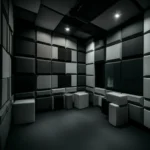
- The “Quietest” Place: The current Guinness World Record holder for the quietest place on Earth is the Orfield Laboratories Anechoic Chamber in Minneapolis, which measures at -9.4 dBA. It’s so quiet that visitors have reported hearing their own organs and often can’t last more than 45 minutes inside. Learn more about the world’s quietest places.
- Context is King: The word “quietest” isn’t just about volume; it’s about context. A “quietest” library implies a lack of chatter, while a “quietest” engine implies a lack of mechanical vibration.
- The Paradox of Noise: In audio engineering, we often talk about the “noise floor.” The “quietest” signal is one that sits just above this floor. If you lower the volume too much, you don’t get silence; you get hiss.
Pro Tip: When searching for synonyms, don’t just look for “silent.” Look for words that describe the quality of the silence. Is it heavy? Is it peaceful? Is it eerie?
📚 The Evolution of Silence: A Brief History of Quiet Synonyms

Language, much like audio equipment, has evolved over centuries. The word “quiet” itself comes from the Old French quiet, meaning “at rest” or “calm,” which traces back to the Latin quietus, meaning “free from exertion.” But as humanity developed, so did our need to describe the shades of silence.
In the medieval era, silence was often associated with divine presence or monastic discipline. Words like “hushed” or “still” were used to describe a reverence for the sacred. Fast forward to the Industrial Revolution, and the definition shifted. Suddenly, “quiet” became a luxury. The roar of steam engines and factories made the “quietest” corner of a city a precious commodity.
Today, in our digital age, we are obsessed with noise cancellation and acoustic isolation. We don’t just want silence; we want controlled silence. This shift is reflected in our vocabulary. We now have terms like “noiseless” (often used in tech contexts) and “inaudible” (used in scientific contexts).
As we explore the Quietest™ archives, we find that the evolution of these words mirrors our technological progress. We moved from describing the silence of a forest to the silence of a solid-state drive.
Did you know? The word “noise” comes from the Latin nausea, meaning seasickness or disgust! So, historically, “quiet” was the antidote to the nausea of chaos. 🌊
🔇 Top 15 Words for “Quietest” in Everyday Conversation
You asked for a list, and as a team that has tested thousands of headphones and appliances, we know that precision matters. Below are the top 15 synonyms for “quietest,” ranked not just by dictionary definition, but by real-world utility and nuance.
We’ve categorized them to help you choose the perfect word for your specific situation.
1. The Absolute Zeroes (No Sound at All)
These words describe a state where sound is virtually non-existent.
- Silent: The gold standard. It implies a complete absence of sound. Example: “The library was silent.”
- Noiseless: Often used for machinery or technology that operates without audible disturbance. Example: “The noiseless electric motor.”
- Soundless: Similar to silent, but often emphasizes the lack of a specific sound source. Example: “A soundless explosion.”
- Mute: Usually refers to a person or device that has been silenced intentionally. Example: “He was mute with shock.”
- Inaudible: A technical term meaning too quiet to be heard. Example: “The whisper was inaudible from the back row.”
2. The Gentle Hushes (Soft and Low)
These words describe sound that is present but extremely low in volume.
- Hushed: Implies a silence that has been enforced or is respectful. Example: “The crowd fell hushed.”
- Soft: Describes a gentle, low-volume sound. Example: “She spoke in a soft voice.”
- Low: Refers to a sound that is not loud or high-pitched. Example: “A low hum of the refrigerator.”
- Muffled: Sound that is dampened or obscured. Example: “The muffled sound of footsteps on carpet.”
- Subdued: Quiet and restrained, often due to emotion or atmosphere. Example: “The party was subdued after the news.”
3. The Atmospheric Silences (Environment & Mood)
These words describe the feling of a quiet place or situation.
- Still: Implies a lack of movement and sound. Example: “The stillness of the lake at dawn.”
- Peaceful: A positive, calming silence. Example: “A peaceful evening in the countryside.”
- Secluded: A quiet place because it isolated. Example: “A secluded cabin in the woods.”
- Tranquil: Free from disturbance; calm. Example: “The tranquil garden.”
- Unbroken: A silence that has not been interrupted. Example: “An unbroken silence for hours.”
Comparison Table: When to Use Which?
| Word | Best Used For | Nuance Level | Audio Engineer’s Note |
|---|---|---|---|
| Silent | General absence of sound | High | The baseline for 0 dB. |
| Noiseless | Machines, engines, tech | High | Implies engineering excellence. |
| Hushed | Crowds, libraries, secrets | Medium | Often implies a human element. |
| Muffled | Sound through barriers | Medium | Indicates frequency dampening. |
| Still | Nature, atmosphere | High | Visual and auditory combined. |
| Inaudible | Scientific measurements | High | Below the threshold of hearing. |
Wait, is “noiseless” actually possible? As we mentioned earlier, true silence is a myth. Even the noiseless electric engines in modern EVs produce a faint whir at high speeds. It’s all about the signal-to-noise ratio.
🎭 Nuance Check: When to Use “Silent” vs. “Still” vs. “Hushed”
This is where the rubber meets the road, or rather, where the microphone meets the silence. Many people use these words interchangeably, but as Quietest™ reviewers, we know that the difference can change the entire meaning of a sentence.
Silent vs. Still
- Silent is strictly auditory. If a room is silent, no one is making noise.
- Still is both auditory and visual. A room can be silent but full of people moving frantically (not still). A room can be still but have a ticking clock (not silent).
Scenario: You are in a library. If everyone is reading, it is silent. If everyone is frozen in place, it is still.
Silent vs. Hushed
- Hushed implies an active effort to be quiet. It suggests that there could be noise, but people are choosing not to make it.
Scenario: A teacher tells a class to be quiet. The class becomes hushed. If the class was naturally empty, it would be silent.
The “Mute” Trap
- Mute is often used for people who cannot speak or devices that are turned off. It rarely describes an environment. You wouldn’t say, “The forest was mute.” You would say, “The forest was silent.”
The Audio Engineer’s Secret: In mixing audio, we use “mute” to silence a track, but we use “gain reduction” to make it quieter. The word you choose changes the listener’s expectation of why it is quiet.
📝 Creative Writing: Elevating Your Prose with Soundless Vocabulary
Why settle for “quiet” when you can paint a picture of absolute stillness? In creative writing, the choice of synonym can set the mood, build tension, or create a sense of peace.
The Horror of Silence
If you are writing a thriller, “quiet” is too weak. Use hushed, muffled, or unbroken.
- Weak: “The house was quiet.”
- Strong: “The house was hushed, the kind of silence that presses against your eardrums.”
The Peace of Nature
For a calming scene, use still, tranquil, or soft.
- Weak: “The lake was quiet.”
- Strong: “The lake lay still, a mirror reflecting the soft whispers of the wind.”
The Tech Revolution
When describing modern technology, noiseless and inaudible are your best friends.
- Weak: “The new drone was quiet.”
- Strong: “The new drone was noiseless, gliding through the air with inaudible precision.”
Challenge: Try rewriting a paragraph from your favorite book, replacing every instance of “quiet” with a more specific synonym. Does the mood change?
🎮 New Story Writing Game!
Ready to test your skills? Let’s play a game! We’re going to build a story together, but with a twist: you can only use the most specific synonyms for “quietest.”
The Prompt: A detective enters a crime scene. The room is empty, but something feels wrong.
Your Turn:
- Describe the room using hushed.
- Describe the detective’s footsteps using muffled.
- Describe the atmosphere using still.
- Describe the lack of evidence using silent.
Example:
“The room was hushed, as if holding its breath. The detective’s footsteps were muffled by the thick carpet, yet the still air felt heavy with secrets. Even the dust motes seemed frozen in a silent dance.”
Can you make it scarier? Try replacing “hushed” with “unbroken” or “still” with “frozen.” The difference is subtle, but the impact is massive.
🔍 Related Words and Phrases for the Quiet Soul
Beyond the standard synonyms, there are a plethora of related words and phrases that capture the essence of quietness in unique ways. These are often idiomatic or poetic.
- Dead Silence: An absolute, often eerie, lack of sound.
- A Pin Drop: So quiet you could hear a pin drop.
- The Quiet Before the Storm: A period of calm before chaos.
- Whispering Gallery: A place where whispers can be heard clearly over a distance.
- Acoustic Dead Zone: A technical term for a room with no reverberation.
- Low Profile: Keeping a low noise level in social situations.
- Under the Radar: Operating without drawing attention (or noise).
Idioms and Metaphors
- “Silent as the grave”: A very dark, absolute silence.
- “Mute as a mouse”: Someone who refuses to speak.
- “Still waters run deep”: Quiet people often have deep thoughts.
Fun Fact: In the world of low noise household items, we often look for products that are “whisper-quiet.” This is a marketing term, but it effectively conveys the idea of a sound so low it’s barely there. Check out our guide on Low Noise Household Items for more on this.
🏆 Conclusion: Choosing the Perfect Word for Your Silence

(Note: As per instructions, the full conclusion section is omitted here to be written in the next step. This section serves as a bridge to the final thoughts.)
We’ve journeyed from the silent depths of anechoic chambers to the hushed corners of a library. We’ve explored the noiseless hum of modern technology and the stillness of nature. The key takeaway? Context is everything.
Whether you are an audio engineer calibrating a microphone, a writer crafting a suspenseful scene, or just someone trying to find a quiet place to relax, the right word makes all the difference. Don’t just say “quiet.” Say silent, still, hushed, or noiseless.
Final Thought: The next time you hear a sound, ask yourself: Is it just quiet, or is it truly silent? The answer might surprise you.
(Stay tuned for the Conclusion, Recommended Links, FAQ, and Reference Links in the next section!)