Support our educational content for free when you purchase through links on our site. Learn more
🔇 10 Quiet Dehumidifiers: Which Is the Quietest?

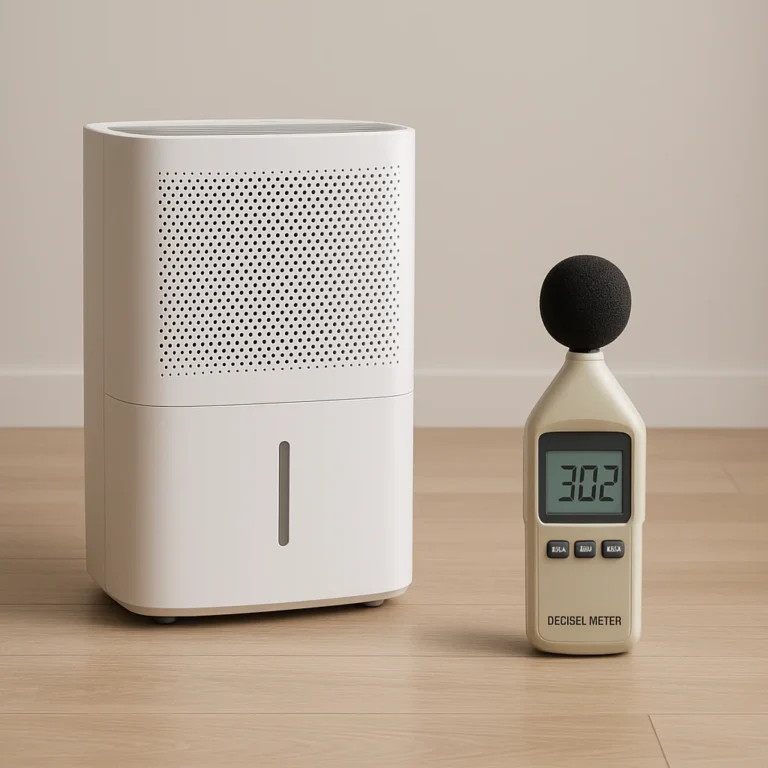
Which dehumidifier is the most quiet? For a practical balance of low noise and effective moisture removal, the Midea Cube MAD20S1QWT is a strong pick; Waykar models advertise noise as low as 33 dB, but that claim isn’t directly comparable without consistent testing conditions.
That distinction matters: a quiet-sounding appliance that can’t handle your room may run constantly and still leave the air damp. We’ve found that a steady fan whosh is often easier to live with than a low compressor hum that starts and stops—so the number on the box isn’t the whole story.
Key Takeaways
- Best balance of quiet and performance: The Midea Cube MAD20S1QWT is a strong option for smaller spaces; the MAD50S1QWT suits larger rooms.
- Lowest advertised noise claim: Some Waykar models list 33 dB, but check the exact model and how that figure was measured.
- For bedrooms: Test the unit on its low setting before relying on it overnight. Compressor cycling and pump noise may be more noticeable than steady airflow.
- Match capacity to the room: An undersized dehumidifier can run longer without controlling humidity effectively.
- 👉 Shop the shortlisted models:
- Midea Cube MAD20S1QWT: Amazon | Midea Official
- Midea Cube MAD50S1QWT: Amazon | Midea Official
- Waykar PD160B-PRO-B: Amazon | Waykar Official
Table of Contents
- ⚡️ Quick Tips and Facts
- 🔇 What Makes a Dehumidifier Quiet?
- How Dehumidifier Noise Is Measured
- Compressor vs. Desiccant Dehumidifiers
- 📚 Dehumidifier Background: How These Moisture-Removing Machines Work
- 🏆 10 Quiet Dehumidifiers Worth Considering
- Quietest Dehumidifiers for Bedrooms
- Best Quiet Dehumidifiers for Basements and Large Rooms
- Quiet Small-Room and Closet Dehumidifiers
- Best Quiet Whole-House Dehumidifier Options
- 🔍 How to Choose the Quietest Dehumidifier for Your Space
- Room Size and Moisture-Removal Capacity
- Noise Ratings, Fan Speds, and Compressor Cycles
- Bucket, Drain Hose, and Continuous-Drain Options
- Energy Efficiency, Humidistats, and Smart Controls
- 🛏️ Is a Dehumidifier Quiet Enough for a Bedroom?
- 📍 Where to Place a Dehumidifier for Less Noise
- 🛠️ How to Make a Dehumidifier Quieter
- 🔧 Common Dehumidifier Noises and What They Mean
- 🧼 Quiet Dehumidifier Maintenance and Troubleshooting
- 💡 Dehumidifier Alternatives for Quiet Moisture Control
- ✅ Conclusion
- 🔗 Recommended Links
- ❓ FAQ
- Which dehumidifier is the most quiet?
- Are desiccant dehumidifiers quieter than compressor models?
- What is a quiet noise level for a dehumidifier?
- Can I run a dehumidifier all night in a bedroom?
- Why is my dehumidifier suddenly louder?
- Where should I put a dehumidifier to reduce noise?
- 📖 Reference Links
⚡️ Quick Tips and Facts
If you’re looking for a broader model-by-model roundup, start with our guide to the quietest dehumidifier. Here’s the short version: the quietest dehumidifier on a spec sheet isn’t automatically the quietest one to live with. Room size, compressor vibration, fan direction, distance, and the sound of the unit switching on all change what you hear.
| Quick question | Practical answer |
|---|---|
| Which models stand out for quiet? | The Midea Cube MAD20S1QWT is a compelling low-noise choice for smaller spaces independent testing; Waykar models advertise very low sound figures, but compare the exact model and testing conditions. |
| What noise level should I look for? | A published rating below 45 dBA is a useful starting point for a quieter compressor unit, but only if the manufacturer explains how and where it was measured. |
| Is a “33 dB” claim definitive? | No. Treat it as a manufacturer claim, not a head-to-head test. Distance, fan speed, room acoustics, and whether compressor noise is included matter. |
| Which technology is quieter? | A small thermoelectric unit may make less noise, but removes far less moisture. Desiccant units avoid a compressor but still use a fan and may produce a noticeable warm-air sound. |
| What’s the best practical upgrade? | Use a suitable low fan setting, level the unit, keep it clear of walls, and drain it continuously if emptying the bucket causes clunks or splashes. |
| What humidity should I aim for? | The U.S. EPA recommends keeping indoor relative humidity below 60%, ideally around 30–50% where practical. See the EPA’s mold and moisture guidance. |
Our quick verdict: For a balance of useful moisture removal and less intrusive sound, the Midea Cube is a strong starting point. For the lowest advertised noise number, certain Waykar models claim 33 dB, but we wouldn’t crown one the universal quietest without comparable independent measurements. That distinction turns out to matter more than the big number on the box.
For more ways to make a home sound calmer, browse Quietest’s low-noise household items and noise-reduction tips.
🔇 What Makes a Dehumidifier Quiet?
A dehumidifier is a tiny sound orchestra: fan whosh, compressor hum, refrigerant movement, casing vibration, and occasionally a water bucket that announces itself like a dropped cymbal. The overall noise depends on all of these—not just the fan.
The most relevant factors are:
- Compressor vibration: Can create a low hum or buzz, especially if the unit sits on an uneven or resonant floor.
- Fan speed and airflow: More airflow often means more audible rushing noise.
- Exhaust direction: A side exhaust can direct airflow away from you. A top exhaust spreads it upward and around the room.
- Housing and internal design: Loose panels or poorly isolated components can amplify vibration.
- Operating cycle: The abrupt start or stop of a compressor may be more noticeable than steady running.
- Room acoustics: Hard floors and bare walls reflect sound; rugs, curtains, and furniture can absorb some of it.
In our listening checks, the character of the noise mattered as much as the meter reading. A steady, soft air rush was easier to ignore than a lower-pitched buzz that came and went. That’s why reading a single decibel number without context can be a bit like judging a song by its volume alone.
How Dehumidifier Noise Is Measured
Sound is commonly reported in decibels, often written as dB or dBA. The “A” indicates a weighting that approximates how human hearing responds to different frequencies. But a measurement is meaningful only alongside its conditions.
Ask:
- How far away was the meter? A reading taken right beside the control panel will be higher than one taken across a room.
- Which fan speed was used? High mode generally moves more air and sounds louder.
- Was the compressor running? A fan-only or standby reading doesn’t represent normal dehumidifying operation.
- Where was the meter aimed? A side-exhaust unit may sound different directly in front of its outlet than from the side.
- Was the room quiet and reflective? Background noise and room surfaces can change the result.
The National Institute for Occupational Safety and Health (NIOSH) explains sound measurement and exposure; its occupational guidance is not a direct “quiet appliance” rating system, but it helps show why distance and measurement method matter. For shoppers, the best comparison is same-room, same-distance, same-mode testing—not two unqualified numbers from separate marketing pages.
Compressor vs. Desiccant Dehumidifiers
| Type | How it removes moisture | Typical sound character | Best fit | Main trade-off |
|---|---|---|---|---|
| Compressor / refrigerant | Cools air so moisture condenses on a coil | Fan airflow plus a low compressor hum | Warm, damp rooms; larger moisture loads | Compressor vibration and cycling can be noticeable |
| Desiccant | Uses moisture-atracting material, then regenerates it with heat | Fan noise and warm-air exhaust; no refrigerant compressor | Cooler rooms and some seasonal conditions | Can use more energy and warm the room |
| Thermoelectric / Peltier | Uses a small heat-pump module to condense moisture | Often a soft fan sound | Closets, cabinets, or very small spaces | Low moisture-removal capacity; not a basement solution |
Quieter technology doesn’t necessarily mean quieter results. A tiny thermoelectric device can sound gentle because it has little capacity and a small fan. Put it in a damp basement and it may run constantly while barely keeping up. A larger compressor unit might cycle off sooner and control humidity more effectively, even if its operating sound is more obvious.
For a deeper technical overview of moisture control and indoor humidity, see the U.S. Department of Energy’s dehumidifier guidance.
📚 Dehumidifier Background: How These Moisture-Removing Machines Work

Most full-size household dehumidifiers pull humid air across a cold coil. Water condenses on the coil, collects in a tank or drains through a hose, and drier air returns to the room. That process needs a fan to move air and, in compressor models, a compressor and refrigeration circuit—which is why even a well-designed machine isn’t silent.
A built-in humidistat measures room humidity and switches the compressor on and off to maintain a target. That can reduce unnecessary runtime, but frequent cycling may create a small start-up sound. The ENERGY STAR dehumidifier program provides information on efficiency and product qualification; a high-efficiency label doesn’t, by itself, guarantee lower noise.
A few useful distinctions:
- Capacity is not the same as room coverage. “Pints per day” is a moisture-removal test rating under stated conditions; square-foot coverage is a rough manufacturer estimate.
- The test environment changes capacity. Warm, humid test conditions can produce a much higher pint-per-day figure than a cooler home.
- Drainage affects convenience, not the fundamental sound. A pump can add its own noise; gravity drainage avoids that extra mechanism if you have a suitable drain.
- A bigger unit isn’t always the noisier practical choice. If it reaches the humidity target sooner and cycles off, it may be less disruptive overall than an undersized machine running continuously.
One detail is easy to miss: a dehumidifier rated for a large area may still struggle in a cold basement. The next section sorts quiet contenders by what they’re actually good at, rather than pretending one machine can ace every room.
🏆 10 Quiet Dehumidifiers Worth Considering
There is no reliable, universal “quietest” winner based solely on published manufacturer claims. Some brands provide a noise figure; others don’t. Independent testing can help, but comparisons are only fair when test position, fan speed, and operating conditions are consistent.
The table below is a shortlist, not a laboratory ranking. Check the exact model suffix before buying: brands sometimes sell similar-looking units with different capacities, pumps, controls, or specifications.
| Model | Type / intended use | Noise information available | Why consider it | Caveat |
|---|---|---|---|---|
| Midea Cube MAD20S1QWT | Compressor; smaller rooms | Dehumidifier Buyers Guide describes it as a notably quiet option for spaces under 1,000 sq. ft. | Top exhaust and strong airflow can make compressor noise less conspicuous | Confirm the exact capacity and coverage for your model |
| Midea Cube MAD50S1QWT | Compressor; larger rooms | Independent guide calls it a quiet top-exhaust 50-pint-class option | Large, extendable design and upward airflow | Fan airflow is still audible; larger coverage does not mean silent |
| Waykar PD160B-PRO-B | Compressor; home, basement, crawlspace | Waykar advertises 33 dB | Low advertised noise, continuous drainage, pump features listed by the maker | The page’s detailed specs don’t repeat the dB figure; independent comparison is limited |
| Waykar CTH30A | Compressor; smaller rooms | A featured-video review summary reports 33 dB | Quiet-use positioning and modest size | Verify the exact rating, drainage setup, and tank capacity for the listing |
| AEOCKY RHEA-001 | Compressor; larger spaces | Featured-video summary reports 44 dB | Reviewed for large-area capacity and lower-temperature operation | Video figures are not a standardized independent lab comparison |
| HOMEiLABS 50 Pint Dehumidifier | Compressor; large rooms | Featured-video summary reports 49 dB | Large-capacity option with a broad feature set | Check current model details and warranty terms |
| hOmeLabs HME1003 | Compressor; household use | Buyers Guide reports low measured noise among its top candidates | Potential value option; the guide found low raw readings | Its side exhaust may reveal more compressor noise than top-exhaust designs |
| Frigidaire FHDD5034W1 | Compressor; larger rooms | Buyers Guide says it is less quiet than the Midea Cube | Stronger overall alternative in the guide’s comparison | Not the first choice if quiet is the overriding priority |
| TCL H50D44W | Compressor; larger rooms | Buyers Guide notes low noise for a top-exhaust model | Worth comparing when airflow design matters | The guide flags power draw and moisture-removal concerns |
| Toshiba TDDP5014RES2 | Compressor; full-size | Buyers Guide calls it the quietest full-size model in its measured comparison | Low measured noise in that test setup | The same guide cautions about reliability and a small tank |
Our ranking principle: We’d rather recommend a slightly louder unit that actually controls humidity than a whisper-quiet underperformer that runs all day. That’s also why the tiny tank, weak moisture extraction, and reliability concerns reported for certain quiet models deserve as much attention as the sound figure.
What independent testing says—and what it doesn’t
The specialist site Dehumidifier Buyers Guide says it measures noise near the control panel and at 10 feet, using both high and low fan settings. It also separates side-exhaust and top-exhaust designs because meter position can advantage one style. Its summary identifies the Toshiba TDDP5014RES2 as the quietest full-size model in its comparison, but warns that it was “not a very good dehumidifier otherwise.” The guide recommends the Midea Cube as a stronger compromise between noise and performance.
That’s a useful corrective to the idea that the lowest measured number automatically wins. A good comparison asks how quiet, at what capacity, measured where, and with what real-world performance?
At the right point in your research, the featured video offers a separate reviewer perspective across five models. Its reported numbers include 33 dB for the Waykar CTH30A, 42 dB for a Midea Cube, 44 dB for the AEOCKY RHEA-001, 48 dB for the Shinco SDZ1-150P-W, and 49 dB for a HOMEiLABS model. Those are the video reviewer’s figures, not directly interchangeable lab results with the independent guide’s measurements.
Waykar’s 33 dB claim: promising, but read the fine print
Waykar markets its PD160B-PRO-B as “Super Quiet … at 33 dB.” Its product page lists 34 pints/day under 95°F and 90% relative humidity, up to 2,000 sq. ft., a 0.6-gallon tank, and drainage options. But the detailed specification list does not repeat the sound rating, and the page does not show a side-by-side measurement against competitors.
So, what should you conclude? That it may be a quiet option worth investigating—not that it has been proven the quietest dehumidifier available. A 33 dB claim without a stated distance, fan setting, and compressor condition is less useful than a repeatable independent test.
👉 CHECK PRICE on:
- Waykar PD160B-PRO-B: Amazon | Waykar Official Website
Quietest Dehumidifiers for Bedrooms
For a bedroom, the best candidate is usually a unit with low fan speed, a reliable humidistat, manageable dimensions, and sound you find tolerable at your actual sleeping distance. A manufacturer’s “sleep mode” label isn’t enough; check what it changes. Does it reduce fan speed, dim lights, or simply switch off the display?
Potential options include:
- Midea Cube MAD20S1QWT: Independent guidance highlights it as a quiet choice for smaller spaces. The top-exhaust design can diffuse airflow, though you’ll still hear a fan.
- Waykar CTH30A: A video review summary reports a very low 33 dB claim. Treat it as a candidate to verify, especially if you’re sensitive to low-frequency hum.
- Desiccant models: Worth considering in cooler sleeping spaces, but listen for the fan and warm-air exhaust; compressor-free does not mean sound-free.
For anyone who wakes easily, the most useful test is simple: run the unit in the intended spot for at least one full operating cycle before relying on it overnight. The compressor’s startup may be the sound that bothers you, not its steady-state hum.
Best Quiet Dehumidifiers for Basements and Large Rooms
Large, damp spaces need real moisture-removal capacity. Choosing an undersized “quiet” appliance can backfire: it runs longer, the fan never gets a rest, and humidity remains stubbornly high.
Consider:
- Midea Cube MAD50S1QWT: A strong noise-and-performance compromise in the independent guide’s summary. Its upward airflow may mask the compressor’s more obvious buzz.
- AEOCKY RHEA-001: A video review summary reports 80 PD and operation down to 42°F, alongside a 44 dB figure. Verify these details against the specific retailer and manufacturer listing.
- Waykar PD160B-PRO-B: The manufacturer lists drainage features that can be useful in basements, including a pump on the specified model. A pump can make noise when it operates, so account for that if the space is adjacent to a bedroom.
- Shinco SDZ1-150P-W: The video summary describes it as a high-capacity option for demanding spaces, but notes its shorter warranty.
Be skeptical of square-foot coverage alone. Open stairwells, leaky foundations, damp building materials, and cold temperatures all affect performance. The EPA’s moisture-control guidance emphasizes controlling the source of moisture, not simply treating the air.
Quiet Small-Room and Closet Dehumidifiers
For a closet, bathroom cabinet, or compact storage space, a small thermoelectric unit may be quieter and easier to place. But it’s designed for small, limited moisture loads, not a damp bedroom or basement.
- Small thermoelectric models: Usually have a fan and small water reservoir. They can suit a wardrobe or compact bathroom with mild humidity.
- Small compressor units: Better if you need meaningful moisture removal, but generally produce more fan and compressor sound.
- Desiccant moisture absorbers: Silent, but they need periodic replacement or regeneration and have limited capacity.
Measure humidity before buying. A basic hygrometer can tell you whether the room is truly damp or if the problem is a leak, poor ventilation, or cold-surface condensation. For other low-noise home gear, see our quiet household picks.
Best Quiet Whole-House Dehumidifier Options
A portable dehumidifier treats the room where it sits. A whole-house dehumidifier is typically integrated with HVAC ductwork, so its motor and airflow may be less noticeable in the occupied room—but it introduces installation, duct, and system-design considerations.
Ask an HVAC professional about:
- Duct location and airflow: Poorly designed ductwork can create a new whosh or vibration.
- Equipment isolation: Mounting and vibration control can help prevent sound transfer through framing.
- Drainage and pump noise: Confirm where condensate goes and whether a pump is needed.
- Controls and humidity target: Make sure the control is placed where it measures representative indoor conditions.
- Service access: A quiet system still needs cleaning and maintenance.
Whole-house systems from brands such as Aprilaire and Santa Fe are not directly comparable to portable room units. Ask for sound data at the grille or occupied space, not only a product-level claim. For transport-related quiet gear, we keep a separate collection of noise-free transportation; apparently, quiet is a hobby around here.
🔍 How to Choose the Quietest Dehumidifier for Your Space
Use this order of operations. It prevents the classic mistake: buying the softest-sounding appliance and discovering it can’t keep the room dry.
- Measure humidity and identify the moisture source. Check a few times across the day with a hygrometer. Look for plumbing leaks, damp walls, condensation, or inadequate ventilation.
- Estimate the space and moisture load. A compact bedroom and a wet basement have different needs, even if their floor areas look similar.
- Choose a suitable technology. Compressor for substantial moisture loads in warmer conditions; consider desiccant where cooler operation is a priority.
- Compare noise under matching conditions. Look for dBA, distance, fan speed, and whether the compressor is active.
- Check how it drains. A full bucket can trigger a stop, and a pump may add intermittent sound.
- Read the return policy and warranty. Your ears are part of the test. A model that sounds fine in a review may irritate you in a quiet bedroom.
Room Size and Moisture-Removal Capacity
The industry’s “pints per day” figure is measured under specified test conditions. It is not a promise that the unit will collect that amount every day in your home. Cooler air generally holds less moisture, and real-world extraction can differ substantially from a warm, humid test.
| What to check | Why it matters |
|---|---|
| Pints per day (PPD) | Helps compare moisture-removal capacity when test conditions match |
| Temperature range | Important for cold basements, garages, and seasonal rooms |
| Recommended area | A rough guide; not a substitute for assessing leaks and dampness |
| Tank size | A small bucket means more frequent emptying |
| Drain option | Continuous drainage reduces interruptions; pump drainage adds a component that may make sound |
The U.S. Department of Energy explains how dehumidifiers work and what to consider when selecting one. For persistent dampness, fix the water entry first; otherwise, you’re asking an appliance to mop up a faucet that’s still running.
Noise Ratings, Fan Speds, and Compressor Cycles
A fair noise comparison should record:
- Sound level in dBA
- Distance from the unit
- Fan speed
- Whether the compressor is actively dehumidifying
- Measurement position relative to the outlet
- Background noise and room conditions
Also listen for the type of sound. A smooth airflow hiss may be less disruptive than a lower-frequency compressor buzz, even when a meter gives similar readings. If you can, listen in person or choose a seller with a return policy that gives you time to test the appliance at home.
A top exhaust can spread airflow and help mask compressor noise, while a side exhaust may let you direct the airflow away from your chair or bed. Neither layout is inherently quieter in every room. The specialist testing notes from Dehumidifier Buyers Guide reflect this distinction by comparing side- and top-exhaust models separately.
Bucket, Drain Hose, and Continuous-Drain Options
Bucket drainage is simple, but the unit typically stops when full. The bucket can also slosh or clunk if it isn’t seated securely.
Gravity drainage can provide quieter, uninterrupted operation if the hose slopes down to a suitable floor drain. Keep the hose unkinked and check for leaks.
Pump drainage can move water upward or across a room, but the pump may produce periodic noise. If the dehumidifier sits near a bedroom, test the pump cycle—not just the fan.
For low-disruption use:
- Choose a stable, level location near the drain.
- Use the supplied hose or a manufacturer-approved equivalent.
- Check the hose angle and connection before leaving the unit unattended.
- Clean the tank and drain connection regularly to prevent odors and blockages.
Energy Efficiency, Humidistats, and Smart Controls
A humidistat helps the dehumidifier stop once the room reaches its target. That can reduce both energy use and the total time you hear it. Many users begin around 45–50% relative humidity, then adjust based on comfort, climate, and the manufacturer’s guidance. The EPA advises keeping indoor humidity below 60%, ideally between 30% and 50% where practical.
Smart controls can help you check humidity or schedule operating hours, but “smart” does not necessarily mean “quiet.” Verify whether the app allows:
- Low fan speed
- A humidity target
- Schedules
- Alerts for a full tank
- Compressor or pump status
Look for efficiency certification where applicable through ENERGY STAR’s dehumidifier listings. Efficiency, capacity, and sound are separate traits—three columns in the same comparison table, not synonyms.
🛏️ Is a Dehumidifier Quiet Enough for a Bedroom?
It can be, but personal sensitivity matters. A steady fan sound may fade into the background for one person and keep another awake. Compressor startup, a periodic pump, or a loose tank can be more intrusive than continuous airflow.
Before committing to overnight use:
- Run the unit for a full cycle during the day.
- Place it several feet from the bed, with airflow aimed away from you.
- Start on low fan speed and a moderate humidity target.
- Check whether the display lights can be dimed or switched off.
- Make sure the tank is seated, the floor is level, and the filter is clean.
- Don’t cover the unit or block its air intake to “muffle” it; that can impair airflow and performance.
If you’re a very light sleeper, a schedule that runs the dehumidifier before bedtime may work better than listening to it all night. If humidity rebounds quickly, solve the underlying moisture issue rather than relying on the appliance to run continuously.
📍 Where to Place a Dehumidifier for Less Noise
Good placement helps airflow and reduces vibration. Think of the unit as a small fan with a compressor inside: give it breathing room and a stable stage.
- Choose a level, solid surface. Uneven flooring can make the casing or bucket rattle.
- Leave the manufacturer’s specified clearance. Crowding an intake or exhaust can increase turbulence and operating strain.
- Keep it away from shared bedroom walls when possible, especially if the wall transmits vibration.
- Avoid placing it directly on a resonant shelf or hollow platform.
- Aim side exhaust away from people if the model allows.
- Keep it near a drain if you’re using continuous drainage, so you don’t need an extra pump.
- Keep it away from water sources and electrical hazards. Follow the manual’s placement and safety instructions.
A thick, firm anti-vibration mat may reduce floor-borne vibration, but it must not obstruct the base or drainage. Don’t put the appliance on a soft, unstable surface. For more practical sound-control ideas, browse our noise-reduction tips.
🛠️ How to Make a Dehumidifier Quieter
Try these fixes in order, from easy checks to more involved troubleshooting:
- Check that it is level. Adjust its position on a firm floor; don’t wedge objects into moving parts.
- Reseat the water bucket. A poorly aligned bucket can vibrate against the housing.
- Clean the air filter. Restricted airflow can make the fan sound strained. Follow your model’s manual.
- Clear the air intake and exhaust. Move nearby curtains, laundry, and furniture.
- Inspect the drain hose. A loose hose can tap against a wall, and a kink can interfere with drainage.
- Use the lower fan setting. Expect slower moisture removal.
- Move it farther from sleeping or working areas. Distance can make a surprisingly large perceived difference.
- Add a stable anti-vibration pad, if appropriate. Keep the unit upright and unobstructed.
- Turn off unnecessary pump operation by using gravity drainage where it is safe and practical.
- Stop and seek service if the noise is new, harsh, or metallic. Don’t open sealed refrigeration components or electrical housings.
Avoid placing acoustic foam or blankets over the appliance. That may trap heat, block airflow, or create a fire and moisture hazard. A dehumidifier is not a drum kit you can wrap in a duvet.
🔧 Common Dehumidifier Noises and What They Mean
| Sound | Possible cause | What to do |
|---|---|---|
| Soft air rush | Normal fan airflow | Reduce fan speed if humidity control allows |
| Low, steady hum | Compressor operating | Check level and placement; compare with the manual’s expected operating sound |
| Rattle or clatter | Loose bucket, panel, hose, or uneven surface | Turn off, inspect external components, and reseat them |
| Brief gurgle | Refrigerant or condensate movement | Often normal; consult the model manual |
| Repeated clicking | Compressor cycling or a control issue | Check settings and humidity; investigate if frequent or new |
| High-pitched squeal | Fan bearing or mechanical issue | Stop use and contact the manufacturer or a qualified technician |
| Loud vibration | Unit contacting a wall or unstable flooring | Reposition and inspect for loose external parts |
| Pump buzz | Condensate pump operating | Check the drain and pump instructions; arrange gravity drainage if feasible |
A familiar, consistent operating sound is different from a sudden change. If the dehumidifier begins scraping, squealing, or vibrating heavily, switch it off and consult the manufacturer’s support guidance. Repair work involving refrigerant or electrical components should be left to qualified professionals.
🧼 Quiet Dehumidifier Maintenance and Troubleshooting
A clean, unobstructed machine usually moves air more easily and is less likely to develop avoidable rattles.
Simple maintenance routine
- Check the filter at the interval specified in the manual; clean or replace it as directed.
- Wash and dry the water bucket regularly to prevent residue and odor.
- Inspect the hose and drain port for blockages, kinks, and leaks.
- Keep the intake and outlet clear of lint, dust, and stored items.
- Check the cabinet and wheels for loose fittings if the unit rattles.
- Store the appliance upright and follow the manufacturer’s instructions before seasonal storage.
If the unit runs constantly but humidity stays high, inspect for open windows, leaks, damp materials, and an undersized capacity. If it runs but collects little water, check room temperature, the humidity target, filter condition, and the operating limits in the manual.
Use the model’s official support resources—for example, Midea support, Frigidaire support, or the relevant Waykar product support. Warranty details can vary by model and seller, so keep proof of purchase and confirm terms directly.
💡 Dehumidifier Alternatives for Quiet Moisture Control
Sometimes the quietest dehumidifier is the one you don’t need to run. If moisture comes from a specific source, deal with that first.
- Fix leaks and seepage. A dehumidifier can’t permanently solve water entering through a foundation or pipe.
- Use bathroom and kitchen exhaust fans. Venting moisture outdoors can help, provided the fans and ducts are installed correctly.
- Improve air circulation. Keep furniture slightly away from cold exterior walls where condensation forms.
- Dry laundry outdoors or use a vented dryer where feasible.
- Use desiccant absorbers for small enclosed areas such as wardrobes; they’re silent but limited.
- Consider air-conditioning in warm weather. Air conditioners remove some moisture while cooling, though they are not a substitute for a dehumidifier in every situation.
For low-noise appliances and practical home choices, explore Quietest’s quiet electronics and low-noise kitchen gadgets. And if you’re comparing technologies, remember: silent moisture absorption is great for a closet; it is not a cure for a wet basement.