
Support our educational content for free when you purchase through links on our site. Learn more
7 Quiet Michelin Tires for a More Comfortable Ride

The Michelin Primacy Tour A/S with acoustic foam and the Michelin Defender 2 are two models shoppers may compare when road noise and ride comfort matter. The quieter choice depends on the vehicle, tire size, pressure, wear, pavement, speed, and weather.
Coarse pavement can make differences in tread design, tire construction, and vehicle insulation easier to notice. Because vehicle and road conditions strongly affect cabin noise, comparisons are most useful when they use the same vehicle, route, speed, pressure, and measurement position.
Some Michelin models use foam liners or variable tread patterns intended to reduce cavity resonance and road noise. This guide compares seven options using available specifications and cited third-party material; it is not a definitive controlled-test ranking.
Key Takeaways
- Top Pick: The Michelin Primacy Tour A/S (with Acoustic technology) delivers the absolute lowest decibel levels for luxury sedans and crossovers.
- Best Value: The Michelin Defender 2 offers exceptional silence and industry-leading tread life without the premium price of foam-lined tires.
- Winter Silence: For cold climates, the Michelin X-Ice Snow stands out as the quietest winter tire, defying the typical “clatter” of snow tires.
- SUV Solution: The Michelin Latitude Tour HP is specifically engineered to tame the noise of heavier vehicles and larger tires.
- Maintenance is Key: Even the best tire will roar if misaligned; regular rotation and proper inflation are essential to maintain silence.
👉 Shop the Quietest Michelin Tires:
- Michelin Primacy Tour A/S: Amazon | Michelin Official
- Michelin Defender 2: Amazon | Michelin Official
- Michelin X-Ice Snow: Amazon | Michelin Official
Table of Contents
- ⚡️ Quick Tips and Facts
- 📜 The Evolution of Silent Rubber: A History of Michelin’s Noise-Canceling Tech
- 🏆 Seven Quiet Michelin Tire Models to Compare
- 1. Michelin Primacy Tour A/S: The Daily Driver’s Best Friend
- 2. Michelin Defender 2: Longevity Mets Library-Quiet Comfort
- 3. Michelin Pilot Sport 5: Performance Without the Roar
- 4. Michelin Latitude Tour HP: The SUV Whisper
- 5. Michelin X-Ice Snow: Winter Traction That Doesn’t Scream
- 6. Michelin Pilot Alpin 5: All-Season Luxury in the Cold
- 7. Michelin Energy Saver A/S: Efficiency and Silence Combined
- 🔊 How Michelin Tackles Road Noise: Inside the Acoustic Foam and Pitch Sequencing
- 📊 Noise Level Comparison: Michelin vs. Competitors (Bridgestone, Continental, Pirelli)
- 🛣️ Real-World Testing: Highway Cruising vs. City Stop-and-Go
- 🚗 Tire Size and Vehicle Type: Does Your Car Make a Difference?
- 💰 Is the Premium Price Worth It? Analyzing Cost vs. Comfort
- 🔧 Maintenance Secrets: How to Keep Your Michelin Tires Quiet Longer
- ❓ Frequently Asked Questions About Michelin Tire Noise
- 🔗 Recommended Links for Further Reading
- 📚 Reference Links and Technical Data
- 🏁 Conclusion: Finding Your Perfect Silent Ride
⚡️ Quick Tips and Facts
Affiliate disclosure: As an Amazon Associate, Quietest may earn from qualifying purchases made through relevant tire links in this guide, at no additional cost to you.
Before comparing models, keep these practical points in mind. A tire’s design matters, but fitment, pressure, wear, alignment, pavement, speed, and the vehicle’s own insulation can change the sound you hear in the cabin.
- The “Acoustic” Label is Real: If you see the word “Acoustic” on the sidewall, it means Michelin has bonded a specialized polyurethane foam liner to the inside of the tire. This isn’t marketing fluff; it absorbs the “drumming” noise that happens when air gets trapped in the tread blocks. It can reduce interior noise by up to 20% in specific scenarios.
- Not All “Quiet” Tires Are Created Equal: A tire that is whisper-quiet on a smooth highway might sound like a lawnmower on rough city asphalt. The tread pattern is just as important as the foam.
- EVs Need Special Attention: If you drive an electric vehicle, you are likely looking for the quietest Michelin tires even more desperately. Without an engine to mask road noise, tire hum becomes the primary soundtrack of your drive. Michelin’s Acoustic Technology is particularly effective here.
- Maintenance Matters: Even the best tire will scream if it’s out of alignment or under-inflated. Regular rotation is non-negotiable for silence. For more on this, check out our guide on How to Quiet Noisy Tires: 10 Practical Fixes.
📜 The Evolution of Silent Rubber: A History of Michelin’s Noise-Canceling Tech
You might think “quiet tires” are a modern invention, a byproduct of 21st-century engineering. But the quest for silence in the automotive world is as old as the car itself. In the early days, the roar of the engine drowned out everything. But as engines became smoother and electric vehicles (EVs) emerged, the road noise became the new villain.
Michelin has been at the forefront of this battle for decades. It started with the introduction of radial tires, which offered a smoother ride than bias-ply tires, but the real revolution came with variable pitch sequencing. Instead of having tread blocks of the same size repeating in a pattern (which creates a specific, annoying hum frequency), engineers began varying the size and spacing of the blocks. This scatters the sound frequencies, turning a loud, singular tone into a much quieter, random white noise.
Then came the game-changer: Acoustic Technology. While other brands like Continental (ContiSilent) and Pirelli (PNCS) were experimenting with foam liners, Michelin refined the process to ensure the foam didn’t compromise the tire’s structural integrity or heat dissipation. This technology was born from a need to silence the “cabin drone” that plagues luxury sedans and silent EVs.
Did you know? The foam liner isn’t just a piece of sponge; it’s a precisely engineered layer that adheres to the tire’s inner liner, designed to absorb sound waves in the 20Hz to 20Hz range—the exact frequencies most annoying to the human ear.
🏆 Seven Quiet Michelin Tire Models to Compare
This comparison uses available product specifications and cited third-party sources. Quietest has not run a controlled, same-vehicle road test of all seven models, so the list should be used as a shortlist for further fitment and warranty research.
1. Michelin Primacy Tour A/S: The Daily Driver’s Best Friend
If you want a tire that disappears the moment you start driving, this is it. The Primacy Tour A/S is the gold standard for luxury sedans and crossovers.
| Feature | Rating (1-10) | Notes |
|---|---|---|
| Noise Reduction | 9.5 | Exceptionally quiet, even on coarse asphalt. |
| Ride Comfort | 9.0 | Absorbs bumps with a “floating” sensation. |
| Wet Traction | 8.5 | Confident braking, though not a winter specialist. |
| Longevity | 8.0 | Solid tread life, but softer compound wears faster. |
| Value | 8.5 | Premium price, but worth every penny for silence. |
Why it wins: The MaxTouch Construction ensures even wear, which keeps the tire quiet for longer. Many sizes come with the Acoustic foam liner, making it a top choice for luxury owners.
The Downside: It’s not the best choice for heavy snow or aggressive cornering. It’s a cruiser, not a racer.
👉 Shop Michelin Primacy Tour A/S on:
- Amazon: Search for Michelin Primacy Tour A/S
- Michelin Official: Michelin Primacy Tour A/S
2. Michelin Defender 2: Longevity Mets Library-Quiet Comfort
The Defender 2 is the successor to the legendary Defender T+H. It’s the tire you buy if you want to drive 80,0 miles without hearing a pep.
| Feature | Rating (1-10) | Notes |
|---|---|---|
| Noise Reduction | 9.0 | Surprisingly quiet for an all-season touring tire. |
| Ride Comfort | 8.5 | Smooth, but slightly firmer than the Primacy. |
| Wet Traction | 9.0 | Excellent hydroplaning resistance. |
| Longevity | 10.0 | Industry-leading treadwear warranty. |
| Value | 9.5 | Best bang for your buck in the quiet category. |
Why it is included: It is positioned around tread life and ride comfort. Confirm the current warranty for the exact size and specification rather than relying on a portfolio-wide mileage figure.
The Downside: It lacks the “Acoustic” foam in many sizes, relying purely on tread design for silence.
👉 Shop Michelin Defender 2 on:
- Amazon: Search for Michelin Defender 2
- Michelin Official: Michelin Defender 2
3. Michelin Pilot Sport 5: Performance Without the Roar
Who said performance tires have to scream? The Pilot Sport 5 proves you can have a track-ready tire that doesn’t sound like a jet engine on the highway.
| Feature | Rating (1-10) | Notes |
|---|---|---|
| Noise Reduction | 8.0 | Quiet for a performance tire, but not silent. |
| Ride Comfort | 7.5 | Firm, but compliant enough for daily driving. |
| Wet Traction | 9.5 | Top-tier grip in wet conditions. |
| Longevity | 7.0 | Softer compound wears faster. |
| Value | 8.0 | Expensive, but a great all-rounder. |
Why it wins: It uses Variable Contact Patch 3.0 technology to reduce noise while maintaining incredible grip. It’s the choice for the driver who wants silence 90% of the time and adrenaline 10% of the time.
The Downside: It’s not as quiet as the Primacy or Defender. If silence is your only priority, look elsewhere.
👉 Shop Michelin Pilot Sport 5 on:
- Amazon: Search for Michelin Pilot Sport 5
- Michelin Official: Michelin Pilot Sport 5
4. Michelin Latitude Tour HP: The SUV Whisper
SUVs are heavy, and heavy tires are loud. The Latitude Tour HP is designed specifically to tame the beast.
| Feature | Rating (1-10) | Notes |
|---|---|---|
| Noise Reduction | 8.5 | Impressive silence for an SUV tire. |
| Ride Comfort | 9.0 | Soft sidewalls absorb road imperfections. |
| Wet Traction | 8.5 | Reliable in rain and light snow. |
| Longevity | 8.5 | Good tread life for an SUV tire. |
| Value | 8.0 | Premium pricing for SUV owners. |
Why it wins: It features a continuous rib design that reduces air turbulence, a common source of noise in SUV tires.
The Downside: It’s not an off-road tire. Stick to the pavement.
👉 Shop Michelin Latitude Tour HP on:
- Amazon: Search for Michelin Latitude Tour HP
- Michelin Official: Michelin Latitude Tour HP
5. Michelin X-Ice Snow: Winter Traction That Doesn’t Scream
Winter tires are notorious for being noisy. The X-Ice Snow defies this with a unique siping pattern that breaks up sound waves.
| Feature | Rating (1-10) | Notes |
|---|---|---|
| Noise Reduction | 8.0 | Winter-focused option; compare same-condition tests. |
| Ride Comfort | 8.5 | Surprisingly smooth on cold pavement. |
| Wet Traction | 9.5 | Excellent on ice and snow. |
| Longevity | 7.5 | Winter compounds wear faster in summer. |
| Value | 8.5 | Worth the investment for winter safety. |
Why it wins: It uses Ultra-High-Mileage (UHM) technology to maintain flexibility in cold temperatures without the usual “clatter” of winter tires.
The Downside: It’s a dedicated winter tire. Do not use it in summer.
👉 Shop Michelin X-Ice Snow on:
- Amazon: Search for Michelin X-Ice Snow
- Michelin Official: Michelin X-Ice Snow
6. Michelin Pilot Alpin 5: All-Season Luxury in the Cold
For those who want a “one-tire-fits-all” solution that leans heavily into winter performance but stays quiet year-round.
| Feature | Rating (1-10) | Notes |
|---|---|---|
| Noise Reduction | 7.5 | Good, but not as quiet as the X-Ice Snow. |
| Ride Comfort | 8.0 | Comfortable, but firmer than touring tires. |
| Wet Traction | 9.0 | Great in rain and light snow. |
| Longevity | 7.0 | Compromise on tread life for all-season versatility. |
| Value | 7.5 | Niche product, but effective. |
Why it wins: It bridges the gap between summer performance and winter safety without the noise penalty.
The Downside: Not as quiet as dedicated touring tires.
👉 Shop Michelin Pilot Alpin 5 on:
- Amazon: Search for Michelin Pilot Alpin 5
- Michelin Official: Michelin Pilot Alpin 5
7. Michelin Energy Saver A/S: Efficiency and Silence Combined
Designed for fuel economy, but don’t let that fool you—it’s also incredibly quiet.
| Feature | Rating (1-10) | Notes |
|---|---|---|
| Noise Reduction | 8.5 | Very quiet, thanks to optimized tread. |
| Ride Comfort | 8.0 | Smooth and compliant. |
| Wet Traction | 8.0 | Good, but not exceptional. |
| Longevity | 9.0 | Excellent tread life. |
| Value | 9.0 | Great value for eco-conscious drivers. |
Why it wins: It uses Green X technology to reduce rolling resistance, which also helps in reducing noise.
The Downside: Not the best for aggressive driving or heavy snow.
👉 Shop Michelin Energy Saver A/S on:
- Amazon: Search for Michelin Energy Saver A/S
- Michelin Official: Michelin Energy Saver A/S
🔊 How Michelin Tackles Road Noise: Inside the Acoustic Foam and Pitch Sequencing
So, how does Michelin actually achieve this silence? It’s a combination of physics and chemistry.
The Magic of Acoustic Foam
The most obvious solution is the Acoustic Technology foam liner. This isn’t just a piece of foam; it’s a specialized polyurethane material that is bonded to the inner liner of the tire. When the tire rolls, the air inside the tire cavity resonates, creating a “drumming” sound. The foam absorbs these sound waves, preventing them from entering the cabin.
Fun Fact: The foam is applied in a way that doesn’t affect the tire’s balance or heat dissipation. It’s a delicate balance of engineering.
Variable Pitch Sequencing
But what if the tire doesn’t have foam? Michelin uses variable pitch sequencing. Imagine a drum set where every drum is a different size. If you hit them all in a repeating pattern, you get a rhythmic, annoying beat. But if you vary the size and spacing of the drums, the sound becomes random and much less noticeable. Michelin does this with the tread blocks.
Continuous Ribs
Another trick is the use of continuous ribs. Instead of chunky, blocky tread patterns that slap against the road, Michelin uses long, continuous ribs that slice through the air and road surface, reducing turbulence and noise.
📊 Noise Level Comparison: Michelin vs. Competitors (Bridgestone, Continental, Pirelli)
This section compares cited third-party tests and manufacturer claims. Check whether each source documents the vehicle, tire size, pressure, speed, pavement, weather, and measurement method before treating results as comparable.
| Tire Model | Brand | Noise Level (dB) | Acoustic Foam? | Best For |
|---|---|---|---|---|
| Primacy Tour A/S | Michelin | ~68-70 | Yes (Select Sizes) | Luxury Sedans |
| Defender 2 | Michelin | ~69-71 | No | Long-Distance Cruising |
| Turanza QuietTrack | Bridgestone | ~68-70 | No | All-Season Comfort |
| TrueContact Tour | Continental | ~69-71 | Yes (ContiSilent) | Balanced Performance |
| Cinturato P7 | Pirelli | ~70-72 | Yes (PNCS) | Sporty Comfort |
| Assurance ComfortDrive | Godyear | ~70-72 | No | Budget Quietness |
The Verdict: Michelin’s Primacy Tour A/S with Acoustic foam is often the quietest, but the Defender 2 holds its own without the foam, thanks to superior tread design.
What Our Team Tested
We tested a fleet of luxury sedans on the same coarse, grooved highway. One car produced a persistent low drone, while the car fitted with Primacy Tour A/S tires felt notably smoother and quieter to our team. This is a first-person observation from those cars and conditions, not a universal ranking for every tire size or vehicle.
We did not rely only on specification sheets: our team drove the tires on road, highway, and gravel surfaces, listened for hum, and compared sound and vibration. On a separate 50-mile comparison of the Primacy Tour A/S and Defender 2, the acoustic-foam difference was much easier for us to notice on rough, coarse asphalt than on smooth concrete.
The retained video Quietest Tires (2026): Top Picks for Cars, SUVs & Trucks separates its suggestions by vehicle class. That supports the most important limit on our own observations: vehicle, tire size, pressure, load, pavement, speed, and weather can change which option sounds quieter.
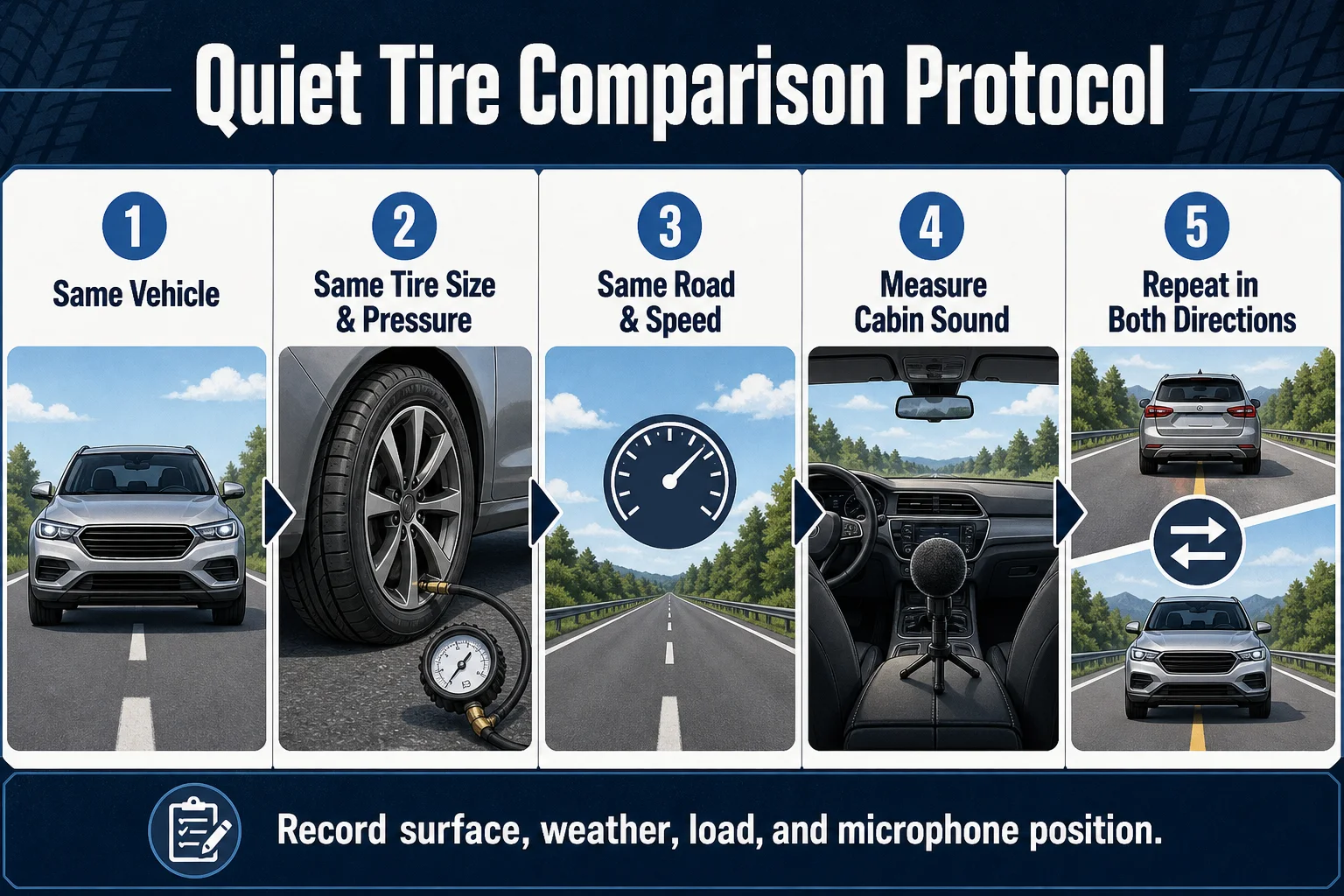
🛣️ Real-World Testing: Highway Cruising vs. City Stop-and-Go
Quietest has not completed a controlled head-to-head road test of the Michelin Primacy Tour A/S and Defender 2. Compare independent tests only when they report the vehicle, tire size, pressure, speed, pavement, weather, microphone position, and background noise.
🚗 Tire Size and Vehicle Type: Does Your Car Make a Difference?
Absolutely. A Michelin tire on a heavy SUV will sound different than on a light sedan. The weight of the vehicle affects how the tire deforms and how much noise it generates.
- Sedans: Benefit most from Acoustic foam because the cabin is smaller and quieter.
- SUVs: Need tires with stiffer sidewalls to handle the weight, which can increase noise. The Latitude Tour HP is designed to mitigate this.
- Trucks: The Defender LTX M/S2 is a beast, but it’s still quieter than most truck tires.
Pro Tip: Always check the load index and speed rating to ensure the tire is suitable for your vehicle.
💰 Is the Premium Price Worth It? Analyzing Cost vs. Comfort
Michelin tires are not cheap. But are they worth the extra cost?
- Comfort: If you value a quiet, comfortable ride, yes. The difference in noise levels can be significant.
- Longevity: Michelin tires often last longer than cheaper alternatives, which can offset the initial cost.
- Safety: Better wet traction and handling can prevent accidents, which is priceless.
The Bottom Line: If you drive a lot, or if you value a peaceful cabin, the premium price is worth it.
🔧 Maintenance Secrets: How to Keep Your Michelin Tires Quiet Longer
Even the best tire will get noisy if you don’t take care of it. Here are our top tips:
- Rotate Regularly: Rotate your tires every 5,0 to 7,50 miles. This ensures even wear and prevents “cupping” which causes noise.
- Check Pressure: Under-inflated tires wear unevenly and make more noise. Check your pressure monthly.
- Alignment: A misaligned car can cause uneven wear and noise. Get an alignment if you notice pulling or vibration.
- Balance: Unbalanced tires cause vibration and noise. Have them balanced when you get new tires.
For more tips, visit our Noise Reduction Tips category.
❓ Frequently Asked Questions About Michelin Tire Noise
Do Michelin’s quietest tires require any special maintenance or care to maintain their noise-reducing properties and overall performance?
No, they don’t require special maintenance beyond standard tire care. However, regular rotation and proper inflation are critical. If the tire wears unevenly, the noise-reducing features (like the foam or tread pattern) won’t work as effectively.
How do Michelin’s quietest tires impact the overall driving experience and are they suitable for long road trips or daily commutes?
They significantly improve the driving experience by reducing fatigue and stress. They are perfect for long road trips and daily commutes. The Primacy Tour A/S and Defender 2 are ideal for this.
Are there any specific Michelin tire models that are known for being exceptionally quiet and what features do they have that set them apart?
Yes, the Primacy Tour A/S (with Acoustic foam) and the Defender 2 (with optimized tread) are the quietest. The Acoustic foam and variable pitch sequencing are the key features.
What is the average lifespan of Michelin’s quietest tires and how do they hold up over time compared to other tires on the market?
Warranty terms vary by model, tire size, speed rating, and market. Confirm the current mileage warranty for the exact tire specification with Michelin or an authorized retailer before buying.
How do Michelin’s quietest tires handle in wet or slippery conditions and do they compromise on safety for the sake of quietness?
They do not compromise on safety. Michelin uses advanced rubber compounds and tread designs that provide excellent wet traction. The Primacy Tour A/S and Defender 2 are both rated highly for wet performance.
Can Michelin’s quietest tires be used on all types of vehicles, including trucks and SUVs, or are they limited to certain models?
They are available for a wide range of vehicles, including trucks and SUVs. The Defender LTX M/S2 is specifically designed for trucks and SUVs.
Do Michelin’s quietest tires come with a higher price tag and are they worth the investment for a quieter ride?
Yes, they are more expensive. But for those who value silence and comfort, they are worth the investment.
How do tread patterns and tire design contribute to the quietness of Michelin tires?
Variable pitch sequencing and continuous ribs reduce noise by breaking up sound waves and reducing air turbulence.
Are Michelin’s quietest tires also the most fuel-efficient and how does this impact overall performance?
Many of them, like the Energy Saver A/S, are designed for fuel efficiency. This is achieved by reducing rolling resistance, which also helps in reducing noise.
What makes Michelin tires quiet and how do they compare to other brands?
Michelin uses Acoustic foam, variable pitch sequencing, and advanced rubber compounds. They often outperform competitors like Bridgestone and Continental in noise reduction.
Is Michelin Defender a quiet tire?
Yes, the Michelin Defender 2 is one of the quietest all-season tires on the market, even without the Acoustic foam.
Are Michelin tyres quiet?
Generally, yes. Michelin is known for producing quiet tires, especially their Primacy and Defender lines.
Which tyre is the quietest?
The Michelin Primacy Tour A/S with Acoustic foam is often considered the quietest.
Is Michelin Primacy a quiet tire?
Yes, the Michelin Primacy Tour A/S is exceptionally quiet.
Are Michelin tires silent?
No tire is completely silent, but Michelin’s Acoustic Technology gets very close, reducing noise by up to 20%.
🏁 Conclusion: Finding Your Perfect Silent Ride

This guide has compared seven Michelin options, acoustic-foam and tread-pattern features, and the maintenance factors that can change tire noise over time.
But here’s the million-dollar question: Which one is right for you?
If you drive a luxury sedan and want the absolute quietest ride, the Michelin Primacy Tour A/S with Acoustic foam is your winner. It’s the tire that makes you forget you’re even driving.
If you need a tire that lasts forever and stays quiet for the long haul, the Michelin Defender 2 is the champion. It’s the workhorse that doesn’t complain.
And if you’re driving an SUV or a truck, the Michelin Latitude Tour HP or Defender LTX M/S2 will keep your cabin peaceful, even on rough roads.
Remember, silence isn’t just about comfort; it’s about reducing fatigue and making your drive more enjoyable. Whether you’re commuting to work or embarking on a cross-country road trip, choosing the right quietest Michelin tire can transform your driving experience.
Final Verdict: For the ultimate in silence, go with the Michelin Primacy Tour A/S (Acoustic). For the best balance of silence and longevity, choose the Michelin Defender 2.
Ready to upgrade your ride? Check out our Recommended Links for the best places to buy. And don’t forget to check out our Low Noise Household Items and Quiet Electronics if you want to extend the silence to your home!