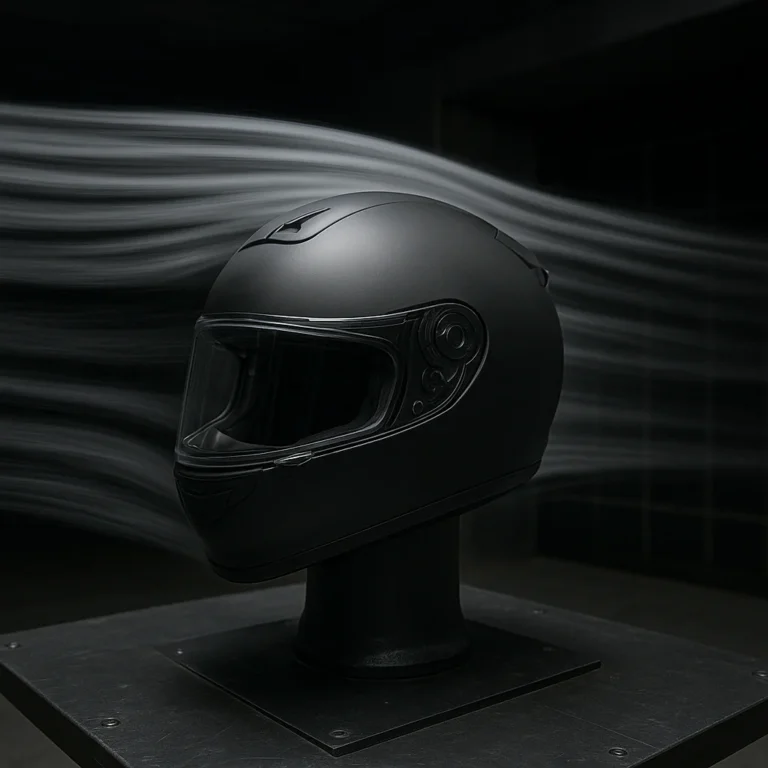
Support our educational content for free when you purchase through links on our site. Learn more
🏍️ 16 Quiet Motorcycle Helmets: Which Cuts Wind Noise?

What is the best helmet to reduce noise? For most street riders, a well-fitting full-face helmet such as the Shoei RF-140 is a strong place to start; touring riders may prefer the modular Schuberth C5. But fit, windscreen turbulence, and riding position can matter just as much as the helmet model.
We’ve seen the same helmet feel impressively calm one bike and turn into a tiny wind orchestra on another. That’s because helmet noise can come from different sources: a visor whistle, air leaking at the neck, or turbulence hitting the shell. And even a quiet helmet isn’t hearing protection: NIOSH warns that prolonged exposure to noise at or above 85 dBA can put hearing at risk.
Key Takeaways
- Prioritize fit first. A snug, comfortable seal can matter more than a helmet’s reputation or price.
- Start with full-face designs if reducing highway wind noise is your main goal; consider modular or adventure models when their convenience suits your riding.
- Test the whole setup. Your helmet, windscreen, posture, and speed work together to shape the noise you hear.
- Use properly fitted earplugs on longer rides. A quiet helmet can help with comfort, but it does not replace hearing protection.
- Choose by riding style: compare the Shoei RF-140, Schuberth C5, and Arai XD-5 for different needs.
Explore the helmets: Shoei Official | Schuberth Official | Arai Official
Table of Contents
- ⚡️ Quick Tips and Facts: Choosing a Quieter Motorcycle Helmet
- 🌬️ Why Motorcycle Helmets Get Noisy: Wind, Fit, and Aerodynamics
- How Wind Noise Affects Hearing and Riding Comfort
- What Makes a Motorcycle Helmet Loud?
- 🕰️ From Basic Shells to Quiet Touring Helmets: A Brief History
- 🏆 16 Best Helmets to Reduce Motorcycle Wind Noise
- Shoei RF-140: Best Full-Face Helmet for Wind Noise Reduction
- Schuberth C5: Best Quiet Modular Touring Helmet
- Arai XD-5: Best Quiet Adventure Helmet
- Sena Phantom: Best Smart Helmet with Active Noise Control
- Schuberth C3 Pro: A Quieter Modular Helmet Option
- Shoei GT-Air 3: Quiet Full-Face Touring Comfort
- Shoei Neotec 3: Premium Quiet Modular Helmet
- Arai Signet-X: Long-Oval Fit and Highway Comfort
- Arai Quantum-X: Stable, Comfortable Street-Riding Helmet
- HJC RPHA 71: Lightweight Sport-Touring Noise Control
- AGV K6 S: Lightweight Full-Face Helmet for Street Riders
- Shark Spartan GT Pro: Touring-Focused Wind Protection
- Nolan N100-6: Practical Modular Helmet for Touring
- LS2 Advant X: Versatile Flip-Up Helmet for Road Trips
- Arai Regent-X: Comfortable Full-Face Fit for Everyday Riding
- Bell Race Star DLX Flex: Aerodynamic Protection for Sport Riding
- 🔍 What Makes a Motorcycle Helmet Quiet?
- Why the Shoei RF-140 Is Known for Noise Reduction
- Helmet Shape, Shell Design, and Aerodynamics
- Neck Rolls, Chin Curtains, and Face-Shield Seals
- Helmet Fit: Seal Out Wind Without Creating Pressure Points
- 🛒 How to Choose the Best Quiet Motorcycle Helmet for You
- Full-Face vs. Modular vs. Adventure Helmets
- Finding the Right Head Shape and Helmet Size
- Ventilation, Visors, Weight, and Long-Distance Comfort
- Safety Certifications: DOT, ECE 22.06, and Snell
- How to Try on a Helmet and Check the Fit
- ⚖️ Helmet Comparisons: Quietness, Fit, and Riding Style
- Sena Stryker vs. Sena Phantom: Smart Helmet Features Compared
- Shoei RF-140 vs. Arai Signet-X: Which Fits Your Street-Riding Needs?
- Shoei RF-140 vs. Arai Quantum-X: Which Is Better for Street Riding?
- 🧰 How to Reduce Wind Noise in Your Current Motorcycle Helmet
- Add a Chin Curtain, Neck Roll, or Better-Fitting Face Shield
- Check Your Motorcycle Windscreen and Riding Position
- Fit a Helmet Communication System Without Adding Noise
- Will Your Intercom or Bluetooth Unit Fit?
- 🎧 Earplugs and Noise-Cancelling Options for Motorcycle Riders
- Motorcycle Earplugs: Foam, Filtered, and Custom-Fit
- Are Noise-Cancelling Earbuds Safe or Suitable for Riding?
- Active Noise Cancellation in Motorcycle Helmets: What It Can and Can’t Do
- 🧼 Helmet Care, Replacement, and Common Noise Problems
- How to Clean and Maintain Helmet Seals
- When to Replace a Helmet or Worn Components
- Troubleshooting Whistling, Buffeting, and Leaks
- 🔗 Recommended Links
- ❓ FAQ
- What Is the Quietest Motorcycle Helmet?
- How Do I Reduce Wind Noise in My Motorcycle Helmet?
- What Makes a Motorcycle Helmet Loud?
- Are Full-Face Helmets Quieter Than Modular Helmets?
- Do Quiet Helmets Protect Your Hearing on Their Own?
- Can a Windscreen Make Helmet Noise Worse?
- Can I Wear Earplugs with a Motorcycle Helmet Intercom?
- ✅ Conclusion
- 📚 Reference Links
⚡️ Quick Tips and Facts: Choosing a Quieter Motorcycle Helmet
If you’re comparing quiet options, start with our guide to the quietest motorcycle helmets. A well-fitting, aerodynamic full-face helmet plus properly worn earplugs is usually a more dependable noise-reduction strategy than relying on active noise cancellation (ANC) alone.
| Quick fact | What it means for your ride |
|---|---|
| Fit matters more than the badge | A helmet that leaks around the neck, cheeks, or visor can whistle even if it’s a premium model. |
| Wind noise is a hearing concern | NIOSH identifies repeated or prolonged exposure to noise at or above 85 dBA as a hearing risk. A helmet is not hearing protection. |
| Full-face designs generally have an advantage | They cover more of the head and face than open-face helmets, but shell shape, sealing, fit, and your motorcycle’s airflow all matter. |
| Modular helmets trade some quiet for convenience | Their moving chin bars and extra joints can create more opportunities for air leakage than a well-sealed full-face design. |
| Earplugs still matter | Even a quiet helmet can leave substantial wind noise at highway speeds. Use correctly fitted hearing protection and retain awareness of traffic. |
| Your windscreen can make things worse | A screen that sends turbulent air at your helmet may increase buffeting and low-frequency roar. |
Our practical shortlist: the Shoei RF-140, Schuberth C5, and Arai XD-5 suit different riding styles: full-face street riding, modular touring, and adventure riding. We don’t treat any one model as universally quietest; fit, head shape, bike, screen, and speed can change the result.
Quietest™ field note: Helmet noise isn’t a single sound. It can be a sharp whistle from a seal, a low roar from buffeting, or a steady hiss from airflow. The fix depends on which one you’re hearing.
🌬️ Why Motorcycle Helmets Get Noisy: Wind, Fit, and Aerodynamics
How Wind Noise Affects Hearing and Riding Comfort
Wind rushing past a helmet creates sound and turbulence. At speed, that noise can mask communication, contribute to fatigue, and put hearing at risk. NIOSH’s guidance on occupational noise uses 85 dBA over an eight-hour workday as a recommended exposure limit; the permitted exposure duration decreases as sound levels rise. Motorcycle wind exposure is different from a controlled workplace measurement, but the takeaway is straightforward: don’t assume your helmet makes highway riding safe for your ears.
A quiet helmet can help make a ride more comfortable, but it doesn’t turn a loud ride into a silent one. Nor should reducing noise mean blocking all awareness. You still need to notice horns, sirens, approaching vehicles, and other important cues.
What Makes a Motorcycle Helmet Loud?
| Noise source | What you may hear or feel | Common causes |
|---|---|---|
| Air leaks | Whistling, hiss, or a sudden rush of air | Poor fit, worn visor gasket, incomplete visor closure, gaps around the neck |
| Turbulence | Roaring, pulsing, or helmet buffeting | Windscreen airflow, upright posture, adventure peak, exposed shell features |
| Ventilation airflow | A steady hiss or rush | Open vents, vent design, crosswinds, or airflow hitting the vent openings |
| Mechanical vibration | Rattle or buzz | Loose visor hardware, peak, accessories, or improperly secured components |
| Helmet fit and movement | Changing noise as you turn your head | Loose shell, incorrect size, poor cheek-pad contact |
A helmet’s aerodynamics matter, but so does the air arriving from the motorcycle. A helmet that is quiet behind one bike’s windscreen may get noisy in the turbulence behind another. That’s why a single decibel figure, without details about the bike, fit, speed, measurement position, and test conditions, can be misleading.
For more ways to address noise around you, browse our noise reduction tips and noise-free transportation guides.
🕰️ From Basic Shells to Quiet Touring Helmets: A Brief History

Modern motorcycle helmets have evolved from simple protective shells into carefully shaped systems combining a shell, impact-absorbing liner, comfort padding, vents, visor, and seals. But safety design and noise reduction aren’t the same thing: a helmet’s certification tells you about specified impact-protection testing, not how quiet it will feel on your motorcycle.
Today’s touring and full-face helmets often use shaped shells, carefully positioned vents, fitted neck rolls, and closer-sealing visors to manage airflow. Modular helmets add a flip-up chin bar for convenience, while adventure helmets balance road use with a peak and more upright riding position. Those features are useful, but each can affect airflow and noise.
Standards also change. In Europe, ECE 22.06 introduced updated helmet testing requirements. In the United States, check for the applicable DOT motorcycle helmet requirements. A safety label is essential; it is not a quietness rating.
🏆 16 Best Helmets to Reduce Motorcycle Wind Noise
A note about the scores: the ratings below are editorial comparisons, not laboratory decibel measurements or certification results. Quietness is especially sensitive to fit, bike, windscreen, and riding position. Check the manufacturer’s current model details and local certifications before buying; availability and specifications can vary by market.
| Helmet | Noise reduction | Aerodynamics | Comfort | Value | Weight | Best for |
|---|---|---|---|---|---|---|
| Shoei RF-140 | 10 | 9.5 | 9 | 8 | 9 | Quiet-focused full-face street riding |
| Schuberth C5 | 9.8 | 9.5 | 10 | 7.5 | 7 | Modular touring |
| Arai XD-5 | 9 | 8.5 | 9.5 | 8 | 8 | Adventure and mixed-surface riding |
| Sena Phantom | 8.5 | 8.5 | 9 | 6.5 | 7 | Integrated communications and ANC features |
| Schuberth C3 Pro | 8.5 | 8.5 | 9 | 8 | 7 | Riders considering an older modular model |
| Shoei GT-Air 3 | 9 | 9 | 10 | 8.5 | 8.5 | Street touring with an internal sun visor |
| Shoei Neotec 3 | 9 | 9 | 9.5 | 7.5 | 7 | Premium modular touring |
| Arai Signet-X | 9.5 | 9 | 10 | 8 | 8 | Riders with an intermediate-oval head shape |
| Arai Quantum-X | 9 | 9.5 | 9 | 8 | 8.5 | Street and sport-touring use |
| HJC RPHA 71 | 8.5 | 9 | 9 | 8.5 | 8.5 | Sport-touring versatility |
| AGV K6 S | 8 | 9 | 8.5 | 8 | 9 | Lightweight street riding |
| Shark Spartan GT Pro | 8 | 8.5 | 8.5 | 8 | 8 | Sport-touring riders |
| Nolan N100-6 | 8.5 | 8.5 | 9 | 8 | 7.5 | Modular touring |
| LS2 Advant X | 8 | 8 | 8.5 | 8.5 | 8 | Versatile flip-up use |
| Arai Regent-X | 8.5 | 8.5 | 9 | 8 | 8 | Everyday full-face riding |
| Bell Race Star DLX Flex | 7.5 | 9.5 | 8.5 | 7.5 | 8 | Sport riding and track-oriented design |
These picks are a starting point, not a substitute for trying helmets on. A helmet that fits your head properly can outperform a higher-scoring model that presses on your forehead or leaves a gap at the neck.
Shoei RF-140: Best Full-Face Helmet for Wind Noise Reduction
The Shoei RF-140 is a compelling choice if your priority is a well-sealed, full-face design for street riding. Its close-fitting cheek pads, neck roll, and visor seal are intended to limit unwanted airflow. Reviewers have praised its composed feel at speed, but there is no universally valid promise that it will be quiet at a particular speed for every rider.
A competing review calls it “the quietest motorcycle helmet” and recounts an owner’s claim of very low wind noise at high speed. That’s useful as an individual experience, not a controlled guarantee: road, bike, rider height, windscreen, fit, and measurement method all matter. The same review reports wind-tunnel improvements compared with the older RF-120; treat manufacturer or reviewer figures as model-specific rather than direct proof of lower sound levels for every setup.
Strengths
- Full-face coverage with a close-sealing visor and neck area
- Stable, aerodynamic road-riding design
- Room for a compatible helmet communication system, depending on the speaker setup
Trade-offs
- No drop-down sun visor
- A snug fit is essential; it may not suit every head shape
- A quiet shell cannot replace hearing protection on long, fast rides
Our reviewers’ take: The RF-140 belongs on a quiet-helmet shortlist, but we wouldn’t buy it solely because an online reviewer called it “silent.” Try it on, check the cheek and neck seal, and test it on your own motorcycle if possible.
Schuberth C5: Best Quiet Modular Touring Helmet
The Schuberth C5 combines a flip-up chin bar with features aimed at touring comfort. A close visor seal, neck roll, internal sun visor, and touring-oriented fit make it a strong option for riders who want the convenience of a modular helmet.
Some reviews describe the C5 as exceptionally quiet, even using the colorful phrase “library-levels of quiet.” That’s a reviewer impression, not a standardized sound rating. Modular helmets have moving joints and seals that need to align and remain in good condition, so fit and maintenance are especially important.
Strengths
- Flip-up design is practical for stops and touring
- Integrated sun visor and touring-focused comfort features
- Designed to work with Schuberth’s communication-system ecosystem
Trade-offs
- Heavier than many full-face options
- Integrated communication features may make it less flexible for riders who prefer another system
- A modular design does not guarantee quieter performance than a full-face helmet
Confirm the exact safety certification for the model and market you’re buying. Don’t assume a certification shown for a European version applies to a product sold elsewhere.
Arai XD-5: Best Quiet Adventure Helmet
The Arai XD-5 is a notable adventure helmet because it balances road comfort with the features riders want for mixed-surface use. Its peak, visor, and ventilation make it adaptable, but those same features can catch turbulent air depending on your motorcycle and riding posture.
Some reviewers report that removing the peak can reduce buffeting on faster rides. If you try this, follow the manufacturer’s instructions and ensure every component is properly secured. A loose peak or accessory can create noise and distraction rather than fix either.
Strengths
- Adventure-oriented versatility for road and mixed-surface riding
- Removable or adjustable components can help tailor airflow
- A useful option for riders who don’t want a road-only shell
Trade-offs
- An adventure helmet’s peak may increase turbulence on some bikes
- It is unlikely to be as consistently quiet as a well-fitting road-focused full-face helmet
- Helmet fit remains decisive
Sena Phantom: Best Smart Helmet with Active Noise Control
The Sena Phantom combines a helmet with built-in communications and active noise-control features. Sena describes its communications and audio technologies on the product page; check the current specification for the version sold in your region.
ANC is not a substitute for a good fit or hearing protection. Active systems can behave differently with changing wind, engine noise, and helmet fit, and electronic functions depend on charge and hardware. If your goal is simply to make a helmet quieter, a well-sealed conventional helmet plus earplugs may be more straightforward.
Strengths
- Integrated communications and audio features
- ANC-focused design for riders who want an all-in-one system
- Fewer separate components to fit inside the helmet
Trade-offs
- Electronic functions depend on battery power
- Built-in communications may limit upgrades or brand choice
- ANC should not be treated as hearing-protection certification
Schuberth C3 Pro: A Quieter Modular Helmet Option
The Schuberth C3 Pro is an older modular model that some riders may encounter through remaining stock or the used market. It has been praised by reviewers for its touring comfort and noise management, but availability, age, condition, and replacement-part support matter.
Before buying one, confirm that the helmet is undamaged, fits correctly, and meets the applicable requirements where you ride. Inspect the visor seal, chin-bar mechanism, and internal padding. A worn seal or an old, compromised helmet can erase any theoretical quietness advantage.
Strengths
- Modular convenience for touring
- Touring features and a reputation for a comfortable fit
- May suit riders who find a newer modular helmet difficult to fit
Trade-offs
- Older design and potentially limited availability
- Parts and service support may be harder to find
- Used-helmet history can be difficult to verify
Shoei GT-Air 3: Quiet Full-Face Touring Comfort
The Shoei GT-Air 3 is built for street and touring riders who want a full-face helmet with an internal sun visor. Its touring-focused design may suit riders who value comfort and convenience without choosing a flip-up chin bar.
Strengths
- Full-face coverage with touring-oriented features
- Internal sun visor for changing light
- A strong alternative to sport-focused helmets
Trade-offs
- Internal features do not guarantee lower noise
- Speaker or communications compatibility should be checked before purchase
- Fit and windscreen interaction still determine much of your real-world experience
Shoei Neotec 3: Premium Quiet Modular Helmet
The Shoei Neotec 3 is a premium modular option for riders who want a flip-up design from a major helmet maker. It is worth comparing with the Schuberth C5 in person: the best choice is the one that fits your head and works with your communication system.
Strengths
- Modular convenience for touring and frequent stops
- Manufacturer support and accessories
- Designed for riders seeking a premium touring helmet
Trade-offs
- Modular mechanisms and seals need careful inspection and closure
- Typically less simple than a basic full-face shell
- Don’t assume the model will be quieter than a full-face helmet on your bike
Arai Signet-X: Long-Oval Fit and Highway Comfort
The Arai Signet-X is designed for riders who need an intermediate-oval fit. That fit can make a big difference: a helmet that matches your head shape is less likely to develop gaps or pressure points that spoil comfort and create noise.
Strengths
- A useful choice for riders who find many helmets too round or short front-to-back
- Full-face design suited to street riding
- A better fit can improve comfort and reduce unwanted air leakage
Trade-offs
- Not suited to every head shape
- A comfortable fit cannot be predicted from brand reputation alone
- Check the current model and certification for your market
Arai Quantum-X: Stable, Comfortable Street-Riding Helmet
The Arai Quantum-X is a street-focused full-face option to consider if it matches your head shape. Some users report that the fit feels snug at first; never assume painful pressure is a normal “break-in.” Follow the brand’s fitting guidance and consult an authorized dealer if you’re unsure.
Strengths
- Full-face coverage and street-riding focus
- A secure fit may help limit helmet movement
- Suitable for riders seeking an alternative to the Signet-X fit shape
Trade-offs
- Fit is personal and should be checked carefully
- Not all ventilation or shell designs feel quiet to every rider
- Confirm current availability and specifications
HJC RPHA 71: Lightweight Sport-Touring Noise Control
The HJC RPHA 71 is a sport-touring helmet to consider if you want a balance of road comfort, ventilation, and a streamlined full-face shape. Check HJC’s current product information for shell, shield, and communications details.
Strengths
- Sport-touring design for varied road use
- A worthwhile fit comparison against premium alternatives
- Useful option for riders who prefer a more road-focused shell
Trade-offs
- Noise performance depends on fit and your bike’s airflow
- Confirm compatibility before installing speakers or a comms system
- Ventilation and quietness can pull in different directions
AGV K6 S: Lightweight Full-Face Helmet for Street Riders
The AGV K6 S is a lightweight full-face option for street riders who want a versatile helmet. Low weight may help comfort, but it does not by itself make a helmet quiet.
Strengths
- Lightweight design
- Suited to everyday road use
- A useful comparison for riders who dislike heavier touring helmets
Trade-offs
- Lightweight construction does not guarantee noise isolation
- Check fit and visor sealing in person
- Ventilation and riding position influence perceived noise
Shark Spartan GT Pro: Touring-Focused Wind Protection
The Shark Spartan GT Pro is a road-oriented helmet worth considering for riders seeking a sport-touring fit. Consult the brand’s regional site for current model details and certification.
Strengths
- Road-focused full-face design
- A possible fit alternative to Shoei, Arai, and HJC models
- Suitable for riders who want a touring-oriented helmet without a modular chin bar
Trade-offs
- Regional model availability can differ
- Noise results depend strongly on rider and motorcycle
- Check visor and accessory compatibility before purchasing
Nolan N100-6: Practical Modular Helmet for Touring
The Nolan N100-6 is a modular helmet for riders who value a flip-up design. Make sure you can close the chin bar securely with gloves and confirm that its fit remains even around the cheeks and neck.
Strengths
- Modular convenience
- Touring-friendly format
- Worth comparing with the Schuberth C5 and Shoei Neotec 3
Trade-offs
- Additional moving parts require maintenance
- Chin-bar and visor fit can affect airflow
- A modular helmet may not match the quietness of a well-fitting full-face design
LS2 Advant X: Versatile Flip-Up Helmet for Road Trips
The LS2 Advant X offers another modular option for road and touring riders. Review the manufacturer’s regional specifications, then compare fit and weight in person.
Strengths
- Flip-up versatility
- Practical for riders who stop often
- A useful alternative across a range of riding styles
Trade-offs
- Noise and comfort depend on individual fit
- Check the chin-bar seal and visor closure
- Verify certification for your country and exact model
Arai Regent-X: Comfortable Full-Face Fit for Everyday Riding
The Arai Regent-X is a full-face helmet to include in an in-person fitting session if its head shape suits you. Comfort matters on long rides: constant pressure or helmet movement can make a quiet ride feel miserable.
Strengths
- Full-face road coverage
- A potential everyday option for riders who prefer its fit
- A stable fit can help avoid air gaps and excessive movement
Trade-offs
- Head-shape compatibility is essential
- Check current regional availability and certification
- A quiet fit is personal, not guaranteed by the brand
Bell Race Star DLX Flex: Aerodynamic Protection for Sport Riding
The Bell Race Star DLX Flex is a sport-oriented helmet. Its riding position and aerodynamic design may work well for a tucked posture, but a sport helmet isn’t automatically the quietest choice for upright touring.
Strengths
- Sport-riding focus
- Designed for riders who value a more aggressive posture
- Worth considering when fit and handling matter alongside sound
Trade-offs
- Aggressive ventilation may add airflow noise
- Sport-focused ergonomics may be less comfortable for relaxed touring
- Check the helmet’s certification and intended use for your market
🔍 What Makes a Motorcycle Helmet Quiet?
Why the Shoei RF-140 Is Known for Noise Reduction
The Shoei RF-140 gets attention for its full-face coverage, close-fitting padding, and aerodynamic design. Reviewers have described its neck roll and visor closure as especially effective at limiting drafts. Those descriptions are useful, but no manufacturer or reviewer claim can account for every combination of head shape, bike, windscreen, and road speed.
A competing review called it “the quietest helmet ever made” and described the visor as sealing “like a vault door.” We’d translate that enthusiast praise into a more practical check: does the shield close evenly, does the gasket contact all around, and does the helmet fit your cheeks and neck without gaps? That’s the part you can verify for yourself.
Helmet Shape, Shell Design, and Aerodynamics
A smooth profile can reduce turbulence, but shell shape interacts with the air around your bike. Vents, edges, peaks, spoilers, accessories, and even an exposed intercom can disturb airflow.
| Design element | Potential benefit | Possible drawback |
|---|---|---|
| Smooth shell profile | Can help air flow around the helmet | May still be noisy in a turbulent windscreen wake |
| Neck roll | Helps limit drafts entering from below | Can feel tight or hot if poorly matched |
| Well-sealed shield | Reduces air leaks and whistle | Worn or misaligned seals may leak |
| Adventure peak | Helps shade the face and offers off-road utility | Can catch airflow or vibrate at speed |
| Ventilation system | Helps manage heat and airflow | Open vents may introduce a steady rush of air |
We compare helmets by real-world suitability, not shell shape in isolation. If wind buffeting arrives from the top of your screen, a helmet change might not solve it. Adjusting your posture or screen could make a bigger difference.
Neck Rolls, Chin Curtains, and Face-Shield Seals
A neck roll and chin curtain help close gaps around the bottom of a helmet, while the visor gasket controls airflow around the shield. These parts can wear, become dirty, or shift during use.
Check them regularly:
- Close the visor fully and inspect the contact line around the shield.
- Look for uneven gaps at the hinge points, top edge, and sides.
- Inspect the neck roll and chin curtain for damage, looseness, or missing pieces.
- Secure removable parts exactly as the manufacturer directs.
- Replace damaged components with compatible parts rather than improvised padding or tape.
Do not block a helmet’s vents or alter its shell to reduce noise. Those changes can interfere with the helmet’s intended operation or create new hazards.
Helmet Fit: Seal Out Wind Without Creating Pressure Points
A good fit should feel snug and even, not loose enough to shift or so tight that it causes pain. Follow the manufacturer’s sizing guide and ask an authorized dealer to help check the fit. NHTSA’s helmet guidance explains why the helmet should be correctly sized and securely fastened.
Fit check, step by step:
- Measure your head where the circumference is widest, typically just above the eyebrows.
- Compare your measurement with the exact brand and model’s sizing chart.
- Fasten the chin strap and check that the helmet sits level.
- Move the helmet gently side to side and front to back. Your skin should move with the helmet; the shell should not slide freely.
- Keep it on for several minutes. Pressure should feel even, not sharp or concentrated.
- If possible, try a second size or shape from the same brand. A different model can fit very differently.
A loose helmet may whistle or move in turbulence. A painfully tight one is not a smart trade for quietness.
🛒 How to Choose the Best Quiet Motorcycle Helmet for You
Full-Face vs. Modular vs. Adventure Helmets
| Helmet style | Typical noise advantage | What to watch |
|---|---|---|
| Full-face | Continuous coverage and fewer moving joints | Fit, vent noise, and visor sealing still vary |
| Modular | Convenient flip-up chin bar for stops | Chin-bar joints and seals need correct alignment |
| Adventure | Versatile for road and off-road riding | Peak and upright posture may increase turbulence |
| Open-face | Good airflow and an unobstructed feel | Less coverage means more wind exposure |
If quiet is your top priority for highway use, a properly fitting full-face model is often the simplest place to start. If you need a modular or adventure helmet, choose one that fits well and test it in the conditions you actually ride.
Finding the Right Head Shape and Helmet Size
Helmet sizing is not universal. A size medium in one brand may feel very different from a medium in another. Head shape also varies; some models suit rounder heads, while others suit more oval shapes.
- Use the manufacturer’s own chart.
- Try the helmet on before committing when possible.
- Ask a qualified dealer to check fit.
- Don’t buy a loose helmet because it feels comfortable in the shop.
- Don’t expect a painful fit to become acceptable through “break-in.”
Ventilation, Visors, Weight, and Long-Distance Comfort
Quietness is only one part of a helmet you can live with. A helmet that is too hot, too heavy, or awkward with your glasses can turn a long ride into a chore.
Before buying, check:
- Ventilation: Can you control airflow without introducing an irritating roar?
- Visor: Does it close evenly and offer a clear field of view?
- Weight: Does the helmet feel comfortable after wearing it for several minutes?
- Accessories: Will your glasses, speakers, or communication system fit?
- Replacement parts: Can you obtain compatible visors, seals, and padding?
- Riding posture: Does the helmet remain stable in your usual position?
Safety Certifications: DOT, ECE 22.06, and Snell
Safety certifications are a separate question from quietness. In the United States, check for the required DOT labeling and consult NHTSA’s helmet guidance. For European approvals, refer to the applicable UNECE helmet regulations. Snell Memorial Foundation publishes its own helmet standards and information.
Buy a helmet that meets the requirements where you ride, then evaluate fit and noise separately. A safety certification is not a decibel score, and a quietness claim is not a safety certification.
How to Try on a Helmet and Check the Fit
Bring your usual riding glasses or communication speakers if you can. Then:
- Put the helmet on without pulling it by the strap in a way that strains the liner.
- Fasten the chin strap.
- Check that the eye opening and shell sit level.
- Feel for even cheek-pad contact and check that the helmet doesn’t rotate easily.
- Wear it for at least several minutes; watch for pressure points.
- Close and open the visor and chin bar several times.
- If possible, test it on the same bike and screen you ride.
No shop fitting can perfectly replicate a highway ride, but it can rule out a poor fit before you buy.
⚖️ Helmet Comparisons: Quietness, Fit, and Riding Style
Sena Stryker vs. Sena Phantom: Smart Helmet Features Compared
The Sena Phantom and Sena Stryker appeal to riders interested integrated communication and noise-control features. Product specifications change, so verify the exact functions, speaker system, battery expectations, and service support for the model available in your region.
| Consideration | Sena Phantom | Sena Stryker |
|---|---|---|
| Best fit for | Riders wanting an integrated smart-helmet package | Riders comparing an established integrated-communications approach |
| Noise-control question | Check which ANC features are included in the local version | Check current feature availability and firmware support |
| Upgrade flexibility | Built-in electronics can limit swaps | Built-in electronics may also constrain upgrade choices |
| Before buying | Confirm fit, certification, battery, and service details | Confirm fit, certification, battery, and service details |
Our advice: compare them as helmets first and electronics second. A communications feature is only useful if the helmet fits, meets your local safety requirements, and works with your riding needs.
Shoei RF-140 vs. Arai Signet-X: Which Fits Your Street-Riding Needs?
The Shoei RF-140 and Arai Signet-X are both full-face options, but fit can decide this comparison before features do.
| Compare | Shoei RF-140 | Arai Signet-X |
|---|---|---|
| Consider it if | Its fit and visor seal suit your head | You need a more intermediate-oval fit |
| Noise priority | Strong candidate for a sealed street helmet | Fit can help avoid gaps for riders its shape suits |
| Potential drawback | No integrated drop-down sun visor | May fit poorly if your head shape is rounder |
| Best next step | Try it alongside the Arai | Try it alongside the Shoei |
Choose the one that fits securely and evenly. A theoretically quieter helmet that creates a forehead hotspot or leaves room around your cheeks is the wrong pick.
Shoei RF-140 vs. Arai Quantum-X: Which Is Better for Street Riding?
The Shoei RF-140 and Arai Quantum-X should be compared by head shape, comfort, and the way they interact with your bike’s airflow—not by a single universal noise ranking.
Choose between them by checking:
- Which helmet sits level and stays stable?
- Does the visor seal evenly?
- Does either model create pressure during a short fitting session?
- Can your intercom or speakers fit without pushing against your ears?
- Which feels more comfortable in your usual riding posture?
A test ride can reveal differences a product page cannot. If neither fits correctly, try another model rather than choosing the “winner” on paper.
🧰 How to Reduce Wind Noise in Your Current Motorcycle Helmet
Add a Chin Curtain, Neck Roll, or Better-Fitting Face Shield
Start with manufacturer-approved accessories. A compatible chin curtain or replacement neck roll can help close an air gap; a new visor or seal may fix a whistle. Don’t wedge in household foam or use tape near moving parts, vents, or the visor mechanism.
Step-by-step check:
- Identify whether you hear a whistle, hiss, roar, or rattle.
- Inspect the visor seal, neck roll, chin curtain, and fasteners.
- Clean the surfaces using the helmet maker’s care instructions.
- Replace damaged parts with compatible components.
- Recheck the helmet’s fit and visor closure.
- If the noise remains, consider windscreen turbulence or an ill-fitting helmet.
Check Your Motorcycle Windscreen and Riding Position
Your windscreen may be sending turbulent air straight into your helmet. Small changes in screen height, angle, or rider posture can shift that airflow.
Try this carefully on a safe route:
- Note the speed and riding position when the noise starts.
- Change your posture slightly without compromising control.
- If your motorcycle allows safe adjustment, change the screen setting.
- Compare the sound and buffeting at the same speed and conditions.
- Make only one change at a time so you can tell what helped.
A screen that sends air over your helmet for one rider may hit another rider at eye level because of differences in height, seat, or bike setup. For broader transportation and noise advice, see our noise-free transportation category.
Fit a Helmet Communication System Without Adding Noise
Speakers that push against your ears can cause discomfort; a poorly routed cable or protruding module may also create a distraction. Before installing an intercom, verify compatibility with the helmet and follow both manufacturers’ instructions.
- Check speaker pockets and compatible mounting locations.
- Position speakers without pressing them into your ears.
- Keep wires clear of the liner, visor, and chin-bar mechanism.
- Secure external modules as directed.
- Test communication at a safe stop before riding.
Will Your Intercom or Bluetooth Unit Fit?
Don’t assume every unit fits every helmet. Check the helmet maker’s compatibility information and the communications brand’s mounting guide. Integrated systems can provide a tidy fit, while universal systems may offer more flexibility but require extra care with placement.
| What to check | Why it matters |
|---|---|
| Speaker pockets | Helps keep speakers aligned without creating pressure |
| Ear clearance | Prevents discomfort and poor helmet fit |
| Mounting surface | Ensures the module can be attached securely |
| Wiring route | Keeps cables clear of moving or safety-related parts |
| System compatibility | Avoids buying components that won’t work together |
🎧 Earplugs and Noise-Cancelling Options for Motorcycle Riders
Motorcycle Earplugs: Foam, Filtered, and Custom-Fit
Earplugs can reduce exposure to wind noise when correctly selected and inserted. Options include disposable foam plugs, reusable filtered plugs, and custom-molded products. The best choice depends on comfort, fit, and whether you can use them consistently.
| Type | Benefits | Drawbacks |
|---|---|---|
| Foam | Effective when inserted correctly; widely available | Incorrect insertion can sharply reduce protection; may muffle sound |
| Filtered/reusable | Designed to reduce sound while retaining more detail | Fit and protection vary by model and ear |
| Custom-molded | Can provide a consistent personal fit | Requires proper molding and care |
Look for a product with clearly stated hearing-protection information and follow its instructions. NIOSH explains that a hearing protector’s real-world performance depends on proper fit and use; don’t treat packaging figures as guaranteed protection for every wearer. See NIOSH hearing-protection guidance.
Are Noise-Cancelling Earbuds Safe or Suitable for Riding?
Consumer ANC earbuds are not a direct substitute for certified hearing protection. Their fit can shift under a helmet, and their sound modes may affect what you hear from traffic. Battery life, helmet pressure, and the device’s behavior in wind also vary.
If you are considering earbuds while riding, check local rules and prioritize road awareness. Don’t use music or ANC at a level that masks horns, sirens, or other important cues. A properly selected set of motorcycle earplugs is generally the more straightforward hearing-protection option.
Active Noise Cancellation in Motorcycle Helmets: What It Can and Can’t Do
ANC uses microphones and audio processing to counter some incoming sound. It can be useful as part of an integrated helmet system, but performance depends on the sound, fit, microphone placement, electronics, and power.
| ANC can help with | ANC cannot guarantee |
|---|---|
| Reducing some steady or repeating noise | Silence in every riding condition |
| Making audio or communication easier to hear | Reliable protection against all harmful sound |
| Adding a convenient built-in feature | Better safety than a properly fitted helmet and hearing protection |
We’re cautious about claims that ANC can remove all wind noise. Motorcycle noise changes with speed, wind direction, engine load, and head movement. Treat ANC as a convenience feature, not your only hearing-protection plan.
🧼 Helmet Care, Replacement, and Common Noise Problems
How to Clean and Maintain Helmet Seals
Follow the helmet manufacturer’s care instructions. Use only approved cleaning methods; harsh chemicals can damage materials. Inspect the visor gasket, neck roll, chin curtain, vents, and fasteners, and make sure removable parts are reinstalled correctly.
A simple maintenance routine:
- Wipe the shield and seal gently using approved products.
- Check for hardened, torn, or compressed rubber.
- Confirm the visor closes evenly.
- Make sure the chin bar locks securely on a modular helmet.
- Replace worn parts with manufacturer-approved components.
When to Replace a Helmet or Worn Components
Replace a helmet if it has been involved in an impact or has damage that compromises its structure. Follow the manufacturer’s replacement guidance, especially for age, storage, and material condition. The Snell Memorial Foundation provides helmet-safety information, while your helmet maker can advise on its specific product and components.
A noisy helmet is not necessarily unsafe, but a cracked shell, damaged liner, unreliable chin-bar latch, or compromised retention system calls for attention—not a DIY noise fix.
Troubleshooting Whistling, Buffeting, and Leaks
| Symptom | Likely place to investigate | First safe check |
|---|---|---|
| Sharp whistle | Visor edge, seal, vent, or accessory | Confirm visor closure and inspect seals |
| Low-frequency roar | Windscreen turbulence or riding posture | Compare posture and screen settings safely |
| Air around the neck | Neck roll, chin curtain, or helmet fit | Check components and size |
| Rattle or buzz | Loose hardware, peak, or accessory | Stop and inspect fasteners |
| Noise changes when turning your head | Aerodynamics, loose fit, or side seal | Recheck fit and test in controlled conditions |
If a part is loose, stop and fix it before riding. If the noise began after an impact or the helmet has visible damage, have it inspected or replace it according to manufacturer guidance.
🔗 Recommended Links
For more on choosing a quiet ride, explore our guides to noise reduction tips and noise-free transportation. You can also browse our wider recommendations for quiet electronics and low-noise household items.
❓ FAQ

What is the quietest helmet for blocking wind and road noise?
There is no single quietest helmet for every rider. The Shoei RF-140 is a strong full-face candidate, the Schuberth C5 is worth considering for modular touring, and the Arai XD-5 offers adventure versatility. Your fit, motorcycle, windscreen, speed, and riding posture can change which one sounds quietest in practice.
Why do reviews disagree about which helmet is quietest?
Reviews may use different motorcycles, riders, speeds, measurement equipment, helmet sizes, and test routes. Some are personal impressions rather than controlled comparisons. Treat rankings as a shortlist, then try helmets on and, where possible, test them on your bike.
Read more about “🤫 10 Helmets With the Least Wind Noise (2026)”
Do noise-canceling helmets help reduce ambient sound?
Some helmets and communications systems include ANC or other noise-control features. They may reduce certain sounds or make audio easier to hear, but they do not promise silence or replace hearing protection. Check the exact product’s current specifications and use a well-fitting helmet and appropriate earplugs for longer, faster rides.
Should I choose ANC instead of earplugs?
No. ANC is an electronic feature whose performance can depend on power and conditions. Earplugs are designed as hearing protectors when correctly selected and fitted. They serve different purposes, and ANC should not be treated as a substitute for hearing protection.
What type of helmet provides the best noise reduction for motorcycle riders?
A well-fitting full-face helmet is a sensible starting point because it covers more of the head and face and typically has fewer movable joints than a modular helmet. But a properly fitted modular helmet can work well for touring, and some adventure helmets manage road noise better than their peaks and ventilation might suggest.
Are full-face helmets quieter than open-face helmets?
Often, a full-face design offers more coverage against direct wind than an open-face helmet. But the result still depends on its fit, seals, vent design, your motorcycle, and the air reaching your head. An open-face helmet exposes more of the face to airflow, so it is generally not the first choice if minimizing wind noise is the priority.
Read more about “Are Full-Face Helmets Quieter Than Modular Helmets?”
How can I make my helmet quieter without compromising safety?
Start with the safe, reversible fixes:
- Confirm the helmet fits and is securely fastened.
- Inspect the visor seal, neck roll, and chin curtain.
- Use only compatible, manufacturer-approved replacement parts.
- Check whether your windscreen is creating turbulence.
- Wear suitable hearing protection that fits correctly.
Don’t drill the shell, block vents, wedge in loose padding, or alter the retention system to chase quietness.
Read more about “What Is the Least Restrictive Motorcycle Helmet? 🏍️ Top 7 Picks (2025)”
Which earplugs work best with a helmet to reduce noise?
The best earplugs are the ones that fit your ears correctly and that you’ll wear consistently. Foam plugs can be effective when inserted properly; filtered or custom-molded options may feel more comfortable for some riders. Choose products with clear hearing-protection information and follow the manufacturer’s fitting instructions.
Can I wear earplugs with a helmet intercom?
Many riders use earplugs with helmet communications, but speaker position, ear shape, and plug type affect comfort and audibility. Set the speakers so they don’t press against your ears, test the system while stationary, and avoid turning audio up to a level that could itself be harmful.
Read more about “7 Quiet Motorcycle Helmets Under $300”
Can a quieter helmet help protect your hearing on long rides?
A quieter helmet may reduce some wind exposure, but it cannot guarantee safe sound levels. NIOSH warns that extended noise exposure can damage hearing, and risk rises as exposure increases. For long or fast rides, use properly fitted hearing protection in addition to a well-fitting helmet.
Read more about “🏆 7 Most Aerodynamic Motorcycle Helmets of 2026: Silence & Speed”
Why is my helmet noisy even though it is expensive?
Price doesn’t determine fit. A helmet may be noisy because it doesn’t match your head shape, a visor seal leaks, a vent whistles, the windscreen creates turbulence, or an adventure peak catches the air. Identify the sound and its source before replacing the helmet.
Read more about “Shoei Helmets Reviewed: Top 6 Quietest & Safest Picks (2025) 🏍️🤫”
Will a taller windscreen make my helmet quieter?
Not necessarily. A taller screen can move airflow over your helmet, but it can also direct turbulence at your head. Rider height, screen shape, seat position, and bike geometry all matter. Test changes carefully and follow your motorcycle manufacturer’s guidance.
Is a modular helmet a bad choice if I care about noise?
No. A modular helmet can be a practical touring choice, especially if its fit and seals suit you. It has more moving parts than a basic full-face design, so check the chin-bar lock and visor seal carefully. If quietness is your only priority, compare a full-face model as well.
Why do helmet-noise tests produce different results?
Tests differ in microphones, placement, motorcycles, windscreens, rider posture, speed, weather, and fit. A video test at highway speed can provide useful context, but it doesn’t predict your exact result. The first YouTube video in this article, for example, describes using an internal sound meter at 130 km/h and ranks several helmets under its test conditions. Its reviewer highlights small differences between models, but those findings should be read as a comparison of that setup—not a universal ranking for every rider.