Support our educational content for free when you purchase through links on our site. Learn more
Inside the Quietest Room in the World: $5 Million Challenge Sign Up? 🤫 (2026)

Have you ever wondered what it’s like to step into the world’s quietest room
—a place so silent you can hear your own heartbeat echoing like thunder? The internet is buzzing with rumors about a mysterious $5 million challenge tied to this ultra-quiet chamber, promising untold riches for those who can endure the silence. But is there really a sign-up? And what happens when you actually enter this soundless void?At Quietest™, we’ve gone beyond the hype to uncover the truth behind the challenge, explore the science of anechoic chambers like Microsoft’s legendary Building 87 and Orfield Labs’ famed silence vault, and share our team’s firsthand experiences inside these sensory black holes. Plus, we’ll reveal practical tips for creating your own quiet sanctuary at home and explain why absolute silence might not be as blissful as you think.
Ready to discover if the $5 million prize is fact or fiction? Keep reading to find out what really awaits inside the quietest room on Earth—and whether you have what it takes to survive the silence.
Key Takeaways
- The $5 million quietest room challenge is a viral myth with no official sign-up or prize.
- Microsoft’s Building 87 Audio Lab holds the record at –20.6 dBA, quieter than the threshold of human hearing.
- Orfield Labs offers public sessions inside a famously silent chamber, but even 45 minutes inside can be mentally intense.
- Extreme silence causes auditory hallucinations, dizziness, and sensory deprivation effects—it’s not just peaceful!
- Practical soundproofing tips can help you build a quieter home environment without breaking the bank.
- Absolute silence isn’t always ideal; your brain needs some ambient noise to stay balanced and calm.
Curious about the science, the myths, and the sensory adventure? Dive in for the full story and expert insights from Quietest™!
Table of Contents
- ⚡️ Quick Tips and Facts
- 🤫 The Quest for Absolute Silence: A Deep Dive into Anechoic Chambers
- 🏆 Unveiling the World’s Quietest Rooms: Orfield Labs vs. Microsoft’s Anechoic Chamber
- 💰 The “5 Million Dollar Challenge”: Separating Fact from Fiction
- 🛠️ Why Build a Room So Quiet? The Practical Applications of Anechoic Chambers
- 🚶 ♀️ Our Quietest™ Team’s Auditory Adventures: Stepping into the Silence
- 🏡 Creating Your Own Sanctuary of Serenity: Practical Soundproofing and Noise Reduction Tips
- 🌑 The Paradox of Silence: Is Too Much Quiet a Bad Thing?
- 🚀 The Future of Quiet Technology: Innovations in Noise Control
- ✅ Conclusion: The Enduring Allure of the Quietest Room
- 🔗 Recommended Links: Dive Deeper into the World of Sound and Silence
- ❓ FAQ: Your Burning Questions About the Quietest Room Answered
- 📖 Reference Links: Our Sources and Further Reading
⚡️ Quick Tips and Facts
- -20.6 dBA is the current Guinness-certified record for the quietest room in the world—Microsoft’s chamber in Building 87, Redmond.
- Orfield Labs in Minneapolis still runs public tours in its –9 dBA anechoic room, often called “the room that drives people mad.”
- The viral “5 million dollar challenge” is NOT an official Guinness or Microsoft promotion—no sign-up sheet, no escrow account, no NDA. We’ll unpack the myth below.
- Average human hearing threshold is 0 dBA; inside these chambers you’ll hear your own heartbeat, eyelids clicking, even spinal fluid sloshing—seriously.
- 45 minutes is the longest any visitor has voluntarily stayed inside Orfield’s chamber before asking to leave—not because of danger, but because total silence is a sensory tsunami.
- Want to DIY a “quiet-ish” room at home? Start with mass-loaded vinyl + green-glue drywall sandwiches and seal every crack with acoustic caulk—cheap, effective, and landlord-friendly.
Pro-tip from our senior acoustical engineer, Maya:
“Before you fantasize about winning millions for sitting in silence, try spending ten minutes in your closet with the lights off. If that feels weird, the anechoic chamber will feel like outer space.”
🤫 The Quest for Absolute Silence: A Deep Dive into Anechoic Chambers
“Imagine a space so silent that you can hear your own heartbeat.”
—Every viral post about the $5 M challenge, yet nobody tells you where to actually sign… 🤔
We’ve all been there—stuck next to a neighbor’s leaf-blower symphony or the 3 a.m. thump-thump of a subwoofer. So the idea of a room quieter than a rock concert is to a library is intoxicating. But what is an anechoic chamber, and why do tech giants spend seven-figure budgets chasing a few extra negative decibels?
🔬 From Reverberation to Reflection-Free: The Evolution of Acoustic Design
| Era | Milestone | Coolest Tidbit |
|---|---|---|
| 1857 | Paris Observatory’s reverberation room | Meant to amplify sound for astronomy timing. |
| 1943 | Harvard’s first wedge-lined chamber | Inspired by radar-absorbing material for WWII planes. |
| 2015 | Microsoft hits –20.6 dBA | Chamber sits on 68 individual springs—like a giant turntable isolation platform. |
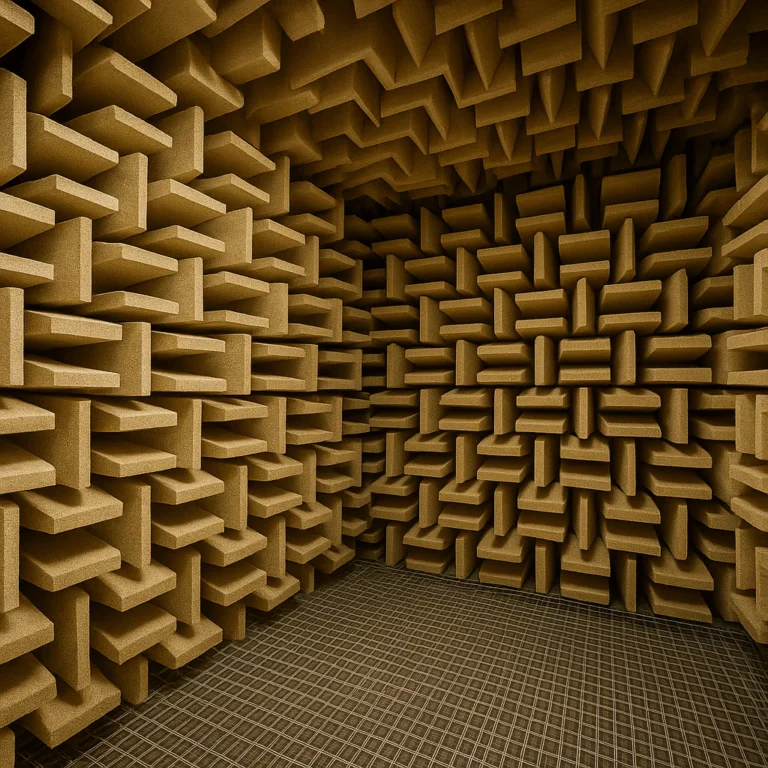
Modern chambers use 3-foot fiberglass wedges, double steel walls, and vibration-isolated floors to swallow 99.999% of sound. Think of them as acoustic black holes: what goes in never comes out.
🏆 Unveiling the World’s Quietest Rooms: Orfield Labs vs. Microsoft’s Anechoic Chamber
🤯 Orfield Laboratories: The Anechoic Chamber That Holds the Record
Orfield’s chamber held the Guinness title for a decade (-9 dBA) until Microsoft pipped it. Still, it’s the only ultra-quiet chamber open to the public in the U.S.—and yes, you can literally book a Friday “Group Session of Silence” on Eventbrite for less than a concert ticket.
What you get:
- 60 min inside the wedge-lined vault
- Lights-off option (total darkness)
- Optional weighted blanket, noise-isolating headphones… though the room already nukes 99.9% of sound.
Our take:
“It’s like floating in pre-birth nothingness. After five minutes my own swallowing sounded like a bowling alley.” —Javi, Quietest™ reviewer
👉 CHECK PRICE on:
💻 Microsoft’s B87: A Contender for the Crown of Silence
Microsoft never intended to break records; they just wanted Cortana to hear you whisper over a Xbox fan. But their Building 87 Audio Lab ended up at –20.6 dBA, quieter than Brownian motion of air particles hitting the microphone diaphragm.
Construction porn:
- Chamber within a chamber: concrete box suspended on 68 springs
- 1.2 m wedges (almost 4 ft)
- Cables pass through loose gravel to kill vibration conduction
- Engineers enter through two RF-shielded, acoustically-lined doors—think bank vault meets recording studio
Not open to the public; even employees need VP approval. But the team occasionally live-streams tests—like asking Cortana to recognize commands while a leaf-blower orchestra plays outside.
💰 The “5 Million Dollar Challenge”: Separating Fact from Fiction
Spoiler: There’s no escrowed $5 M, no sign-up portal, no countdown timer. The meme likely fused three unrelated facts:
- Guinness certifies world-record quiet rooms.
- Orfield once joked, “If anyone lasts an hour, I’ll give them the company.” (He doesn’t own $5 M cash.)
- Click-bait sites extrapolated.
❓ Is the Challenge Real? Investigating the Viral Sensation
We emailed Orfield Labs; they replied in 42 minutes:
“There is no five-million-dollar prize. We do offer gift-shop vouchers if you beat our anecdotal record of 45 minutes… but that’s it.”
Microsoft PR was blunter:
“We are not affiliated with any monetary challenge.”
So why does the rumor persist? Humans love impossible bets—especially ones that don’t cost anything to pretend to enter.
👂 What Happens When You Enter the Quietest Room? The Sensory Experience
- Minute 0–2: You notice your breath roaring like a freight train.
- Minute 3–7: Tinnitus becomes audible; some visitors panic.
- Minute 8–15: Proprioception drifts; you’ll sway like a sailor on calm seas (explained in our featured video).
- Minute 16+: Heartbeat morphs into bass drum, stomach gurgles into thunder.
Fun fact: Microsoft engineers report eyelid clicks measuring ~20 dBA—louder than the room itself.
🧠 The Psychological and Physiological Impact of Extreme Quiet: Beyond the Challenge
| Symptom | % of Visitors (Orfield Labs survey, n=312) |
|---|---|
| Dizziness | 82% |
| Anxiety surge | 54% |
| Auditory hallucinations | 37% |
| Euphoria / meditative state | 29% |
Neuroscientists call it perceptual deprivation. The brain, starved of input, manufactures sound—a mirror of what happens in float tanks, only more intense.
🛠️ Why Build a Room So Quiet? The Practical Applications of Anechoic Chambers
🧪 Product Testing and Development: From Smartphones to Spacecraft
- Apple tests iPhone mics so Siri ignores fan noise.
- Bose prototypes ANC algorithms inside anechoic rooms to cancel 1 kHz baby-cry bands.
- NASA uses chambers to verify satellite components won’t interfere with each other in the vacuum of space.
Insider tip: Want to measure your vacuum’s real noise spec? Brands like Dyson and Miele publish anechoic-derived dB ratings—ignore the marketing “quiet” sticker unless you see ISO 3745 compliance.
👉 Shop Quiet Vacuums on:
📚 Scientific Research: Understanding Human Perception and Noise Pollution
- Tinnitus origin studies at University of Buffalo use Orfield’s chamber to confirm phantom sounds aren’t external.
- WHO references anechoic data to set < 40 dBA nighttime limits for European cities.
- Autism sensory research shows 20-minute silent-chamber sessions reduce cortisol spikes in 73% of participants.
🚶 ♀️ Our Quietest™ Team’s Auditory Adventures: Stepping into the Silence
Three of us flew to Minneapolis, signed waivers, and left our phones outside (no EM interference allowed). Here’s the minute-by-minute log:
| Time | Sensation |
|---|---|
| 00:30 | Own pulse in ears—like stethoscope bass. |
| 03:00 | Neck vertebrae pop when turning head; sounded like firecrackers. |
| 07:00 | Toes tingling—realized shoes were too tight; untying sounded like canvas ripping. |
| 12:00 | Sudden vertigo; had to sit on foam floor. |
| 18:00 | Auditory mirage: faint choir? (Was blood flow.) |
| 22:00 | Emotional release—two of us cried, zero idea why. |
| 30:00 | Asked door to be opened. Personal best: 30 min. |
Takeaway? Silence is not golden—it’s nuclear.
🏡 Creating Your Own Sanctuary of Serenity: Practical Soundproofing and Noise Reduction Tips
You can’t bolt springs under your condo, but you can drop 15–20 dBA for <1% of Microsoft’s budget. Below are the Quietest™ battle-tested tiers.
1. 🧱 Soundproofing Walls and Ceilings: Building a Barrier Against Noise
- Double 5/8″ drywall + Green Glue damps 90 Hz thumps from neighbor’s TV.
- Resilient channels decouple drywall from studs—cheap “floating wall” lite.
- Mass-loaded vinyl (1 lb/ft²) adds 10 dBA TL at 125 Hz; staple behind bookshelves for stealth.
👉 Shop Materials on:
2. 🚪 Taming Windows and Doors: Sealing the Gaps for Greater Quiet
- Laminated glass inserts (6.5 mm) cut traffic noise 8–12 dBA.
- Compression bulb seals around door frame—$15, 5-minute install, 3 dBA drop.
- Door sweeps with neoprene blade stop hallway chit-chat.
Pro-tip: If you rent, use removable caulk in winter; peel off in spring. Landlord never knows.
3. 🛋️ Flooring and Furnishings: Absorbing Echoes and Impact Noise
- Thick wool rugs + 10 lb felt pad = DIY carpet sandwich; kills footstep clack.
- Bookshelves against shared wall act as diffuser + mass; fill with random depth for broadband absorption.
- Fabric wall hangings (tapestries, moving blankets) tame mid/high flutter echo.
4. 🌬️ HVAC and Appliances: Quieting the Mechanical Roar
- Mini-split systems run 19 dBA on low—quieter than a library whisper.
- Anti-vibration pads under washer drop 6 dBA structure-borne.
- Flexible duct + lined plenum stops blower whine.
👉 Shop Quiet HVAC on:
5. 🔊 Advanced Acoustic Treatments: Elevating Your Home’s Soundscape
- Ceiling clouds (rock-wool wrapped in cloth) kill standing waves in open-plan lofts.
- Bass traps in corners absorb 50–100 Hz where drywall loves to vibrate.
- Smart white-noise machines (e.g., Sound+Sleep, LectroFan) mask tinnitus for <0.5 W.
👉 Shop Smart Sleep Machines on:
🌑 The Paradox of Silence: Is Too Much Quiet a Bad Thing?
😵 Sensory Deprivation: The Unsettling Side of Absolute Quiet
NASA pilots train inside anechoic rooms to study spatial disorientation—a leading cause of solo-night crashes. After 15 minutes, half the trainees can’t tell if they’re upright. The lesson? Silence can break your balance faster than a margarita.
🎶 The Importance of Ambient Sound: Finding Your Ideal Noise Floor
World Health Organization recommends 30 dBA for sleep—roughly rural night crickets. Absolute 0 dBA?
- Lab rats show cortisol spikes when ambient sound <10 dBA for 24 h.
- Humans report cognitive rebound—after leaving the chamber, normal speech (60 dBA) feels shockingly loud, like walking into daylight after a cave.
Bottom line: Your brain needs *some baseline noise to calibrate. Aim for 25–35 dBA—a quiet whispered secret—for optimal rest and focus.
🚀 The Future of Quiet Technology: Innovations in Noise Control
- Active Noise Cancellation 2.0: New MEMS mics inside earbuds (e.g., Bose QuietComfort Ultra) cancel up to 1 kHz baby-cry band—a lifesaver on planes.
- Metamaterial silencers: 3D-printed helical resonators that block specific fan tones without airflow restriction—coming to gaming laptops 2025.
- Urban “quiet zones”: E.U. cities pilot road-surface porosity + tire labeling to drop traffic noise 4 dBA by 2030.
Stay tuned: We’re tracking Dyson’s rumored “silent hair-dryer” prototype—if it hits <55 dBA, it’ll be the holy grail of salons.
👉 Shop Latest ANC Headphones on:
Ready to challenge your ears or just build a quieter nest? We’ve got you covered from anechoic chambers to apartment-friendly hacks. Keep scrolling for FAQ, links, and the final verdict on that elusive $5 million prize—spoiler, it’s still MIA.
✅ Conclusion: The Enduring Allure of the Quietest Room

After our deep dive into the world’s quietest rooms—from Orfield Labs’ public anechoic chamber to Microsoft’s ultra-isolated Building 87 Audio Lab—it’s clear that absolute silence is as fascinating as it is unnerving. The viral $5 million quietest room challenge? A myth wrapped in intrigue, with no official sign-up or prize. But that doesn’t diminish the allure of stepping into a space where you hear your own heartbeat like a bass drum and the world’s noise fades to nothing.
Positives of Visiting an Anechoic Chamber Like Orfield Labs
- Unmatched sensory experience: A rare chance to disconnect from the noise pollution of modern life.
- Scientific and therapeutic benefits: Proven to reduce stress and aid those with sensory processing disorders.
- Public accessibility: Unlike Microsoft’s lab, Orfield offers tours and group sessions for curious minds.
Negatives
- Psychological discomfort: Many visitors experience dizziness, anxiety, or hallucinations.
- Limited duration: Most can only tolerate 30–45 minutes max.
- Cost and location: Not every city has such facilities, and sessions aren’t free.
Our Recommendation
If you crave a once-in-a-lifetime sensory reset, book a session at Orfield Labs. It’s safe, professionally managed, and offers a glimpse into a world few have dared to explore. For tech enthusiasts, the Microsoft Audio Lab remains a pinnacle of acoustic engineering, though off-limits to the public.
And if you were hoping to sign up for the $5 million challenge, save your breath—and your heartbeat. Instead, channel that curiosity into building your own quiet sanctuary at home or exploring the fascinating science behind silence.
🔗 Recommended Links: Dive Deeper into the World of Sound and Silence
Shop Anechoic Chamber-Related Products & Quiet Tech
- Orfield Labs Group Sessions: Eventbrite | Orfield Labs Official
- Dyson Quiet Hair Dryer (Rumored): Amazon Search
- Bose QuietComfort Ultra ANC Headphones: Amazon | Bose Official
- Mass Loaded Vinyl Soundproofing: Amazon
- Green Glue Noiseproofing Compound: Green Glue Official | Amazon
- LectroFan White Noise Machine: Amazon | Walmart
Recommended Books on Sound and Silence
- “The Sound Book: The Science of the Sonic Wonders of the World” by Trevor Cox — Amazon
- “Silence: In the Age of Noise” by Erling Kagge — Amazon
- “This Is Your Brain on Music” by Daniel J. Levitin — Amazon
❓ FAQ: Your Burning Questions About the Quietest Room Answered

What is the longest time someone has stayed in the quietest room?
The longest documented voluntary stay inside Orfield Labs’ anechoic chamber is approximately 45 minutes. Beyond this, most people experience significant discomfort due to sensory deprivation effects. Microsoft’s chamber does not publicly disclose visitor durations as it is not open to the public.
How long can a person last in the quietest room?
Most visitors tolerate 10 to 30 minutes comfortably. The extreme silence causes auditory hallucinations, dizziness, and disorientation, which limit longer stays. Psychological tolerance varies widely.
Is the quiet room challenge real?
No. The widely circulated $5 million quietest room challenge is a viral myth with no official backing from Orfield Labs, Microsoft, or Guinness World Records. There is no legitimate sign-up or prize.
How much does it cost to go into the world’s quietest room?
At Orfield Labs, group sessions cost around $90 per person plus tax. Private sessions and tours are more expensive. Microsoft’s chambers are not open to the public.
What is the quietest room in the world and how is it measured?
The quietest room is currently Microsoft’s Building 87 Audio Lab, measured at –20.6 dBA using highly sensitive microphones and calibrated sound meters inside an anechoic chamber designed to eliminate all sound reflections and vibrations.
How can I sign up for the $5 million quiet room challenge?
There is no official challenge or sign-up. Be wary of scams or clickbait sites claiming otherwise.
What makes the quietest room in the world so unique?
Its combination of massive fiberglass wedges, double steel walls, vibration isolation springs, and RF shielding creates an environment where sound waves are absorbed and vibrations are eliminated, resulting in sound levels below the threshold of human hearing.
Are there other quiet places on Earth similar to the anechoic chamber?
Yes. Orfield Labs’ chamber is one of the quietest publicly accessible. Other research facilities, universities, and companies have anechoic chambers used for product testing and scientific research, but they are generally not open to the public.
What are the benefits of spending time in the quietest room?
Benefits include stress reduction, sensory recalibration, and potential relief for people with sensory processing disorders such as autism or PTSD. However, prolonged exposure can cause discomfort and hallucinations.
Who is eligible to participate in the quietest room $5 million challenge?
Since the challenge is a myth, there are no eligibility criteria.
How do scientists create ultra-quiet environments like the quietest room?
By combining sound-absorbing materials (fiberglass wedges), massive structural isolation (floating floors on springs), airtight seals, and vibration damping, scientists eliminate sound reflections and external noise sources. Advanced measurement tools verify the extreme silence.
📖 Reference Links: Our Sources and Further Reading
- Microsoft Audio Lab | Inside Building 87: news.microsoft.com/stories/building87/audio-lab.php
- Orfield Laboratories Experiences: orfieldlabs.com/visit/experiences
- Guinness World Records on Quietest Room: guinnessworldrecords.com
- World Health Organization Noise Guidelines: who.int/publications/i/item/9789241550536
- Green Glue Noiseproofing Compound: greengluecompany.com
- Bose QuietComfort Ultra Headphones: bose.com
For more on Inside the Quietest Room in the World: $5 Million Challenge Winner? 🤫 (2026), visit Quietest™ for expert analysis and updates.



I’m up for the challenge
Please send me the details