Support our educational content for free when you purchase through links on our site. Learn more
Is the $5 Million Quiet Room Challenge Real?

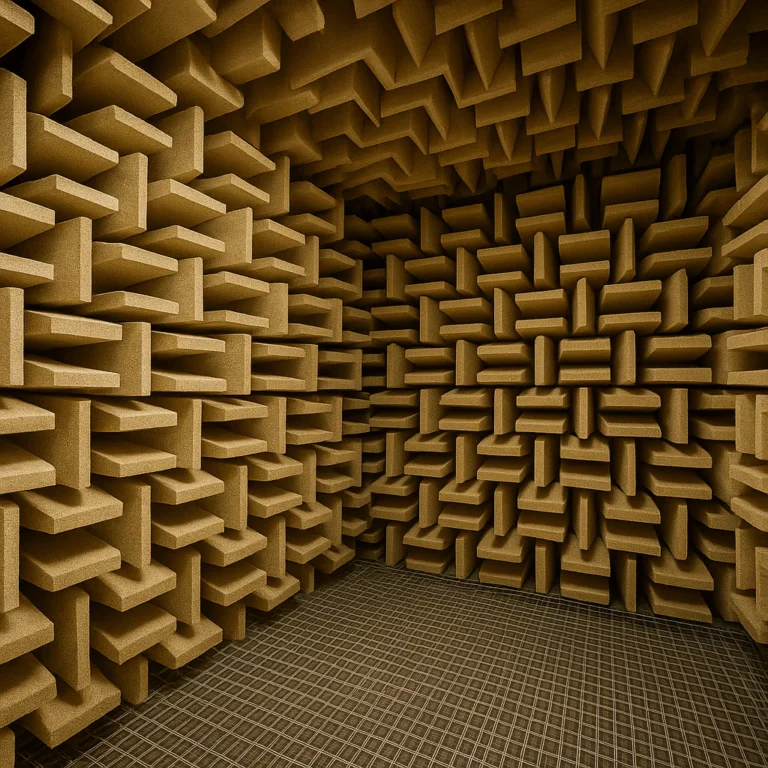
No verified $5 million prize is offered for staying in the world’s quietest room. The story is an internet challenge myth, not a Guinness endurance record or an offer published by Orfield Laboratories or Microsoft. Videos of people spending time in anechoic chambers can be genuine while the attached cash-prize claim is false.
This fact check separates three ideas that viral posts often combine: the current acoustic measurement record, a facility’s visitor rules, and an invented endurance challenge.
Key takeaways
- No official $5 million challenge was found. Neither the current Guinness record page nor the reviewed facility pages publish that offer.
- The current Guinness record is a sound measurement. Guinness lists Orfield Laboratories at −24.9 dBA from tests conducted in 2021.
- Microsoft held an earlier record. Its Building 87 chamber measured −20.35 dBA in 2015, according to Guinness.
- A visit is not an endurance contest. Orfield currently describes tours and silent sessions as available by appointment.
- There is no universal 45-minute rule. A repeated social-media claim is not a scientific or facility-wide limit.
The verdict: the prize claim is unsupported
The reviewed primary sources document quiet-room measurements, laboratory design, testing uses, and visitor access. They do not document a $5 million prize for remaining in a chamber. The absence of an offer on those sources cannot prove that no person has ever made a private hypothetical challenge, but it is enough to reject the viral claim that the famous facility or record body runs an official contest.
A careful headline should therefore say unsupported internet myth, not “winner revealed.” There is no verified winner because there is no verified official contest.
How the myth mixes separate facts
| Viral claim component | What is documented | What is not established |
|---|---|---|
| A famous extremely quiet room exists | Guinness documents record-setting anechoic chambers. | That the record creates an endurance contest. |
| Visitors may hear unusual sounds | Quiet conditions can make bodily or phantom sounds more noticeable. | That everyone hallucinates or becomes unable to leave. |
| People film challenge videos | Creators have filmed chamber experiences. | That a creator’s challenge is backed by a facility or cash sponsor. |
| A time limit is repeated online | Facilities and studies use session-specific procedures. | A universal 45-minute human limit. |
Who currently holds the quietest-place record?
As reviewed in July 2026, the Guinness World Records page lists the anechoic test chamber at Orfield Laboratories in Minneapolis. Guinness reports a −24.9 dBA result from tests conducted on November 19, 2021.
Microsoft’s Building 87 chamber was a legitimate earlier record holder. Guinness reported −20.35 dBA in 2015, and Microsoft describes the chamber’s isolated foundation, spring mounting, and acoustic-testing purpose. Repeating Microsoft as the current holder without a date turns a true historical fact into an outdated current claim.
Record status can change, so cite the record body and date rather than embedding “current” permanently in a headline. Our quietest-room record guide explains the measurement and current record separately from this challenge myth.
Did anyone win the $5 million challenge?
No verified winner was found because no verified official $5 million contest was found. A fact check should not manufacture a winner, loser, organizer, deadline, or prize terms to fill that gap.
Orfield’s official visitor page currently says its facilities can be booked by appointment for tours, silent sessions, events, and consultations. That is a paid or arranged visitor experience, not evidence of a prize challenge. Microsoft’s public Building 87 story describes engineering and device testing, not a public cash competition.
The broader “stay for 45 minutes or go insane” story also lacks the certainty implied by viral captions. Controlled sensory-deprivation studies have reported perceptual disturbances, with differences between people and experimental setups. That evidence does not create a universal countdown. See our quiet-room perception research guide for the study details.
A reusable verification method
- Find the named organizer. A real multi-million-dollar contest should identify the sponsor and publish terms.
- Locate the official offer. Look for eligibility, dates, judging, payment, liability, and contact information on the sponsor’s domain.
- Separate measurement from endurance. A Guinness acoustic record does not imply a human-stay record.
- Date every record claim. Former record holders remain important, but “current” requires a current source.
- Check the facility’s access page. Current booking rules outrank copied instructions in an old article.
- Reject missing evidence. Repetition, dramatic video thumbnails, and hypothetical questions are not contest documentation.
Frequently asked questions
Is the $5 million quiet-room challenge real?
No official offer was found in the reviewed Guinness, Orfield, or Microsoft sources. Treat it as an unsupported internet myth unless a named sponsor publishes verifiable rules.
Who won the quietest-room challenge?
There is no verified official winner because there is no verified official contest. Creators may set their own video challenges, but that does not establish the viral prize.
Does Microsoft still hold the record?
Not according to the current Guinness page reviewed for this article. Guinness lists Orfield Laboratories at −24.9 dBA from a 2021 measurement. Microsoft held an earlier record in 2015.
Can the public visit a record-setting chamber?
Orfield currently advertises by-appointment tours and silent sessions. Availability, pricing, safety rules, and permitted activities should be confirmed directly before travel.
Is 45 minutes the longest anyone can stay?
The reviewed sources do not establish a universal limit. Session durations depend on the facility, study, person, and conditions.
References