Support our educational content for free when you purchase through links on our site. Learn more
🔊 Refrigerator Decibels: What’s Normal?

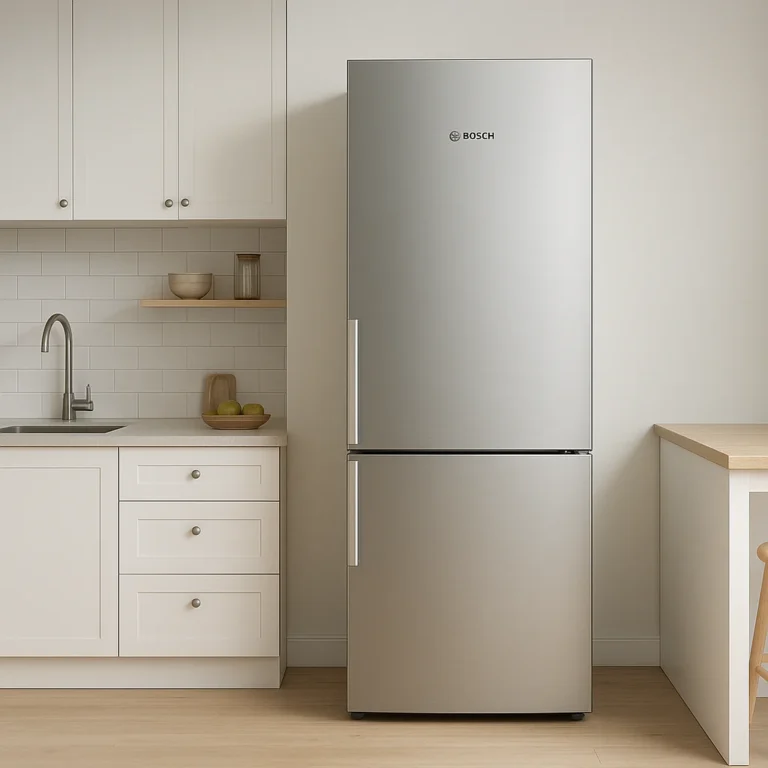
What is the average decibel level of a refrigerator? A typical household refrigerator is often listed around 40–43 dBA, although the exact level varies by model, installation, operating cycle, and measuring method. Think of that as a useful reference—not a strict pass-or-fail limit.
We’ve heard a refrigerator seem perfectly unobtrusive during a busy afternoon, then suddenly become the loudest thing in the kitchen after everyone else has gone to bed. That’s partly because a quiet room makes familiar sounds easier to notice—and partly because refrigerators cycle through different sounds as they cool, circulate air, and defrost.
Below, we explain what refrigerator decibel ratings really mean, how to measure noise at home, which sounds are normal, and what to check when a fridge starts rattling or humming louder than usual.
Key Takeaways
- A common reference range is about 40–43 dBA, but refrigerator noise ratings and test conditions vary.
- A single decibel reading doesn’t tell the whole story. Room acoustics, distance, installation, and the refrigerator’s operating cycle affect what you hear.
- Low humming, brief clicks, and occasional gurgling can be normal. Persistent grinding, scraping, or a new loud buzz deserves attention.
- Start with simple checks: level the appliance, ensure it has required ventilation clearance, and reposition rattling bottles or shelves.
- Compare model-specific evidence when shopping. Check official specifications and repeated owner feedback rather than relying on “quiet” marketing claims.
Table of Contents
- ⚡️ Quick Tips and Facts: Average Refrigerator Decibel Levels
- 🔊 What Decibel Level Should a Refrigerator Be?
- Typical Refrigerator Noise by Type
- How Refrigerator Noise Compares With Everyday Sounds
- Why Decibels Can Be Tricky to Compare
- 📊 How to Measure Refrigerator Noise Accurately
- Where to Place a Sound Meter or Phone
- Best Time to Take a Reading
- Sound Meter Apps vs. Dedicated Decibel Meters
- 🧊 Refrigerator Noise Levels by Style and Technology
- Top-Freezer, Bottom-Freezer, and French-Door Refrigerators
- Built-In, Compact, and Commercial Refrigerators
- Why Installation and Kitchen Layout Affect Noise
- 📜 Background: How Modern Refrigerators Became Quieter
- The Compressor’s Role in Refrigerator Sound
- How Energy-Efficiency Standards Changed Appliance Design
- 🎧 Why Does a Refrigerator Make Noise? Common Causes Explained
- Compressor Humming and Vibrations
- Evaporator and Condenser Fans
- Refrigerant Flow, Clicking, and Expansion Sounds
- Ice Maker, Water Valve, and Defrost-Cycle Sounds
- ✅ Normal Refrigerator Sounds vs. Noises That Need Attention
- When Humming, Gurgling, and Clicking Are Normal
- Rattling, Grinding, Buzzing, and High-Pitched Noises
- When to Call an Appliance Technician
- 🛠️ How to Reduce Refrigerator Noise at Home
- Level the Refrigerator and Check Its Clearance
- Reposition Bottles, Shelves, and Food Containers
- Check Door Seals and Cabinet Panels
- When Anti-Vibration Pads Help—and When They Don’t
- 🧹 Cleaning Condenser Coils in Dusty Homes and UAE Climates
- How Dirty Coils Can Increase Noise and Running Time
- Safe Coil-Cleaning Steps and Maintenance Intervals
- ⚙️ Quiet Refrigerator Technology: What Actually Makes a Difference?
- How Smart Inverter Compressors Reduce Noise
- Total No Frost and the Sounds of Automatic Defrost
- Multi Air Flow, Cooling Fans, and Temperature Control
- Sound-Insulating Materials and Vibration Control
- 🛒 What to Look for When Buying a Quiet Refrigerator
- How to Read Manufacturer Noise Specifications
- Compressor Type, Capacity, and Energy Use
- Placement, Ventilation, and Kitchen Design
- Warranty Coverage and Compressor Guarantes
- 🇦🇪 Choosing a Quiet Refrigerator for a UAE Home
- Why Open-Plan UAE Kitchens Can Make Noise More Noticeable
- Hot Weather, Ventilation, and Refrigerator Workload
- Features to Prioritize in the UAE
- Quiet Refrigerator Picks for UAE Buyers
- 1. Best Overall Quiet Refrigerator
- 2. Best Quiet French-Door Refrigerator
- 3. Best Quiet Bottom-Freezer Refrigerator
- 4. Best Quiet Refrigerator for Small Kitchens
- 5. Best Quiet Refrigerator on a Practical Budget
- 🔍 Troubleshooting Refrigerator Noise by Sound
- Refrigerator Humming Loudly or Running Constantly
- Buzzing, Clicking, or Popping
- Rattling, Vibrating, or Scraping
- Grinding or Squealing From the Freezer
- 🏠 Refrigerator Noise in Apartments, Studios, and Open-Plan Homes
- 🔌 Refrigerator Noise and Electricity Use: What’s the Connection?
- Conclusion
- Recommended Links
- FAQ
- Is 40 dB Loud for a Refrigerator?
- Are New Refrigerators Quieter Than Older Models?
- Why Is My Refrigerator Louder at Night?
- Can a Refrigerator Be Completely Silent?
- Should I Worry If My Refrigerator’s Noise Changes?
- Does a No-Frost Refrigerator Make More Noise?
- Reference Links
⚡️ Quick Tips and Facts: Average Refrigerator Decibel Levels
If you’re shopping, start with our guide to the quietest refrigerators. The short answer to “What is the average decibel level of a refrigerator?” is about 40–43 dBA during normal operation—roughly 41.5 dBA at the midpoint of one commonly cited household-apliance range. Treat that as a practical ballpark, not a universal laboratory specification: brands and models differ, and manufacturers may not publish comparable sound ratings.
| Quick fact | What it means |
|---|---|
| Typical household reference range | 40–43 dBA, according to Noise Pollution Clearinghouse’s household sound-level list |
| Midpoint of that range | 41.5 dBA—a simple calculation, not a separately measured industry average |
| Quiet-room comparison | The same source lists a quiet room at 28–33 dBA and a typical living room at 40 dBA |
| Manufacturer caveat | GE says it does not rate refrigerator or freezer sound levels, so it cannot give a model-independent decibel figure |
| New-fridge caveat | A refrigerator can run more audibly while cooling down after installation or a large load of warm groceries |
| Best shopping clue | Compare published dBA figures only when measurement conditions are clear; also read reviews for recurring noise complaints |
A few practical takeaways:
- Around 40 dBA isn’t the same as silence. In a kitchen connected to a living room, a steady hum may stand out more than it would in a busy, enclosed kitchen.
- The reading depends on where and how it’s measured. The household sound-level list says its figures are taken at “the distance that a person would typically be from the source”; that is not necessarily the same test setup used by a manufacturer.
- A noise change matters more than a single number. A new rattle, scraping sound, or persistent loud buzz deserves more attention than familiar compressor humming.
- Decibels are logarithmic. A 3 dB increase represents roughly twice the sound intensity, but not necessarily twice the perceived loudness. NIST explains the decibel scale and sound measurements.
- For more practical ways to quiet your home, browse our guides to low-noise household items and noise reduction tips.
🔊 What Decibel Level Should a Refrigerator Be?
For a typical residential refrigerator, roughly 40–43 dBA is a useful reference range, not a pass/fail rule. Some models may sound quieter, while others make brief, perfectly normal noises from fans, ice makers, refrigerant flow, or defrost cycles.
The main reason you’ll find different answers online is that not every source is reporting the same kind of number. One list may give a typical household sound level; a manufacturer may publish a controlled test result; another manufacturer may not rate sound levels at all. GE, for instance, says: “Refrigerators and freezers will make some noise or sound when they are running. This is normal,” and states it does not rate their sound levels. See GE’s refrigerator and freezer sound guidance.
Typical Refrigerator Noise by Type
There is no dependable dBA figure that applies to every French-door, top-freezer, built-in, or compact refrigerator. Design can influence noise, but the specific model, installation, room, and operating cycle matter more than the style label alone.
| Refrigerator type | What may affect its sound | What to check |
|---|---|---|
| Top-freezer or bottom-freezer | Compressor and fan placement; freezer airflow | Product specifications and recurring owner feedback |
| French-door | Multiple fans, ice maker, water dispenser, larger capacity | Ice-maker operation and fan noise reports |
| Side-by-side | Airflow design, ice and water systems | Whether reviews describe a steady hum or intermittent rattles |
| Built-in | Cabinet enclosure and required ventilation clearances | Manufacturer installation instructions |
| Compact or mini fridge | Small compressor, short cycling, cabinet vibration | Room placement and whether the unit sits level |
| Frost-free model | Automatic defrost and circulation fans | Whether occasional clicks, drips, or fan changes are expected |
These are design considerations, not a ranking. A feature-rich fridge might make more kinds of sounds, but that does not automatically mean it is louder overall. A well-installed, well-maintained model can be less intrusive than a nominaly quiet model vibrating against a cabinet.
How Refrigerator Noise Compares With Everyday Sounds
The Noise Pollution Clearinghouse household list gives a refrigerator reference of 40–43 dBA, a typical living room at 40 dBA, and a quiet room at 28–33 dBA. Those comparisons help explain why a fridge can fade into the background during the day yet seem obvious late at night.
| Sound reference | Approximate level in the cited list | How it may feel at home |
|---|---|---|
| Quiet room | 28–33 dBA | Very low background sound |
| Typical living room | About 40 dBA | Similar to the refrigerator reference range |
| Refrigerator | 40–43 dBA | Usually a steady, nearby appliance sound rather than silence |
These numbers should be read as illustrative reference points, not universal measurements. Room acoustics, distance, reflections, and background noise all change what reaches your ears.
Why Decibels Can Be Tricky to Compare
A decibel is a logarithmic unit. That means a small numerical increase is not a simple percentage increase in sound energy. The video summary supplied for this article uses the familiar shorthand that every 3 dB increase doubles noise. More precisely, a 3 dB rise is about a doubling of sound intensity; perceived loudness is a separate question and depends on frequency, duration, and listening conditions. NIST’s acoustics resources explain why measurement context matters.
The takeaway: don’t compare two refrigerator dBA numbers unless you know how they were measured. Distance, operating mode, room noise, and test method can make a seemingly neat comparison less neat than it looks.
📊 How to Measure Refrigerator Noise Accurately
A phone app can help you spot a loud rattle or compare “before” and “after” a repair, but it is not a substitute for a calibrated sound-level meter. Use the same room, position, and operating conditions each time.
Where to Place a Sound Meter or Phone
- Choose a typical listening position. Measure where you sit, work, or sleep—not with the microphone pressed against the fridge.
- Keep a consistent distance. Record the distance from the refrigerator and use it for every comparison.
- Avoid touching the cabinet. Contact can pick up vibration mechanically and distort an airborne sound reading.
- Note the room conditions. Open windows, ventilation, TV audio, and hard reflective surfaces can alter the reading.
- Use A-weighting if available. A dBA measurement is commonly used to approximate how people hear sound at everyday levels. The U.S. Occupational Safety and Health Administration’s sound-level meter guidance provides background on sound measurement and weighting.
Best Time to Take a Reading
Refrigerators cycle. A reading taken while the compressor is off may look impressively quiet; one taken during active cooling may capture a louder moment.
For a useful home check:
- Measure during normal, steady operation, not only immediately after switching the appliance on.
- Take several readings across a typical cycle and note the range.
- Record whether the compressor, fans, ice maker, or defrost cycle were operating.
- If the fridge is newly installed, allow it to cool fully before treating an initial reading as representative. The manufacturer’s setup instructions take priority.
Sound Meter Apps vs. Dedicated Decibel Meters
| Tool | Useful for | Limitations |
|---|---|---|
| Phone sound-meter app | Comparing changes in the same spot; finding when a sound occurs | Microphone calibration and accuracy vary by device |
| Handheld sound-level meter | More consistent home measurements | Quality and calibration still matter |
| Professional measurement setup | Formal, repeatable testing | Usually unnecessary for routine troubleshooting |
If your phone reads 42 dBA today and 41 dBA tomorrow, that doesn’t prove the fridge changed by exactly 1 dB. Look for a repeatable trend or a clear new sound, then use a technician when there’s a performance or safety concern.
🧊 Refrigerator Noise Levels by Style and Technology
Different refrigerator designs produce different sound patterns. A fan-equipped frost-free model may have more airflow sounds than a simpler unit; a dispenser and ice maker add valves and moving parts. More sound sources do not necessarily mean a higher average noise level, but they do mean more noises you may notice.
Top-Freezer, Bottom-Freezer, and French-Door Refrigerators
- Top-freezer models: Often straightforward in layout, though the compressor and fan can still be audible depending on placement.
- Bottom-freezer models: May use fans to move cold air between compartments; listen for airflow and intermittent fan changes.
- French-door models: Commonly add features such as an ice maker, water dispenser, and multiple airflow paths. These can create more occasional clicks or valve sounds.
- Side-by-side models: Their design and dispenser systems can add distinct operating sounds, but model-to-model differences are substantial.
When comparing models, check the official specification sheet, installation requirements, and owner feedback for repeat mentions of the same noise. One reviewer’s “loud” may mean a deep, steady hum; another may be reacting to a brief ice-maker fill.
Built-In, Compact, and Commercial Refrigerators
Built-in units are fitted into cabinetry and must have the ventilation clearances specified by the manufacturer. A tight opening or incorrectly installed trim can turn ordinary vibration into a cabinet buzz. Compact fridges can transmit vibration through desks, floors, and thin cabinetry. Commercial equipment is designed for different workloads and surroundings, so household sound expectations may not apply.
Measure the actual space before buying. Confirm the refrigerator’s required side, rear, and top clearances in the installation manual. Do not seal ventilation openings to make an appliance sound quieter; restricted airflow can impair performance.
Why Installation and Kitchen Layout Affect Noise
A refrigerator that sounds fine in a showroom may seem louder at home because kitchens have different floors, cabinets, wall distances, and background sound. Hard surfaces can reflect sound, while open-plan layouts carry appliance noise into living areas.
Check that:
- The appliance is level and stable.
- It is not touching a wall, cabinet, or nearby appliance in a way that transfers vibration.
- Airflow clearances meet the manufacturer’s instructions.
- The floor is firm and the adjustable feet are set correctly.
For broader ideas about quieter household setups, see Quietest’s low-noise household items and noise reduction tips.
📜 Background: How Modern Refrigerators Became Quieter

Refrigerators make sound because they move heat, circulate air, and control temperature—not because every hum signals trouble. Modern designs can use variable-speed compressors, fans, insulation, and vibration-control features to manage operation, but “modern” alone is not a noise guarantee.
The Compressor’s Role in Refrigerator Sound
The compressor circulates refrigerant through the cooling system. Depending on design and operating conditions, you may hear a low hum, a brief start-up sound, or changes in pitch as the appliance adjusts. Fans, valves, refrigerant movement, and defrost operations add other sounds. The U.S. Department of Energy’s refrigerator guidance describes the basic role of refrigerator systems and energy use.
How Energy-Efficiency Standards Changed Appliance Design
Efficiency requirements encourage manufacturers to reduce energy consumption through system and insulation improvements. Energy efficiency and quietness are related only indirectly: a more efficient appliance is not automatically quieter, and a quiet appliance is not automatically more efficient. Compare each feature using its own evidence—energy labels for consumption, sound specifications where available, and user reports for lived experience.
🎧 Why Does a Refrigerator Make Noise? Common Causes Explained
The compressor gets most of the blame, but refrigerators are small, busy systems. Fans spin, refrigerant moves, plastic parts expand and contract, and ice makers fill and release cubes. GE’s guidance is refreshingly plain: normal running noise is expected, while unusual or excessively loud sounds call for troubleshooting (GE Appliances).
Compressor Humming and Vibrations
A steady low hum often means the compressor is running. If the sound has become louder, check simple causes first: a unit that rocks slightly, a bottle touching another bottle, or a cabinet panel vibrating against the refrigerator.
Evaporator and Condenser Fans
Fans move air through the appliance or across cooling components. Their sound may change as operating conditions change. A fan that scrapes, grinds, or squeals is different from a smooth airflow sound and may need inspection.
Refrigerant Flow, Clicking, and Expansion Sounds
Gurgling, trickling, hissing, or light clicking can happen as refrigerant circulates or components respond to temperature changes. The sound alone does not diagnose a fault. A new sound accompanied by poor cooling, a burning smell, or repeated failed starts deserves prompt attention.
Ice Maker, Water Valve, and Defrost-Cycle Sounds
Ice makers can click, drop ice, and briefly buzz as water enters. Automatic defrost may produce occasional pops, drips, or changes in fan operation. If you do not use the ice maker, consult the manual about switching it off; do not disconnect water lines or alter electrical parts unless the manufacturer’s instructions say it is safe.
✅ Normal Refrigerator Sounds vs. Noises That Need Attention
No one can diagnose an appliance from a sound description alone, but the pattern and accompanying symptoms are useful clues.
| Sound or pattern | Often normal? | What to check |
|---|---|---|
| Steady low hum while cooling | Yes | Confirm it is level and not touching nearby surfaces |
| Brief click when starting or stopping | Often | Monitor whether cooling remains normal |
| Occasional gurgle, drip, or pop | Often | Compare with the owner’s manual |
| Rattle from bottles or shelves | Often fixable | Rearange items and check shelf fit |
| New grinding or scraping | Not a routine sound | Check for obstructions only where the manual permits; arrange service if it persists |
| Loud buzzing with weak cooling | Needs investigation | Follow manufacturer troubleshooting guidance |
| Repeated clicking with failed starts | Needs investigation | Contact the manufacturer or a qualified technician |
When Humming, Gurgling, and Clicking Are Normal
A refrigerator is not a soundproof box. A steady hum, brief clicks, and occasional fluid-like sounds may be part of normal operation. GE explicitly notes that refrigerators and freezers make sounds while running (GE support).
Rattling, Grinding, Buzzing, and High-Pitched Noises
Start with the harmless suspects: containers touching, a loose shelf, a refrigerator not level, or contact with a cabinet. Grinding, persistent high-pitched squealing, or a sudden loud buzz should not be dismissed, especially if cooling performance changes.
When to Call an Appliance Technician
Contact the manufacturer or a qualified technician if the refrigerator:
- Stops cooling or has an unexplained temperature change.
- Makes repeated start-up clicks without running normally.
- Produces persistent grinding, scraping, or a burning smell.
- Shows a leak, damaged cord, or other electrical concern.
- Continues making a new, loud noise after basic checks.
Use the brand’s official support channel and avoid opening electrical or refrigerant-system components yourself. GE directs users to its refrigerator troubleshooting support and Bodewell repair scheduling.
🛠️ How to Reduce Refrigerator Noise at Home
Before buying vibration pads or blaming the compressor, try these safe, simple checks. We’ve found that a small contact point can create a surprisingly convincing “the fridge is dying” rattle—especially when the cabinet acts like an amplifier.
Level the Refrigerator and Check Its Clearance
- Read the installation manual for the model’s recommended leveling procedure.
- Check whether the refrigerator rocks gently when you press a corner.
- Adjust leveling feet only as the manual allows.
- Confirm the appliance is not touching adjacent cabinets or walls in a way that transmits vibration.
- Keep required ventilation clearances. Do not push the fridge into a tight space to hide the noise.
Reposition Bottles, Shelves, and Food Containers
- Separate glass bottles that knock together.
- Check that shelves and drawers are seated correctly.
- Keep containers from touching a vibrating interior wall.
- Avoid overloading shelves or blocking air vents.
- Close doors fully and confirm bins do not obstruct them.
Check Door Seals and Cabinet Panels
A door seal is primarily a cooling and food-safety component, not a soundproofing fix. If a seal is visibly damaged or the door does not close properly, consult the owner’s manual or the manufacturer. Check exterior panels for loose items or cabinet contact, but do not remove covers or tighten internal electrical components unless the manual specifically instructs you to.
When Anti-Vibration Pads Help—and When They Don’t
Anti-vibration pads can help when a suitable, stable appliance transmits vibration into a hard floor. They will not fix a failing fan, blocked airflow, or a mechanical fault. Use pads only if they are compatible with the refrigerator’s weight and setup, and make sure the appliance remains level and stable.
For more practical household sound-control ideas, visit Quietest’s noise reduction tips.
🧹 Cleaning Condenser Coils in Dusty Homes and UAE Climates
Dusty coils can interfere with heat release and make a refrigerator work harder, though they are not a guaranteed explanation for a noisy fridge. Coil location and cleaning instructions vary: some models have accessible coils, while others are not designed for consumer cleaning.
How Dirty Coils Can Increase Noise and Running Time
When dust builds up on accessible components, heat transfer may be less effective. The refrigerator could run longer or the fan may be more noticeable. The U.S. Department of Energy’s appliance guidance recommends maintenance in line with the manufacturer’s instructions.
Safe Coil-Cleaning Steps and Maintenance Intervals
- Check the owner’s manual to find out whether the coils are accessible and how to clean them.
- Switch off and unplug the appliance only if the manual says this is appropriate and safe.
- Use the recommended brush or vacuum attachment, avoiding wiring and refrigerant lines.
- Restore ventilation clearances before restarting.
- Follow the manual’s cleaning interval; there is no single schedule that suits every model or home.
In dusty environments, check the manual more often for guidance—but never remove a sealed panel or probe internal components.
⚙️ Quiet Refrigerator Technology: What Actually Makes a Difference?
Features can influence how often and how noticeably a refrigerator runs, but marketing terms do not replace model-specific noise measurements. Look for published sound data, a clear warranty, correct installation requirements, and consistent owner feedback.
How Smart Inverter Compressors Reduce Noise
Variable-speed inverter compressors can adjust output rather than always running at a single fixed speed. That may produce smoother operation in some models, but inverter technology is not a promise of silence. The rest of the system—fans, cabinet design, installation, and operating conditions—still matters.
For example, LG describes its refrigerator product technologies on its official site. Check the exact model’s specifications and warranty terms for your market; features and coverage differ by country and product.
Total No Frost and the Sounds of Automatic Defrost
No-frost systems circulate air and manage frost automatically. That can add fan and defrost-cycle sounds, while avoiding manual defrosting. The first video summary linked for this article cautions that a No Frost model in a warm environment may produce more noticeable sound. That is a useful possibility, not a universal rule: a particular model’s installation and workload can change the result.
Multi Air Flow, Cooling Fans, and Temperature Control
Multi-airflow systems distribute cold air through the compartments. Fans may run at different times or speeds, so you can hear airflow that a simpler design might not produce. The benefit is more even cooling in suitable conditions; the trade-off is another sound source to consider.
Sound-Insulating Materials and Vibration Control
Insulation, mounting design, and vibration control may help reduce sound transmission. But a feature name does not tell you the actual dBA performance. Ask for model-specific documentation and look for multiple independent owner reports describing the same operating conditions.
🛒 What to Look for When Buying a Quiet Refrigerator
Quietness is only one part of the purchase. A refrigerator should also fit your kitchen, maintain safe food temperatures, and meet your storage needs. For low-noise kitchen equipment beyond refrigerators, explore Quietest’s low-noise kitchen gadgets.
How to Read Manufacturer Noise Specifications
- Look for dBA, not just an unqualified “dB” claim.
- Check whether the manufacturer explains the measurement method, distance, and operating mode.
- Compare products using the same kind of test data.
- Treat unsourced claims such as “whisper quiet” as marketing until supported by measurements.
- Remember that some brands do not publish refrigerator noise ratings; GE says it does not rate sound levels for its refrigerators and freezers (GE’s explanation).
Compressor Type, Capacity, and Energy Use
An inverter compressor may offer smoother output in a particular design, but capacity, fan operation, and installation still shape the result. Compare the refrigerator’s energy-use information separately from sound claims. The U.S. Department of Energy provides general guidance on refrigerator efficiency and operation.
Placement, Ventilation, and Kitchen Design
Before ordering, measure the appliance opening and confirm the manufacturer’s required clearances. Consider whether the kitchen is open to a living or sleeping area, whether the floor transmits vibration, and whether the unit will sit beside a resonant cabinet panel. A quiet model installed incorrectly can sound louder than it should.
Warranty Coverage and Compressor Guarantes
Read the actual warranty for your market and model. A long compressor warranty may cover a particular component under stated conditions; it does not necessarily cover labor, diagnosis, or every noise-related repair. Do not assume a broad “10-year compressor warranty” applies to every model or country. Verify terms directly with the brand before purchase.
🇦🇪 Choosing a Quiet Refrigerator for a UAE Home
In the UAE, as anywhere, the appliance’s installation and room conditions matter more than a country label. Hot surroundings can increase cooling demand, and open-plan kitchens can make normal operating sounds more noticeable. Check locally available model specifications, installation requirements, and warranty terms.
Why Open-Plan UAE Kitchens Can Make Noise More Noticeable
An open kitchen shares sound with the living area, so a steady hum may be easier to hear during quiet evenings. Hard floors and walls can reflect sound; cabinetry can also vibrate if the appliance touches it. The first video’s guidance recommends considering location and kitchen layout when choosing a refrigerator. That is sensible—but a separate room is not required just because a model is listed at 39 dB or more. Placement advice must be based on the home and the manufacturer’s installation instructions, not a universal cutoff.
Hot Weather, Ventilation, and Refrigerator Workload
Warm ambient conditions, frequent door opening, and blocked ventilation can increase the refrigerator’s workload. Follow the model’s rated climate range and installation clearances. Avoid placing the appliance near heat sources unless the manufacturer permits it, and never obstruct vents to reduce sound.
Features to Prioritize in the UAE
- Clear, model-specific noise information where available.
- A compressor and cooling design with independently verifiable specifications.
- Suitable ventilation for the intended cabinet opening.
- A locally supported warranty with understandable terms.
- Availability of service and replacement parts.
- Owner reviews that describe similar kitchens and usage.
Quiet Refrigerator Picks for UAE Buyers
We don’t name a “quietest” UAE model without a current, model-specific sound rating and reliable local availability. A brand’s technology label alone is not enough. Start with official regional product pages, compare the exact specification sheets, and ask the seller or manufacturer whether a sound rating is available.
1. Best Overall Quiet Refrigerator
Choose the model that combines clear noise evidence, suitable capacity, sound installation guidance, and local service support. If a manufacturer will not provide dBA data, treat owner reviews as supporting evidence—not as a controlled measurement.
2. Best Quiet French-Door Refrigerator
French-door models can include extra fans, dispensers, and ice makers. Compare these features against your actual needs and check reviews for repeated comments about fan or ice-maker noise. More features are convenient, but every feature you don’t use is one more thing you may not need to hear.
3. Best Quiet Bottom-Freezer Refrigerator
Look for suitable airflow design, stable installation, and a model whose freezer fan does not attract recurring complaints. Verify the exact dimensions and ventilation clearances before buying.
4. Best Quiet Refrigerator for Small Kitchens
In a small kitchen, prioritize the lowest well-supported noise specification you can verify, but also measure cabinet openings and allow required airflow. A compact refrigerator is not automatically quieter; its floor, cabinet, and compressor cycling can make it surprisingly noticeable.
5. Best Quiet Refrigerator on a Practical Budget
Rather than trusting a low-noise slogan, compare the warranty, service coverage, energy information, installation requirements, and recurring owner feedback. A basic model that fits correctly may be a better choice than a feature-packed unit with no sound information.
🔍 Troubleshooting Refrigerator Noise by Sound
Use this table to decide what to inspect and when to call for help. It is a troubleshooting starting point, not a remote diagnosis.
| Sound | First safe check | Get service if… |
|---|---|---|
| Humming | Check leveling, clearance, and nearby vibrating objects | It is newly loud or cooling performance changes |
| Buzzing | Check for contact with cabinetry or a rattling item | It persists, becomes harsh, or accompanies failed cooling |
| Clicking | Note whether it occurs briefly during normal cycling | Repeated clicking coincides with the compressor failing to run |
| Rattling | Rearange bottles and reseat accessible shelves | It continues after external items are removed |
| Grinding or scraping | Check the manual for any user-safe obstruction check | The sound persists or seems to come from a fan or internal part |
| High-pitched squeal | Stop experimenting and follow manufacturer support guidance | It is new, sustained, or paired with poor cooling |
Refrigerator Humming Loudly or Running Constantly
Check door closure, ventilation, ambient heat, recent grocery loading, and whether the appliance is level. If the refrigerator is new, allow it to cool according to the installation guide. If it continues running unusually long or temperatures are not stable, contact the manufacturer.
Buzzing, Clicking, or Popping
A short click or pop can occur during normal operation. Buzzing may come from a vibrating item or a component operating under load. Note when it happens, how long it lasts, and whether cooling changes. That information is more useful to a technician than “it sounds weird”—though, to be fair, “weird” is an excellent first clue.
Rattling, Vibrating, or Scraping
Remove items touching the refrigerator, check accessible shelves, and verify that the unit is stable. Do not reach behind a running refrigerator or remove protective covers. If a scraping or grinding sound persists, use official service support.
Grinding or Squealing From the Freezer
A freezer fan or ice-related component may be involved, but sound alone cannot confirm the cause. Check the owner’s manual and arrange service if the noise continues, especially if the freezer is warming or the sound is worsening.
🏠 Refrigerator Noise in Apartments, Studios, and Open-Plan Homes
In smaller homes, distance is short and background sound can be low. A refrigerator’s normal operating cycle may therefore feel more prominent, especially at night. Try moving the listening area rather than the refrigerator if its clearance or ventilation would otherwise be compromised. A rug or soft furnishing may reduce room reflections, but should not cover appliance vents or interfere with safe access.
If you are sensitive to background sound, compare the refrigerator from your usual seat during both active and idle periods. Quietest also covers low-noise options in household products and electronics.
🔌 Refrigerator Noise and Electricity Use: What’s the Connection?
Noise and electricity use can both change with workload, but a louder refrigerator is not automatically an inefficient one. A hot room, frequent door openings, poor ventilation, or a large load of warm food may keep a refrigerator running longer. A mechanical fault can also affect operation, but a sound measurement cannot establish energy efficiency.
For efficiency, consult the appliance’s official energy information and the U.S. Department of Energy’s refrigerator guidance. For sound, use comparable manufacturer data where available and note the actual operating conditions. Keep the two questions separate: “How much power does it use?” and “How loud is it where I live?”