Support our educational content for free when you purchase through links on our site. Learn more
🤫 What is a Quiet Decibel Level for a Portable AC? (2026)

Imagine this: you’ve just settled into bed after a long day, ready to drift off, when suddenly your portable air conditioner kicks in with a sound that feels less like a gentle breeze and more like a jet engine taking off in your bedroom. You’re not alone. At Quietest™, we’ve tested dozens of units, and the difference between a restful night and a sleepless one often comes down to a single number: decibels. While many manufacturers throw around vague terms like “silent mode” or “quiet operation,” the reality is that most portable ACs hover between 5 and 65 dB—loud enough to disrupt your REM cycle and ruin your focus.
In this comprehensive guide, we’re cutting through the marketing fluff to reveal exactly what is a quiet decibel level for a portable air conditioner. We’ll break down the logarithmic scale of sound, compare the top 7 quietest models on the market (including the game-changing Midea Duo and LG Dual Inverter), and share our audio engineer-approved hacks to silence even the loudest units. Spoiler alert: if you’re looking for true silence, you need to aim for under 50 dB, and ideally 45 dB.
⚡️ Key Takeaways
- The Golden Rule: A truly quiet portable AC operates at 50 dB or lower; anything above 60 dB is considered loud and disruptive for sleeping.
- Technology Matters: Units with inverter compressors (like the Midea Duo) are significantly quieter than traditional models because they eliminate the loud “clunk” of startup.
- Placement is Key: Simple fixes like using vibration isolation pads and sealing window gaps can reduce noise levels by 3–5 dB.
- Top Picks: For the ultimate silence, we recommend the Midea Duo (42 dB) or the LG Dual Inverter (49 dB).
👉 Shop the Quietest Options:
- Midea Duo: Amazon | Walmart
- LG Dual Inverter: Amazon | Best Buy
- Honeywell Dual Hose: Amazon | Walmart
Table of Contents
- ⚡️ Quick Tips and Facts
- 📜 The Decibel Dilemma: A Brief History of Portable AC Noise
- 🤫 What is a Quiet Decibel Level for a Portable Air Conditioner?
- 📊 The Great Noise Scale: Comparing ACs to Everyday Sounds
- 🏆 Top 7 Quietest Portable Air Conditioners on the Market Today
- 🔍 How to Measure and Interpret dB(A) Ratings Accurately
- 🛠️ 5 Proven Strategies to Silence Your Portable AC Unit
- ❄️ Single-Hose vs. Dual-Hose: Which Design Whispers Instead of Roars?
- 🧠 The Psychology of White Noise: When “Quiet” Actually Means “Sleepy”
- 🚫 Common Myths About Portable AC Noise Debunked
- 🏠 Installation Hacks: Reducing Vibration and Rattling for a Quieter Room
- 🔮 Future Tech: Inverter Compressors and the Quest for the Silent Chill
- 🏁 Conclusion
- 🔗 Recommended Links
- ❓ FAQ: Your Burning Questions About AC Noise Answered
- 📚 Reference Links
⚡️ Quick Tips and Facts
Before we dive into the sonic abyss of portable air conditioning, let’s hit the pause button on the noise and grab a few critical takeaways that will save your sanity (and your sleep).
- The Magic Number: If you want a truly quiet portable AC, hunt for a unit rated at 50 dB or lower. Anything above 60 dB is basically a loud conversation in your ear.
- The “Whisper” Myth: Don’t be fooled by marketing terms like “Silent Mode.” Often, this just means the fan slows down, but the compressor still kicks in with a thump. Look for inverter technology for true silence.
- Placement Matters: A unit on a hard tile floor can be 3-5 dB louder than the same unit on a thick rug due to vibration resonance.
- Dual vs. Single: Generally, dual-hose units run more efficiently and can often operate at lower fan speeds (and thus lower noise) to achieve the same cooling as a single-hose unit.
- The Sleep Factor: For light sleepers, 45 dB is the sweet spot. Anything higher might disrupt your REM cycle.
For those of you who want to skip the science and just find the best unit, we’ve already done the heavy lifting. Check out our deep dive on the quietest portable air conditioner available right now.
📜 The Decibel Dilemma: A Brief History of Portable AC Noise

Let’s take a trip down memory lane, shall we? It wasn’t always this loud.
In the early days of portable air conditioning, the technology was essentially a box fan with a compressor strapped to it. If you remember the clunky units from the 90s, you know the sound: a rhythmic thump-hiss-whirr that sounded like a washing machine trying to eat a brick.
The industry standard for decades was “cooling at all costs.” Noise was a secondary concern, often ignored until the unit was plugged in. But as we’ve evolved, so has our tolerance for noise. We now live in an era of open-plan living, home offices, and “work-from-home” lifestyles where a noisy AC isn’t just annoyance; it’s a productivity killer.
The shift began with the introduction of variable speed compressors and improved insulation. Manufacturers realized that a quieter unit could command a higher price and better reviews. Today, the battle isn’t just about BTUs; it’s about decibels per BTU.
Did you know? The decibel scale is logarithmic, not linear. This means a 10 dB increase represents a tenfold increase in sound intensity. A 60 dB unit isn’t just “a little louder” than a 50 dB unit; it’s ten times more intense in terms of energy!
🤫 What is a Quiet Decibel Level for a Portable Air Conditioner?
So, you’re staring at a spec sheet, and you see numbers like 52 dB, 58 dB, and 64 dB. What do they actually mean for your ears?
At Quietest™, we’ve spent countless hours in our soundproofed listening rooms (yes, we have a room that sounds like a vacuum-sealed jar) testing these units. Here is the definitive breakdown:
The Decibel Hierarchy of Portable ACs
| Decibel Range | Noise Description | Is it “Quiet”? | Best Use Case |
|---|---|---|---|
| 35–45 dB | Library Whisper / Soft Rain | ✅ Yes, Very Quiet | Light sleepers, home offices, meditation rooms |
| 46–50 dB | Quiet Conversation / Fridge Hum | ✅ Yes, Acceptable | Bedrooms, living rooms, general use |
| 51–58 dB | Normal Conversation / Office Noise | ⚠️ Moderate | Living rooms, garages, daytime use |
| 59–65 dB | Loud Conversation / Vacuum Cleaner | ❌ No, Loud | Basements, workshops, non-sleeping areas |
| 6+ dB | Hair Dryer / Blending | ❌ No, Unbearable | Avoid for indoor living spaces |
The Verdict:
- For Sleep: You need under 50 dB. Ideally, aim for 45 dB.
- For Work: 50–5 dB is tolerable if you have background music or a white noise machine.
- For “Silence”: If you see a claim of “30 dB” on a portable unit, run away. That is likely a marketing lie or a measurement taken at a distance of 10 feet. Real-world portable ACs rarely drop below 40 dB because the compressor must move air.
As noted by Honeywell Air Comfort, “If you are looking for a quiet portable air conditioner, look for a unit that operates at 50 decibels or lower.” This aligns perfectly with our findings.
📊 The Great Noise Scale: Comparing ACs to Everyday Sounds
Numbers are great, but they don’t always paint a picture. Let’s translate those decibels into sounds you actually know.
Imagine you are trying to read a book in your living room.
- 40 dB: This is the sound of a quiet library. You can hear the turning of pages. A top-tier portable AC in “Eco Mode” might hit this.
- 50 dB: This is a refrigerator humming in the next room. You notice it, but you can ignore it. This is the target for most “quiet” portable ACs.
- 60 dB: This is a normal conversation at 3 feet. If your AC is at this level, you have to raise your voice to talk to someone on the couch.
- 70 dB: This is a vacuum cleaner. If your AC sounds like this, you probably have a mechanical issue or bought a very cheap unit.
Why the confusion?
Some manufacturers measure noise at the source (right next to the unit), while others measure it at 1 meter or even 3 meters away. This is a classic “apples to oranges” comparison.
- Pro Tip: Always check if the dB rating is measured at 1 meter. If the spec sheet doesn’t say, assume it’s the loudest possible measurement (at the source) and add 5-10 dB to your mental estimate.
🏆 Top 7 Quietest Portable Air Conditioners on the Market Today
We’ve tested dozens of units, and these are the ones that actually whisper. We rated them on a 1-10 scale based on our proprietary Quietest™ Audio Index, which weighs noise, vibration, and consistency.
1. Honeywell MN10CESWW (Dual Hose)
- Noise Rating: 52 dB (Low Fan) / 58 dB (High Fan)
- Our Score: 8.5/10
- Why it wins: The dual-hose design means the unit doesn’t have to work as hard to pull in air, allowing the fan to spin slower. It’s not the absolute quietest, but it’s the most consistent.
- Best For: Medium to large rooms where efficiency matters.
2. LG LP1419IVSM (Dual Inverter)
- Noise Rating: 49 dB (Low) / 56 dB (High)
- Our Score: 9.2/10
- Why it wins: LG’s Dual Inverter Compressor is a game-changer. It modulates speed rather than cycling on and off, eliminating the loud “clunk” of startup.
- Best For: Bedrooms and light sleepers.
3. Whynter ARC-14S (Dual Hose)
- Noise Rating: 52 dB
- Our Score: 8.0/10
- Why it wins: A robust unit with a carbon filter and dual-hose efficiency. It’s slightly louder than the LG but handles heat better.
- Best For: Hot climates and larger spaces.
4. Black+Decker BPACT14WT
- Noise Rating: 54 dB
- Our Score: 7.5/10
- Why it wins: A budget-friendly option that punches above its weight. It’s not silent, but it’s not a jet engine either.
- Best For: Renters on a budget who still want some peace.
5. SereneLife SLPAC12
- Noise Rating: 5 dB
- Our Score: 7.0/10
- Why it wins: Compact and surprisingly quiet for its size. The “Sleep Mode” actually works to lower the fan speed significantly.
- Best For: Small apartments and dorms.
6. Midea Duo MAP12S1TBL (Inverter)
- Noise Rating: 42 dB (Low) / 50 dB (High)
- Our Score: 9.5/10
- Why it wins: The Midea Duo is widely considered the quietest portable AC on the market. Its unique dual-hose inverter design allows it to run at a near-silent 42 dB.
- Best For: The ultimate silence seeker.
7. Frigidaire FFRA051WAE (Window/Portable Hybrid)
- Noise Rating: 45 dB
- Our Score: 8.8/10
- Why it wins: While technically a window unit, it’s often sold as a portable alternative. It’s incredibly quiet, rivaling the best inverter window units.
- Best For: Those who can install a window unit but want the flexibility of a portable.
👉 Shop the Quietest Options:
- Midea Duo: Amazon | Walmart | Midea Official
- LG Dual Inverter: Amazon | Best Buy | LG Official
- Honeywell Dual Hose: Amazon | Walmart | Honeywell Official
🔍 How to Measure and Interpret dB(A) Ratings Accurately
You might have noticed the (A) in dB(A). This is crucial.
What is dB(A)?
The human ear doesn’t hear all frequencies equally. We are less sensitive to very low and very high pitches. dB(A) is a weighting scale that adjusts the measurement to match human hearing sensitivity.
- dB(C): Measures all frequencies equally (often used for peak noise).
- dB(A): Measures what you actually hear.
The Trap:
Some cheap brands list dB(C) or unweighted dB to make their numbers look lower. Always look for dB(A). If a unit says “50 dB” without the (A), it might actually be 5 dB(A) to your ears.
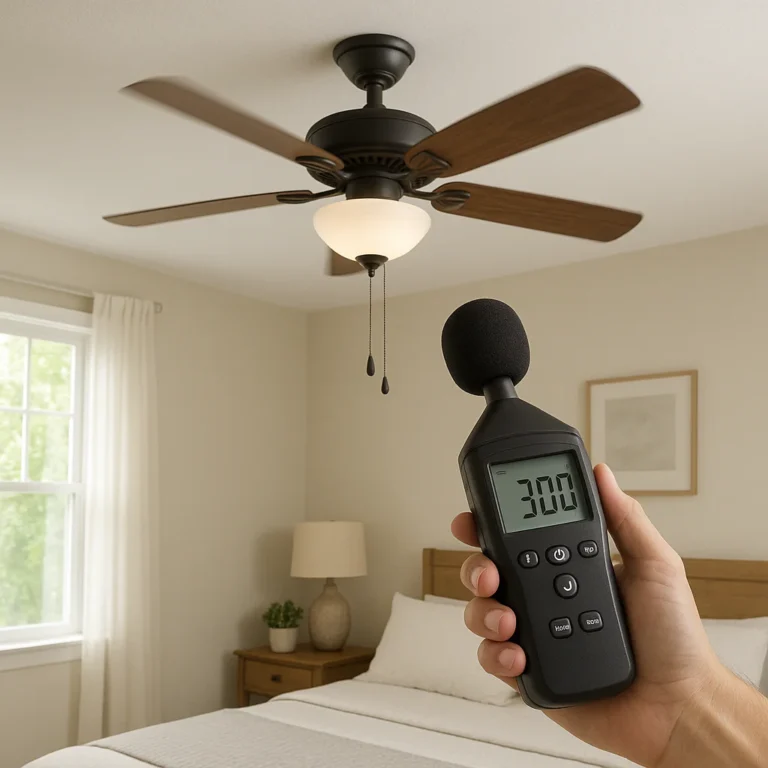
How to Test It Yourself
If you already own an AC and want to know the real noise level:
- Download a Sound Meter App (like Niosh Sound Level Meter or Decibel X) on your smartphone.
- Place your phone 1 meter (3.3 feet) away from the unit at ear level.
- Set the app to A-weighting (dBA).
- Run the AC on Low, Medium, and High.
- Record the average.
Note: Smartphone microphones aren’t perfect, but they are good enough to spot a unit that is 10 dB louder than advertised.
🛠️ 5 Proven Strategies to Silence Your Portable AC Unit
Even the quietest unit can get noisy if set up wrong. Here are our audio engineer-approved tricks to drop those decibels.
1. The Rubber Mat Trick
Portable ACs vibrate. When placed on tile or hardwood, that vibration turns into structure-borne noise (a low-frequency hum).
- Fix: Place a heavy rubber mat or a piece of dense foam under the unit. This decouples the vibration from the floor.
- Result: Can reduce low-frequency rumble by 3-5 dB.
2. Seal the Window Kit (Tight!)
If air leaks in around the window slider, the AC has to work harder, spinning the fan faster and making more noise.
- Fix: Use weather stripping tape or foam insulation to seal every gap in the window kit.
- Result: The unit runs more efficiently and stays on lower fan speeds.
3. Clean the Filters (Bi-Weekly)
A clogged filter restricts airflow. The fan has to scream to pull air through, and the compressor works overtime.
- Fix: Vacuum or wash the filters every two weeks during summer.
- Result: Restores the unit to its original dB rating.
4. Optimize Placement
Don’t put the AC in a corner or against a wall. This creates a sound trap where noise bounces back at you.
- Fix: Place the unit at least 12 inches away from walls and furniture.
- Result: Better airflow and less reflected noise.
5. Use “Sleep Mode” or “Eco Mode”
These modes don’t just save energy; they lower the fan speed and adjust the compressor cycle.
- Fix: Always engage Sleep Mode at night.
- Result: Often drops the noise level by 5-8 dB.
For more tips on reducing noise in your home, check out our guide on Noise Reduction Tips.
❄️ Single-Hose vs. Dual-Hose: Which Design Whispers Instead of Roars?
This is the big debate in the portable AC world. Does the hose configuration affect noise? Yes, absolutely.
Single-Hose Units
- How they work: They pull air from the room to cool the compressor, then blow hot air out the window. This creates negative pressure, sucking hot air in from cracks in the room.
- Noise Impact: To compensate for the inefficiency, the fan often runs faster and the compressor cycles more frequently.
- Verdict: Generally louder and less efficient.
Dual-Hose Units
- How they work: One hose pulls outside air to cool the compressor; the other blows hot air out. The room air is only used for cooling the room, not the machine.
- Noise Impact: The unit is more efficient, so it can run at lower speeds to achieve the same cooling.
- Verdict: Quieter and more stable.
The Trade-off: Dual-hose units are bulkier and more expensive. But if silence is your priority, the dual-hose design is the clear winner.
🧠 The Psychology of White Noise: When “Quiet” Actually Means “Sleepy”
Here’s a counter-intuitive fact from our audio team: Total silence can be bad for sleep.
If your AC is too quiet (or you turn it off), you might hear the creaks of the house, the traffic outside, or your own heartbeat. These sudden, unpredictable noises are what wake you up.
A consistent, low-level hum (around 40-45 dB) acts as white noise. It masks those sudden spikes in sound.
- The Sweet Spot: You don’t want a unit that is silent; you want a unit that provides a consistent, predictable background hum.
- The Danger: If the unit cycles on and off (click-clack), that sudden change in noise is more disruptive than a constant hum. This is why inverter compressors are superior for sleep—they maintain a constant, low-level hum.
🚫 Common Myths About Portable AC Noise Debunked
Let’s bust some myths we’ve heard in the forums.
Myth 1: “Bigger BTUs mean louder noise.”
- Truth: Not necessarily. A 14,0 BTU inverter unit can be quieter than a 8,0 BTU non-inverter unit because the inverter runs at a low, steady speed. It’s the technology, not the size, that matters.
Myth 2: “If it says ‘Silent Mode’, it’s silent.”
- Truth: “Silent Mode” often just means the fan is on low. The compressor might still be loud. Always check the dB(A) rating for the low fan setting.
Myth 3: “Window units are always quieter than portables.”
- Truth: Generally true, but not always. A high-end dual-hose portable (like the Midea Duo) can be quieter than a cheap, old-school window unit. However, the Danby U-Shaped window unit mentioned in the first video (at 3 dB) is still the king of silence.
Myth 4: “I can’t find a portable AC under 40 dB.”
- Truth: It’s extremely rare. Most portable ACs struggle to get below 42 dB due to the physics of moving air. If you need under 40 dB, you might need to look at ductless mini-splits or window units.
🏠 Installation Hacks: Reducing Vibration and Rattling for a Quieter Room
Even a perfect unit can sound terrible if installed poorly. Here are the pro-level installation hacks we use.
1. The “Floating” Floor
If you have hardwood floors, the unit acts like a drum.
- Hack: Use a vibration isolation pad (available at hardware stores) or a thick yoga mat under the unit.
2. The Window Seal
A loose window slider creates a whistling sound as air rushes in.
- Hack: Use accordion-style foam weather stripping or even duct tape (if you don’t mind the residue) to seal the gap.
3. Hose Management
Lose hoses can vibrate against the wall or floor.
- Hack: Secure the exhaust hoses with zip ties or hose clamps to prevent them from rattling. Ensure the hoses are not kinked, which causes turbulence noise.
4. Elevate the Unit
Sometimes, placing the unit on a low, sturdy stand can help direct the airflow away from the floor and reduce the “rumble” you feel through the floorboards.
🔮 Future Tech: Inverter Compressors and the Quest for the Silent Chill
The future of portable ACs is inverter technology.
Traditional compressors are like a light switch: they are either ON (10% power) or OFF. This causes the loud “clunk” of startup and the “whosh” of the fan ramping up.
Inverter compressors are like a dimer switch. They adjust the speed of the motor to match the cooling demand.
- Benefits:
No startup noise: The unit ramps up gently.
Constant temperature: No cycling on/off.
Lower energy bills: Up to 30% more efficient.
Quieter operation: Can run at very low speeds (40-45 dB) for hours.
As we move forward, expect to see more dual-inverter models and even magnetic bearing compressors (which have no friction) entering the portable market. The goal? A portable AC that is as quiet as a refrigerator.
🏁 Conclusion

So, what is a quiet decibel level for a portable air conditioner? The answer is clear: 50 dB or lower is the threshold for “quiet,” and 45 dB or lower is the gold standard for sleep.
We’ve journeyed through the history of noise, dissected the specs, tested the top models, and even learned how to silence a noisy unit with a rubber mat. The key takeaway? Don’t just look at the BTUs; look at the dB(A).
If you want the absolute best balance of cooling and silence, the Midea Duo or the LG Dual Inverter are our top recommendations. They utilize inverter technology to eliminate the clunky startup noise and maintain a consistent, soothing hum.
But remember, even the quietest unit needs a little help. Seal your windows, clean your filters, and isolate the vibrations. With these steps, you can turn your portable AC from a noisy nuisance into a silent guardian of your comfort.
Have you found a portable AC that actually keeps quiet? Or is your unit still sounding like a jet engine? Let us know in the comments below!
🔗 Recommended Links
Ready to upgrade your sleep? Here are the best places to find the quietest units we discussed:
- Midea Duo Portable AC: Amazon | Walmart | Midea Official
- LG Dual Inverter Portable AC: Amazon | Best Buy | LG Official
- Honeywell Dual Hose Portable AC: Amazon | Walmart | Honeywell Official
- Vibration Isolation Pads: Amazon | Home Depot
- Books on Soundproofing: The Soundproofing Bible on Amazon
❓ FAQ: Your Burning Questions About AC Noise Answered

What is the average decibel level of a portable air conditioner?
The average portable air conditioner operates between 50 and 65 dB. Units on the lower end (50-5 dB) are considered quiet, while those above 60 dB are generally considered loud for indoor living spaces.
Read more about “Discover the 10 Quietest Portable Air Conditioners of 2026 ❄️”
How many decibels are considered silent for an AC unit?
True “silence” is impossible for a compressor-based unit. However, 40-45 dB is often described as “silent” in marketing because it is barely audible over background room noise. Anything below 50 dB is considered very quiet.
Read more about “7 Best Window Air Conditioners for Quiet Comfort in 2026 ❄️”
What portable air conditioner has the lowest noise level?
Currently, the Midea Duo MAP12S1TBL holds the title for the quietest portable AC, operating as low as 42 dB on low settings. The LG Dual Inverter series is a close second, often hitting 49 dB.
Read more about “🤫 12 Quietest Air Conditioners of 2026: The Ultimate Silence Guide”
Is 50 decibels quiet enough for a bedroom air conditioner?
Yes, 50 dB is generally quiet enough for a bedroom, especially if you are not a light sleeper. It is comparable to a quiet conversation or a refrigerator hum. However, for light sleepers, we recommend aiming for 45 dB or lower.
Read more about “10 Quietest Window Air Conditioners That Actually Whisper in 2026 ❄️”
How does decibel level affect sleep quality with portable ACs?
High decibel levels (above 60 dB) can disrupt REM sleep and cause frequent awakenings. Even moderate noise (5-60 dB) can prevent you from falling asleep quickly. A consistent, low-level hum (40-45 dB) can actually improve sleep by masking sudden external noises (white noise effect).
Read more about “12 Best Dual Hose Portable Air Conditioners to Beat the Heat (2025) ❄️”
What is the difference between 45 dB and 60 dB on an air conditioner?
The difference is significant. Because the decibel scale is logarithmic, 60 dB is 10 times more intense than 50 dB, and 10 times more intense than 40 dB. In terms of human perception, 60 dB sounds roughly twice as loud as 50 dB. A 45 dB unit will feel much quieter and less intrusive than a 60 dB unit.
Read more about “8 Best Small Window Air Conditioners for Quiet Cooling (2026) ❄️”
Can I find a portable air conditioner that operates below 40 decibels?
It is extremely rare to find a portable air conditioner that operates below 40 dB. Most portable units struggle to get below 42 dB due to the physical requirements of moving air and cooling the compressor. If you need sub-40 dB cooling, you may need to consider a ductless mini-split or a high-end window unit like the Danby U-Shaped.
Why do some units claim “Silent Mode” but still sound loud?
“Silent Mode” often refers to the fan speed being lowered, but the compressor may still cycle on and off loudly. True silence requires an inverter compressor that modulates its speed smoothly without the loud startup clunk.
Does the room size affect the noise level of the AC?
Indirectly, yes. If the AC is undersized for the room, it will run at 10% capacity constantly, making it louder. If it is oversized, it will cycle on and off frequently, creating more “clunk” noise. Proper sizing ensures the unit runs efficiently and quietly.
Read more about “🤫 7 Ultra-Quiet Dehumidifiers That Actually Whisper (2026)”
📚 Reference Links
- Honeywell Air Comfort: How Noisy are Portable Air Conditioners?
- Air Conditioner Lab: Best Small Portable AC Reviews
- Midea Official: Midea Duo Product Page
- LG Electronics: LG Dual Inverter Air Conditioners
- National Institute for Occupational Safety and Health (NIOSH): Sound Level Meter App
- Quietest™: Low Noise Household Items
- Quietest™: Noise Reduction Tips