Support our educational content for free when you purchase through links on our site. Learn more
10 Quietest Blender Reviews: Find Your Calm 🥤

Our top pick is the Vitamix Ascent X5 for its strong blending performance and comparatively controlled noise; for a built-in sound shield, choose the Hamilton Beach Professional Quiet Blender. These reviews for the quietest blenders compare noise, blending results, cleanup, and real-world trade-offs, so you can find the right fit for your kitchen—not just the smallest number on a decibel meter.
Here’s the catch: a “quiet” blender still makes noise. One independent test measured the Vitamix Ascent X5 at 89 dBA, while portable models can be gentler on the ears but less capable with ice and thick blends. We’ve sorted out what those differences mean for everyday smoothies, small apartments, and early-morning kitchens.
Key Takeaways
- Best overall: Vitamix Ascent X5 balances powerful blending with comparatively controlled noise.
- Best sound shield: Hamilton Beach Professional Quiet Blender uses an enclosure to reduce sound escaping into the room.
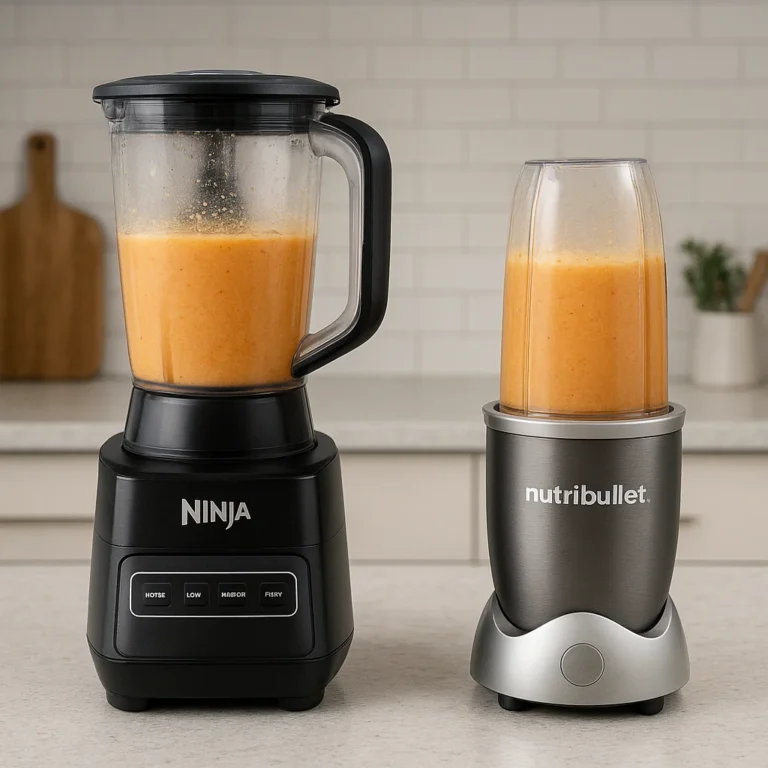
- Best for ice and frozen drinks: Ninja Professional Plus DUO offers strong ice-crushing performance and a personal cup.
- Best personal pick: nutribullet Flip is a convenient choice for single-serving smoothies.
- Compare test methods, not just dBA numbers: Distance, ingredients, room acoustics, and blending speed all affect reported noise.
- Reduce extra rattling: A stable counter, properly seated jar, and silicone mat can help limit vibration.
- 👉 Shop by your toughest regular recipe: A smoothie-only personal blender won’t necessarily handle ice, nut butter, or large batches.
Table of Contents
- ⚡ Quick Tips and Facts: Choosing a Quiet Blender
- 🔇 What Makes a Blender Quiet? Noise, Decibels, and Design
- How Blender Noise Is Measured
- Sound Enclosures, Motor Design, and Other Noise-Reducing Features
- 🧪 How We Evaluate Quiet Blender Reviews
- Noise Testing: What to Compare Beyond Decibel Ratings
- Blending Performance, Cleanup, Durability, and Value
- 📚 A Brief History of Quieter Blenders
- 🏆 Best Quiet Blenders: Our Top Picks
- 1. Best Quiet Blender Overall
- 2. Best Premium Quiet Blender for Serious Home Cooks
- 3. Best Upper Mid-Range Quiet Blender
- 4. Best Mid-Range Quiet Blender for Everyday Use
- 5. Best Budget Quiet Blender
- 6. Best Affordable Blender for Smaller Kitchens
- 7. Best Quiet Personal Blender for Smoothies
- 8. Best Quiet Blender for Apartments and Shared Spaces
- 9. Best Quiet Blender for Frozen Fruit and Ice
- 10. Best Quiet Commercial-Style Blender for Home Use
- 🔍 All Quiet Blender Reviews: Side-by-Side Comparison
- Noise Levels, Capacity, Controls, and Key Features
- Which Quiet Blender Is Best for Your Needs?
- ✅ Quiet Blender Buying Guide: What to Look For
- Motor Power, Blade Design, and Blending Results
- Jar Material, Capacity, and Ease of Cleaning
- Noise Enclosures, Counter Space, and Storage
- Warranty, Replacement Parts, and Long-Term Reliability
- 🥤 Quiet Blender Types: Countertop, Personal, and Immersion
- 🏠 Choosing a Quiet Blender for Your Home
- Best Options for Apartments, Babies, and Early Mornings
- Best Options for Smoothies, Soups, Nut Butter, and More
- 🧽 How to Make Any Blender Quieter
- Placement, Noise Mats, and Sound-Absorbing Bariers
- Maintenance Tips to Reduce Rattling and Vibration
- ⚠️ Quiet Blender Trade-Offs and Common Buying Mistakes
- 💬 Conclusion: Finding the Quietest Blender for You
- 🔗 Recommended Links
- ❓ Frequently Asked Questions About Quiet Blenders
- 📖 Reference Links
Table of Contents
- ⚡ Quick Tips and Facts: Choosing a Quiet Blender
- 🔇 What Makes a Blender Quiet? Noise, Decibels, and Design
- How Blender Noise Is Measured
- Sound Enclosures, Motor Design, and Other Noise-Reducing Features
- 🧪 How We Evaluate Quiet Blender Reviews
- Noise Testing: What to Compare Beyond Decibel Ratings
- Blending Performance, Cleanup, Durability, and Value
- 📚 A Brief History of Quieter Blenders
- 🏆 Best Quiet Blenders: Our Top Picks
- 1. Best Quiet Blender Overall
- 2. Best Premium Quiet Blender for Serious Home Cooks
- 3. Best Upper Mid-Range Quiet Blender
- 4. Best Mid-Range Quiet Blender for Everyday Use
- 5. Best Budget Quiet Blender
- 6. Best Affordable Blender for Smaller Kitchens
- 7. Best Quiet Personal Blender for Smoothies
- 8. Best Quiet Blender for Apartments and Shared Spaces
- 9. Best Quiet Blender for Frozen Fruit and Ice
- 10. Best Quiet Commercial-Style Blender for Home Use
- 🔍 All Quiet Blender Reviews: Side-by-Side Comparison
- Noise Levels, Capacity, Controls, and Key Features
- Which Quiet Blender Is Best for Your Needs?
- ✅ Quiet Blender Buying Guide: What to Look For
- Motor Power, Blade Design, and Blending Results
- Jar Material, Capacity, and Ease of Cleaning
- Noise Enclosures, Counter Space, and Storage
- Warranty, Replacement Parts, and Long-Term Reliability
- 🥤 Quiet Blender Types: Countertop, Personal, and Immersion
- 🏠 Choosing a Quiet Blender for Your Home
- Best Options for Apartments, Babies, and Early Mornings
- Best Options for Smoothies, Soups, Nut Butter, and More
- 🧽 How to Make Any Blender Quieter
- Placement, Noise Mats, and Sound-Absorbing Bariers
- Maintenance Tips to Reduce Rattling and Vibration
- ⚠️ Quiet Blender Trade-Offs and Common Buying Mistakes
⚡ Quick Tips and Facts: Choosing a Quiet Blender
If you’re comparing reviews for the quietest blenders, start with one mildly inconvenient truth: no blender is silent. Even the best sound enclosure can’t make spinning blades, a motor, and ice cubes behave like a library.
Our Quietest™ audio reviewers look beyond the decibel headline. We care about how loud a blender is, what the noise sounds like, how long it runs, and whether it can actually make the smoothie you want. A brief, controlled blend can be less disruptive than a quieter machine that needs repeated attempts.
| Quick fact | What it means for you |
|---|---|
| About 85–90 dBA is common in full-size blending tests | A “quiet” countertop blender can still sound loud in a small kitchen. |
| Portable and immersion blenders can sound less forceful | They’re useful for single servings or soups, but may not replace a powerful countertop blender. |
| Sound enclosures reduce some airborne motor noise | They can make blending more neighbor-friendly, but usually add bulk and don’t erase blade or vibration noise. |
| A difference of a few decibels may be hard to judge by numbers alone | Test distance, room acoustics, ingredients, and speed can change the result. |
| Ice and frozen ingredients are especially noisy | They create sharp impacts and often require higher speed or longer blending. |
| A silicone mat can reduce counter-borne rattling | It won’t make the motor quiet, but it can stop the countertop from joining the percussion section. |
Our fast recommendations
- Best blend of quiet and performance: Vitamix Ascent X5
- Best value with a sound dome: Hamilton Beach Professional Quiet Blender
- Best for crushing ice on a tighter budget: Ninja Professional Plus DUO with Auto-iQ
- Best for a quieter personal smoothie: nutribullet Flip
- Best for soups and smaller batches: Dualit Hand Blender
Our quick tip: Choose a blender based on your toughest regular job—not its easiest one. A smoothie with banana and yogurt is a friendly audition. Frozen berries, kale, and ice are the opening night.
🔇 What Makes a Blender Quiet? Noise, Decibels, and Design
Blender noise comes from several sources at once: the motor, the blades moving through ingredients, ingredients hitting the jar, vibration through the base and counter, and sound escaping into the room. A noise-dampening dome mainly helps with the last of those; it can’t stop ice from clacking against the jar.
How Blender Noise Is Measured
Sound levels are usually reported in decibels A-weighted, or dBA, which adjusts measurements to reflect the sensitivity of human hearing. A dBA reading is useful for comparison, but it is not a complete description of what your ears will experience.
| Sound level | General comparison | Why blender comparisons need context |
|---|---|---|
| Around 60 dBA | Ordinary conversation in some settings | Background noise and room size affect what you notice. |
| Around 70–80 dBA | Many portable or lower-powered blending tests | Some blenders sound soft; others have a sharper, more irritating pitch. |
| Around 85–90 dBA | Common reported range for many full-size models | Distance and blending load can shift readings substantially. |
| Around 100 dBA | Reported by some very loud machines or conditions | Don’t assume every standard blender reaches this level; tests vary. |
The National Institute for Occupational Safety and Health (NIOSH) explains that noise exposure depends on both sound level and duration. That workplace guidance is not a blender-shopping scorecard, but it reinforces why a blender’s brief operating time matters alongside its peak reading.
A reading from one review should not be treated as a universal product specification. For example, one reviewer may measure a blender at a fixed distance with a particular recipe; another may use a different room, microphone, jar load, or speed. Comparisons are most useful when the test method is consistent.
Sound Enclosures, Motor Design, and Other Noise-Reducing Features
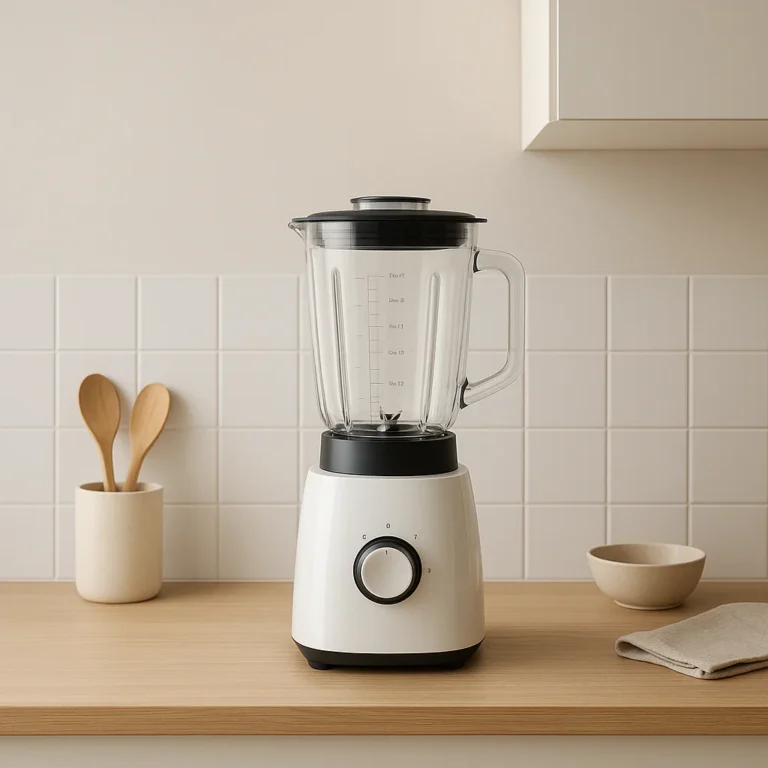
A sound shield can reduce the amount of noise escaping directly from a countertop blender. Models such as the Hamilton Beach Professional Quiet Blender use a dome around the jar. The shield is practical for airborne sound, but it can’t fully contain vibration or the sharp clatter of hard ingredients.
Other factors matter too:
- Motor and speed control: A motor that blends efficiently may finish sooner, even if its peak sound is not the lowest.
- Jar and blade geometry: Ingredient circulation affects how long the machine needs to run.
- Base stability: A heavy, well-seated base may vibrate less than a lightweight one on a hollow counter.
- Sound character: A high-pitched whine can feel more intrusive than a lower, steadier hum at a similar reading.
- Recipe and fill level: A small load may not circulate well in a large jar; a packed jar can strain blending and extend the noise.
Sound shields also have a practical downside: they take up space. If you have a small kitchen, an enclosure can be a welcome neighborly gesture—or a plastic dome that lives permanently on the counter because it won’t fit in the cupboard.
🧪 How We Evaluate Quiet Blender Reviews
At Quietest™, we review blenders as both kitchen appliances and noise sources. We compare published lab and editorial tests, manufacturer specifications, warranty information, and recurring user feedback. We also distinguish measured results from broad claims such as “quietest ever,” which are difficult to verify without a consistent testing method.
Our perspective is shaped by listening work: a number tells you how loud; listening tells you what kind of loud. That distinction matters when a high-pitched motor cuts through a quiet apartment at breakfast.
Noise Testing: What to Compare Beyond Decibel Ratings
When reading reviews, look for these details:
- Microphone distance: A close measurement will be higher than one taken several feet away.
- Operating mode: Peak readings, average readings, and readings at a particular speed are not interchangeable.
- Blend load: Water, soft fruit, frozen fruit, and ice produce different sounds.
- Room conditions: A tiled kitchen can reflect sound; curtains, rugs, and open-plan layouts change the listening experience.
- Sound quality: Listen for rattling, sharp blade impacts, and a piercing motor tone—not just the meter reading.
- Run time: A short noisy cycle might be less disruptive overall than a longer, lower-pitched blend.
A useful comparison is one made within the same test. RTINGS’ quiet blender testing reports peak levels and compares models under its own methodology. Its findings are more meaningful as a relative ranking within that testing setup than as a promise that your kitchen will produce precisely the same number.
Blending Performance, Cleanup, Durability, and Value
A quiet blender that leaves kale strings in your drink is not a victory. We weigh:
- Texture: Does it handle leafy greens, frozen fruit, ice, and thick mixtures?
- Convenience: Are the controls intuitive? Can you add ingredients safely?
- Cleaning: Are blades removable, parts dishwasher-safe, or hard to reach?
- Durability: Do reviews mention worn drive gears, cracked jars, or unreliable switches?
- Repair and support: Can you get replacement jars, lids, and service?
- Noise per task: Does it achieve the result quickly, or need repeated cycles?
Consumer feedback is useful for spotting patterns, but it is not a controlled noise test. A reviewer’s “quiet” may mean “doesn’t wake the baby,” while another’s means “quieter than my old blender.” We treat those as valuable use-case reports, not lab measurements.
📚 A Brief History of Quieter Blenders

Traditional countertop blenders were designed mainly around power, capacity, and blending speed. The motor and jar were exposed, sound spread directly into the kitchen. Commercial cafés and restaurants had a stronger incentive to manage that noise, leading to enclosed designs such as the Vitamix Quiet One.
Home models now borrow some of those ideas: sound shields, insulated personal-blender cups, smoother speed controls, and presets designed to complete common tasks consistently. But there’s no single innovation that makes a blender quiet. A shield may lower escaping sound; better blending efficiency may shorten the noisy part; a stable base may reduce vibration. They solve different pieces of the puzzle.
For a broader look at quieter appliances, browse Quietest™’s low-noise kitchen gadgets and low-noise household items.
🏆 Best Quiet Blenders: Our Top Picks
The following picks reflect a blend of noise reports, performance, usability, and consumer-review patterns. Decibel figures are sourced from the cited testing summaries, not guaranteed results in every kitchen. Models and regional versions can change, so confirm jar capacity, included accessories, and warranty details on the manufacturer’s page before buying.
1. Best Quiet Blender Overall
Vitamix Ascent X5
| Aspect | Rating |
|---|---|
| Noise management | 8/10 |
| Blending performance | 10/10 |
| Controls and programs | 9/10 |
| Cleaning and usability | 9/10 |
| Build and warranty | 9/10 |
| Overall | 9/10 |
RTINGS reports a peak of 89.0 dBA for the Ascent X5 in its quiet-blender testing. That is not whisper-quiet, but it’s a strong result for a full-size machine with substantial blending ability. The X5 includes a 48-ounce container, variable-speed control, and 11 automatic programs on the tested model. Check the official Vitamix Ascent X5 page for current features and package details.
Why we like it: It can make smooth blends from fibrous greens and tackle thick mixtures such as nut butter, while its programs make repeat recipes less fiddly. RTINGS also reports snow-like crushed ice in a small test batch.
What to know before buying:
- It remains a powerful countertop blender, not a quiet personal appliance.
- Hard ingredients and high-speed blending still create noticeable noise.
- Its premium features may be excessive if you only make simple fruit smoothies.
A reviewer’s desk-side note: in a quiet room, the character of the sound can matter as much as the peak. The X5 is a capable, steady workhorse, but nobody should expect to blend ice beside a sleeping person and get away with it.
Best for: People who want high blending performance with comparatively controlled noise, and will use the extra programs and power.
👉 CHECK PRICE on: Amazon | Walmart | Vitamix Official Website
2. Best Premium Quiet Blender for Serious Home Cooks
Vitamix Quiet One
The Vitamix Quiet One is a commercial blender built around a sound enclosure and frequent-use construction. It is a tempting choice if you want café-style power at home, but it is large, specialized, and more machine than many households need.
| Strength | Trade-off |
|---|---|
| Enclosed design helps contain airborne noise | The enclosure occupies valuable counter space |
| Commercial-style blending capability | High power does not mean silence |
| Designed for repeated service use | Not the most convenient choice for every home kitchen |
Published noise claims vary by test conditions, and we found no directly comparable independent measurement in the supplied reviews that establishes a universal dBA figure for the Quiet One. Treat claims in the mid-60s to low-70s dBA as context-specific, not a guaranteed at-home reading. For a quieter home-use pick with clearly reported third-party testing, compare the Ascent X5 and Hamilton Beach options here.
Best for: High-volume blending, frequent entertaining, or buyers who specifically want a commercial-style enclosed blender.
👉 CHECK PRICE on: Amazon | eBay | Vitamix Official Website
3. Best Upper Mid-Range Quiet Blender
Vitamix VX1
RTINGS reports a peak around 90.5 dBA for the Vitamix VX1. That is slightly louder than its X5 result, but the VX1 brings a 64-ounce jar, a stepless speed dial, pulse control, and a self-cleaning program. See the Vitamix VX1 product page.
Pros
- Strong results with kale, crushed ice, and thick blends
- Large jar suited to family portions
- Straightforward manual control
- Self-cleaning program simplifies routine cleanup
Cons
- Fewer programs and convenience features than the Ascent X5
- Testing reports a slightly higher peak sound level than the X5
- Warranty terms differ; verify the current coverage for your purchase and location
Best for: Buyers who want robust Vitamix-style blending and a larger container without needing a wide library of presets.
👉 CHECK PRICE on: Amazon | Walmart | Vitamix Official Website
4. Best Mid-Range Quiet Blender for Everyday Use
Hamilton Beach Professional Quiet Blender
This is our best fit for shoppers who specifically want a sound shield without stepping up to a commercial machine. RTINGS reports a peak just over 87 dB with its dome installed, and a 32-ounce pitcher. Product details are available from Hamilton Beach.
Pros
- The removable dome helps reduce sound escaping into the room
- Compact pitcher is convenient for smaller daily batches
- Reported to blend fibrous ingredients smoothly
- A strong option for shared homes and early-morning routines
Cons
- The enclosure adds height and storage demands
- Tough blends may require removing the dome and using the tamper
- Ice and thick mixtures can get louder and require hands-on help
RTINGS describes its shielded noise result as “only slightly louder than some battery-powered blenders with much weaker motors.” That comparison is useful for understanding its relative quietness, but it does not mean the machine is conversation-level quiet.
Best for: Smoothies and everyday blends where noise reduction matters more than maximum batch size.
👉 CHECK PRICE on: Amazon | Walmart | Hamilton Beach Official Website
5. Best Budget Quiet Blender
Black+Decker Quiet Blender with Cyclone Glass Jar
RTINGS reports this model at a little over 87 dB in its testing, with a 48-ounce glass jar and a smaller personal jar. It offers an appealing feature set for a budget-oriented shopper, though long-term sturdiness is a concern.
Pros
- Glass main jar and a personal blending container
- Removable blades can make cleaning easier
- Test results show it can handle fibrous ingredients in smoothies
- A reported noise result close to costlier shielded options
Cons
- Build quality is less robust than premium models
- Reviews point to concerns around the lid and motor-base gears
- Not a strong ice crusher; hard chunks may remain
- Nut butter may require stopping to stir
Best for: Smoothies and ordinary household blends, not repeated ice crushing or heavy-duty thick mixtures.
👉 CHECK PRICE on: Amazon | Walmart | BLACK+DECKER Official Website
6. Best Affordable Blender for Smaller Kitchens
KitchenAid K150
The KitchenAid K150 is a practical countertop option if you want a well-known brand and a more traditional pitcher design. RTINGS calls it quiet for a full-size blender, but says it is louder and less powerful than the Hamilton Beach Professional Quiet.
Pros
- Familiar, simple controls
- Handled pitcher is easy to pour
- More versatile than a single-purpose personal blender
- Suitable for routine smoothies and everyday kitchen tasks
Cons
- No sound dome
- Not as quiet as the best shielded models in the cited comparison
- Less suited to especially tough or thick blends than high-powered premium options
Best for: Home cooks who value a convenient handled jar and everyday usability over the lowest possible noise.
👉 CHECK PRICE on: Amazon | Walmart | KitchenAid Official Website
7. Best Quiet Personal Blender for Smoothies
nutribullet Flip Insulated
The nutribullet Flip uses an insulated stainless-stel vessel and is built for single-serve blending. Homes & Gardens reports readings around 71–73 dB in its testing, and found the insulated design useful for dampening sound and keeping drinks cold.
Pros
- More manageable sound profile than many full-size countertop blenders
- Portable, single-serve format
- Handles smoothies, including some frozen-fruit and seed blends, in the cited review
- Insulated vessel keeps a prepared drink cold
Cons
- Not a replacement for a full-size blender
- Not designed for hot soup
- Ice crushing is not a dependable use case; reports differ on what it can manage
- Bulkier than some basic portable blenders
Best for: Quiet personal smoothies when you don’t need a large jar or frequent ice crushing.
👉 CHECK PRICE on: Amazon | Walmart | nutribullet Official Website
Other portable options worth comparing
- Beast GO Cordless: RTINGS reports a peak just over 79 dB and strong results with fibrous greens in single servings. It is heavier than many portable blenders and can struggle with ice. Amazon | Beast Official Website
- BlendJet 2: Homes & Gardens reports a low average reading for its test, but it is best for soft fruit and simple protein shakes—not kale, frozen fruit, or tough jobs. Check the manufacturer’s current safety notices and product information before purchasing. BlendJet Official Website
- Ninja Blast Max: A stronger portable option for frozen drinks, but it remains a portable blender and may leave flecks of greens or berry skin. Amazon | Ninja Official Website
8. Best Quiet Blender for Apartments and Shared Spaces
Hamilton Beach Professional Quiet Blender
For apartment life, the Hamilton Beach’s removable dome is a useful advantage. It is not magic—your neighbor will not mistake a smoothie for a whisper—but the shield addresses noise escaping directly from the jar.
Small Apt Kitchen describes the Hamilton Beach SoundShield as exceptionally quiet, with reported levels far below many standard blenders. Those numbers differ from RTINGS’ reported just-over-87 dB peak under its test conditions. We would trust the controlled, clearly described test for direct model comparison, and treat the apartment article’s lower figure as a separate measurement that may use a different method. Different distance, ingredient load, speed, and weighting can produce very different results.
Apartment-friendly habits:
- Blend on a firm counter, not a wobbly cart.
- Use a silicone mat to reduce rattling.
- Keep cycles short and avoid ice-heavy recipes during quiet hours.
- Check your lease or building rules rather than assuming one universal “acceptable” time.
- If you share walls, remember that vibration transmitted through a counter or floor can matter as much as airborne noise.
For more small-space advice, see our coverage of quiet living and low-noise household items and this related guide to quiet blenders for apartments.
Best for: Apartment residents who make regular smoothies and want a full-size blender with an actual noise-dampening enclosure.
👉 CHECK PRICE on: Amazon | Walmart | Hamilton Beach Official Website
9. Best Quiet Blender for Frozen Fruit and Ice
Ninja Professional Plus Blender DUO with Auto-iQ
The Ninja Professional Plus DUO pairs a 72-ounce pitcher with a personal cup. RTINGS reports a peak just under 89 dBA, and particularly strong performance crushing ice for frozen drinks.
Pros
- Large batch pitcher plus personal cup
- Effective ice crushing in the cited testing
- Auto-iQ programs simplify common blends
- Strong feature-to-versatility balance
Cons
- The large pitcher may leave fibrous produce less smooth than premium high-performance models
- Nut butter may need pauses and stirring
- Sharp blades call for careful handling during cleanup
- Ice blending can still be loud
Best for: Frozen drinks, ice, and households that want both family-size and single-serve blending.
👉 CHECK PRICE on: Amazon | Walmart | Ninja Official Website
10. Best Quiet Commercial-Style Blender for Home Use
Zwilling Enfinigy Power Blender
The Zwilling Enfinigy Power Blender offers a 64-ounce jar, multiple speeds, and preset programs for jobs such as smoothies, ice, and frozen desserts. Homes & Gardens reports an average around 80 dB in its testing, with lower manual speeds more tolerable than some presets.
Pros
- Large capacity for families and batch prep
- Multiple speeds and dedicated programs
- Smooth results reported with frozen fruit and leafy greens
- Self-cleaning function is convenient
Cons
- Presets can be louder than lower manual speeds
- Pulse control may be less precise for recipes that need a chunky texture
- The large footprint can crowd smaller kitchens
- A lower average reading does not mean every program or load will be equally quiet
Best for: Families who want broad countertop versatility and can spare the counter space.
👉 CHECK PRICE on: Amazon | Walmart | Zwilling Official Website
🔍 All Quiet Blender Reviews: Side-by-Side Comparison
Noise Levels, Capacity, Controls, and Key Features
The figures below come from the cited reviews and may use different test procedures. Treat them as reported results, not a perfectly standardized leaderboard.
| Blender | Reported noise result | Approximate capacity | Standout feature | Main caution |
|---|---|---|---|---|
| Vitamix Ascent X5 | 89.0 dBA peak | 48 oz | Strong all-around performance and programs | Premium full-size blender remains clearly audible |
| Vitamix VX1 | About 90.5 dBA peak | 64 oz | Large jar and manual control | Fewer conveniences than the X5 |
| Hamilton Beach Professional Quiet | Just over 87 dB with dome | 32 oz | Removable sound shield | Tough blends may require removing shield |
| Black+Decker Quiet Blender | A little over 87 dB peak | 48 oz plus personal jar | Glass jar and removable blades | Weaker build; limited ice performance |
| Ninja Professional Plus DUO | Just under 89 dBA peak | 72 oz plus personal cup | Ice crushing and multi-container setup | Can leave fibrous blends less smooth |
| Beast GO Cordless | Just over 79 dB peak | Personal size | Portable, smooth single-serving greens | Limited ice capability |
| nutribullet Flip | About 71–73 dB | 20 oz | Insulated personal vessel | Not for hot soup or dependable ice crushing |
| Zwilling Enfinigy Power Blender | About 80 dB average | 64 oz | Batch blending and multiple programs | Presets and difficult textures can sound louder |
| Dualit Immersion Hand Blender | About 79 dB in one test | Handheld | Blend soup directly in a pot | Less powerful; requires hands-on blending |
Which Quiet Blender Is Best for Your Needs?
| Your main priority | Our pick | Why |
|---|---|---|
| Quietness plus high blending capability | Vitamix Ascent X5 | Strong reported performance and useful programs |
| Built-in sound shielding | Hamilton Beach Professional Quiet | The dome directly addresses escaping sound |
| Frozen drinks and crushed ice | Ninja Professional Plus DUO | Strong ice-crushing results in cited testing |
| Quiet single-serving smoothies | nutribullet Flip | Insulated portable format and low reported readings |
| Smooth soups in a pot | Dualit Immersion Hand Blender | No countertop jar needed for many soup tasks |
| Commercial-style enclosed blending | Vitamix Quiet One | Designed for frequent, professional-style use |
| Large family batches | Zwilling Enfinigy Power Blender or Vitamix VX1 | Larger capacity and broad countertop capability |
| Smallest routine cleanup and portability | A personal blender | Less volume and storage, with limits on ingredients |
A note on competing review rankings
The reviews do not name one universal winner. RTINGS favors performance paired with comparatively low peak noise, putting the Vitamix Ascent X5 at the top of its tested list. Homes & Gardens includes several portable models with lower reported readings, while Small Apt Kitchen prioritizes apartment-friendly shielding and describes the Hamilton Beach SoundShield as the quietest option.
Those conclusions can all make sense because they answer different questions:
- Which full-size blender combines power and relatively low noise? The Ascent X5 is a strong answer.
- Which portable blender produces a lower reported reading? A personal model may win, but it does less.
- Which countertop design has a dedicated shield? The Hamilton Beach is a compelling fit.
- Which reading should you trust? Prefer comparisons made by the same reviewer using a consistent method, and avoid treating different publications’ numbers as directly interchangeable.
The “quietest” blender depends on the job. That distinction is the difference between a useful recommendation and a decibel trophy.
✅ Quiet Blender Buying Guide: What to Look For
Motor Power, Blade Design, and Blending Results
Wattage is a specification, not a noise rating. Higher wattage can support demanding tasks, but motor power alone does not tell you how loud a blender will sound or how quickly it will finish. Jar shape, blade design, ingredient circulation, and speed control all contribute.
Before choosing, list your usual blends:
- Soft fruit and yogurt: Most personal and countertop models can manage these.
- Leafy greens and seeds: Look for reviews that specifically test kale or spinach.
- Frozen berries: Check whether the model needs added liquid and how smooth the result gets.
- Ice: Confirm ice-crushing capability in the manufacturer’s instructions; don’t assume a portable blender can do it.
- Nut butter or thick dips: These loads often need a tamper, pauses, and careful ingredient management.
The USDA’s general food-preparation guidance is a helpful reminder to keep food handling and appliance cleanliness in mind; follow the blender maker’s instructions for hot ingredients, load limits, and safe operation.
Jar Material, Capacity, and Ease of Cleaning
Jar material doesn’t determine blender noise by itself. A sturdy fit, good lid seal, and stable base are more important than assuming glass is automatically quieter than plastic. Glass can feel durable and resist some odors, but it is heavier and breakable. Plastic is lighter and often easier to handle, but may scratch or retain odors over time.
| Feature | Considerations |
|---|---|
| Glass jar | Heavier, scratch-resistant, and breakable if dropped |
| Plastic jar | Lighter and easier to carry; check care instructions and replacement availability |
| Personal cup | Convenient for one serving; usually less versatile for thick mixtures |
| Larger pitcher | Useful for families, but may not blend tiny quantities efficiently |
| Removable blade assembly | Can simplify cleaning; adds parts that must be reassembled correctly |
| Dishwasher-safe parts | Convenient, but always confirm which components are safe for your model |
To clean a countertop blender, follow the manufacturer’s instructions. A common approach is to rinse promptly and use a little dish soap with warm water for a brief, controlled blend—but don’t put the motor base in water or reach into a jar with exposed blades.
Noise Enclosures, Counter Space, and Storage
Sound shields can be useful if you blend often in a shared home. Before buying, measure:
- The blender’s height with the shield open and closed.
- The space under your cabinets.
- The storage location for the dome when it is not in use.
- The room needed to remove the jar, add ingredients, and use a tamper.
- The counter area needed for safe ventilation and stable placement.
A shield can also reduce convenience: lifting a cover every time you add an ingredient may become tiresome. If you mostly make simple smoothies, a quieter personal blender might be easier to live with. If you regularly prepare batches, the shielded countertop design may be worth the footprint.
Warranty, Replacement Parts, and Long-Term Reliability
A quiet blender is only a good buy if it stays quiet and usable. Check:
- Warranty length and exclusions
- Availability of replacement jars, lids, seals, and blade assemblies
- Whether the warranty is valid in your country
- Whether the manufacturer offers authorized service
- Customer reports about drive coupling wear, leaks, or motor trouble
Warranty terms can differ by model, retailer, and region. Read the exact document for your purchase rather than relying on a brand-wide claim. For example, Vitamix publishes product and support details through its official warranty and service pages.
🥤 Quiet Blender Types: Countertop, Personal, and Immersion
| Blender type | Typical strengths | Noise considerations | Best use |
|---|---|---|---|
| Countertop blender | Power, capacity, broad recipe range | Often loudest; sound shield can help | Family smoothies, ice, thick blends |
| Personal blender | Compact, direct-to-cup convenience | Often lower-powered and less forceful, but not silent | Single smoothies and shakes |
| Immersion blender | Blends in a pot or bowl; easy to store | Can be less overwhelming than a full-size model, but sound is close to the user | Soup, sauces, baby food |
| Commercial enclosed blender | Strong motor with acoustic enclosure | Shield can reduce escaping sound; machine remains substantial | Frequent, high-volume blending |
The Dualit Hand Blender is a useful example of an immersion option, while the Vitamix Quiet One represents the enclosed commercial category. For more appliance comparisons, visit our low-noise kitchen gadgets section.
🏠 Choosing a Quiet Blender for Your Home
Best Options for Apartments, Babies, and Early Mornings
If you live in an apartment, have a sleeping baby, or share walls with someone who cherishes a peaceful morning, noise management is a combination of appliance choice and timing.
A sound-dome blender can help, but a portable model may be less intrusive if its ingredients are within its capabilities. A hand blender may better for soup than firing up a large jar. For social context, the World Health Organization’s environmental noise resources cover noise and health broadly; they do not provide a universal rule for when a person may use a blender at home. Check local rules and your building’s quiet hours.
Practical approach:
- Use a silicone mat to limit counter vibration.
- Avoid blending ice or frozen chunks when someone is asleep.
- Prep ingredients in advance so the blend cycle stays brief.
- Choose a machine with a suitable capacity; underfilling a large jar can make blending inefficient.
- Check your lease or household agreements for quiet-hour expectations.
Best Options for Smoothies, Soups, Nut Butter, and More
| Recipe or task | Best type to consider | What to verify |
|---|---|---|
| Fruit smoothie | Personal or countertop | Jar size and cleanup |
| Kale smoothie | Strong personal or countertop blender | Test results for fibrous greens |
| Frozen drink | Countertop with ice capability | Instructions for ice and required liquid |
| Soup | Immersion blender or hot-blending countertop model | Manufacturer’s hot-liquid guidance |
| Nut butter | High-performance countertop blender | Tamper use, batch size, and motor limits |
| Baby food | Immersion or small personal blender | Texture control and cleaning |
| Dips and sauces | Variable-speed countertop or immersion blender | Pulse control and minimum batch size |
The smartest purchase is usually the blender that handles your most demanding regular recipe without adding unnecessary capacity, attachments, or noise.
🧽 How to Make Any Blender Quieter
Even a comparatively loud blender can be less disruptive if it is stable, well-maintained, and used efficiently. These steps won’t turn a countertop blender into a silent appliance, but they can reduce rattling and wasted run time. More practical ideas are in Quietest™’s noise reduction tips.
Placement, Noise Mats, and Sound-Absorbing Bariers
- Choose a solid counter. Hollow or lightweight surfaces can amplify vibration.
- Place a silicone mat underneath. It can help reduce counter-borne rattling; keep the blender’s feet stable.
- Move it away from walls and corners. A tight corner may reflect sound toward the room.
- Keep the base level. A rocking blender is noisier and less safe.
- Use a manufacturer-approved sound enclosure. Don’t block ventilation or improvise a cover that could trap heat.
- Close the kitchen door if practical. This may reduce sound traveling into other rooms, though it cannot eliminate noise.
One practical trick from our reviewer notes: a machine that seems loud on a bare countertop may become noticeably less rattly on a dense silicone pad. The motor is still doing its thing; the countertop simply stops acting like a drum.
Maintenance Tips to Reduce Rattling and Vibration
- Make sure the jar is seated correctly on the base.
- Check the lid and gasket for secure fit.
- Remove stuck ingredients only after the machine is off and unpluged.
- Clean around the jar coupling and base according to the manual.
- Replace worn seals or damaged components with manufacturer-approved parts.
- Don’t exceed fill lines or blend ingredients the manufacturer says are unsuitable.
- If you hear a new grinding, scraping, or rattling sound, stop using the blender and inspect it safely before restarting.
Maintenance can fix a loose lid or poorly seated jar. It cannot repair a failing motor bearing or worn drive coupling; persistent new noises call for service, not louder music.
⚠️ Quiet Blender Trade-Offs and Common Buying Mistakes
Common mistakes to avoid
- Buying by the lowest dB number alone: Tests may use different distances and recipes.
- Assuming “quiet” means inaudible: Even shielded full-size blenders make substantial sound.
- Expecting a personal blender to replace a high-power countertop model: Portability and quiet operation often come with capacity and performance limits.
- Choosing a large jar for tiny servings: The ingredients may not circulate efficiently.
- Blending ice without checking the manual: Some personal models are not designed for it.
- Ignoring sound quality: A piercing whine can be more annoying than a lower hum.
- Forgetting where the enclosure will live: A dome needs storage space, too.
- Trusting one product’s advertised decibel figure as a universal fact: Ask how, where, and with what ingredients it was measured.
For a quick visual overview of how sound shields and compact blender designs are discussed, the featured video, “Best Quiet Blender: Low-Noise and Near-Silent Picks,” from Kitchen Hacks walks through several low-noise options. It emphasizes that no blender is truly noiseless; use it as a starting point, then verify model details and independent test results before buying.
The bottom line before you choose
- Choose the Vitamix Ascent X5 for the strongest blend of premium performance and comparatively controlled noise.
- Choose the Hamilton Beach Professional Quiet if a removable sound dome is your priority.
- Choose the Ninja Professional Plus DUO for ice, frozen drinks, and multiple serving sizes.
- Choose the nutribullet Flip for single-serving smoothies with a gentler reported sound profile.
- Choose an immersion blender for soup and sauce tasks where a full-size pitcher would be unnecessary.
And the promised answer to the question hanging over every comparison: there isn’t one universally quietest blender for every person or recipe. A shielded countertop blender, a low-noise personal model, and an immersion blender can each win—just in different kitchens, doing different jobs.