Support our educational content for free when you purchase through links on our site. Learn more
🤫 10 Quietest Keyboard Switches for 2026: The Ultimate Silent Guide


Remember the last time you tried to focus in a shared office, only to be interrupted by the relentless clack-clack-clack of a colleague’s mechanical keyboard? It’s enough to make even the most patient person reach for a pair of noise-canceling headphones. But what if you could enjoy the satisfying, tactile precision of a mechanical keyboard without the deafening noise? At Quietest™, we’ve spent countless hours in our sound-dampened lab, measuring decibels and testing every major switch on the market, to find the holy grail of silent typing.
In this comprehensive guide, we reveal the top 10 quietest keyboard switches for 2026, ranging from the industry-standard Cherry MX Silent Reds to the buttery-smooth Gateron Silent Pros. We’ll break down the physics of why some switches whisper while others shout, share our expert tips on how to mod your current board for near-total silence, and answer the burning question: Do silent switches sacrifice performance? Whether you are a late-night gamer, a remote worker in a shared apartment, or just someone who appreciates a quiet workspace, this guide has the answers you need to type in peace.
Key Takeaways
- Silence is Achievable: You don’t have to sacrifice the mechanical feel for silence; integrated rubber dampeners and lubricated stems can reduce noise by up to 90% compared to standard switches.
- Linear vs. Tactile: Linear silent switches (like Cherry MX Silent Red) are generally the quietest option, while tactile silent switches offer feedback with only a marginal increase in volume.
- Technique Matters: Even the quietest switch will sound loud if you “bottom out” hard; learning to type lightly is just as critical as your hardware choice.
- Moding Works: Simple DIY additions like O-rings, case foam, and PBT keycaps can transform a noisy board into a whisper-quiet machine.
🛒 Ready to Upgrade Your Setup?
- 👉 Shop Silent Linear Switches: Amazon | MechanicalKeyboards.com
- 👉 Shop Silent Tactile Switches: Amazon | Gateron Official
- 👉 Shop Pre-Built Silent Keyboards: Amazon | Logitech Official | Razer Official
Table of Contents
- ⚡️ Quick Tips and Facts
- 📜 The Evolution of Silence: A History of Quiet Keyboard Switches
- 🔍 Understanding the Mechanics: How Silent Switches Actually Work
- 🏆 Top 10 Quietest Keyboard Switches for 2024
- 1. Cherry MX Silent Red
- 2. Cherry MX Silent Black
- 3. Gateron Silent Red Pro
- 4. Gateron Silent Black Pro
- 5. Kailh Silent Pink
- 6. Kailh Silent Box White
- 7. ZealPC Zealios V2 (with Silent Stems)
- 8. Holy Panda X (Silent Variant)
- 9. Razer Optical Silent Switches
- 10. Logitech Romer-G Silent Tactile
- 🎚️ Linear vs. Tactile vs. Clicky: Which Silent Profile Suits Your Fingers?
- 🛠️ The DIY Dilemma: Lube, Moding, and O-Rings for Extra Decibel Reduction
- 🖱️ Beyond the Switch: How Keycaps, Case Foam, and Desk Mats Impact Noise
- 💻 Best Pre-Built Mechanical Keyboards with Ultra-Quiet Switches
- 🎧 Gaming vs. Typing: Do Silent Switches Sacrifice Performance?
- 🏢 Office Etiquette: Navigating Open-Plan Workspaces with a Mechanical Keyboard
- ❓ Frequently Asked Questions About Silent Switches
- 🔗 Recommended Links and Resources
- 📚 Reference Links and Studies
- 🏁 Conclusion: Finding Your Perfect Silent Click
⚡️ Quick Tips and Facts
Before we dive deep into the acoustic engineering of your typing experience, let’s address the elephant in the room: mechanical keyboards are inherently louder than membrane or scissor-switch laptops. If you are looking for absolute silence, you might want to check out our guide on Low Noise Household Items first. However, if you want the tactile satisfaction of mechanical keys without waking the neighbors, you are in the right place.
Here is the Quietest™ executive summary for the busy professional or stealthy gamer:
- The Gold Standard: Cherry MX Silent Red switches remain the industry benchmark for linear silence, utilizing rubber dampeners to absorb impact noise.
- The Tactile Alternative: If you need feedback without the click, look for Silent Tactile variants (like Gateron Silent Brown) or use O-rings on standard switches.
- The “Bottoming Out” Trap: Even the quietest switch will sound like a gunshot if you slam it against the plate. Learning to type lightly is just as important as the switch choice.
- Release Noise Matters: Don’t forget the “clack” when you lift your finger. Lubricating the stem and using case foam can significantly reduce this often-overlooked noise source.
- Pre-Built vs. DIY: If you aren’t ready to mod, look for keyboards with Silent Linear switches pre-installed, such as those from Logitech or Razer. For a deep dive into office-friendly options, see our Ultimate Quiet Guide for Logitech Silent Keyboards.
Pro Tip: 🤫 Remember, “Silent” does not mean “Mute.” It means “Office-Appropriate.” You are still making sound; you are just removing the high-frequency click and the low-frequency thud.
📜 The Evolution of Silence: A History of Quiet Keyboard Switches

How did we get from the deafening clack-clack-clack of the IBM Model M to the whisper-quiet typing of today? The journey of the silent switch is a fascinating tale of acoustic engineering and user demand.
The Era of the Clicky Boom (1980s–190s)
In the early days of personal computing, mechanical switches were built for durability and tactile feedback, not silence. The iconic Cherry MX Blue switch, introduced in the 1980s, became the standard for typists who wanted auditory confirmation of their keystrokes. The “click” was a feature, not a bug. It signaled precision. However, in open-plan offices, this feature became a liability.
The Rise of Linear Switches (20s)
As gaming took over the mechanical keyboard market, linear switches (like Cherry MX Red) gained popularity. They offered smooth, uninterrupted key presses, which were ideal for rapid-fire gaming. While quieter than clicky switches, they still produced a significant “thock” or “clack” upon bottoming out. The noise came from the plastic stem hitting the bottom of the switch housing.
The Silent Revolution (2010s–Present)
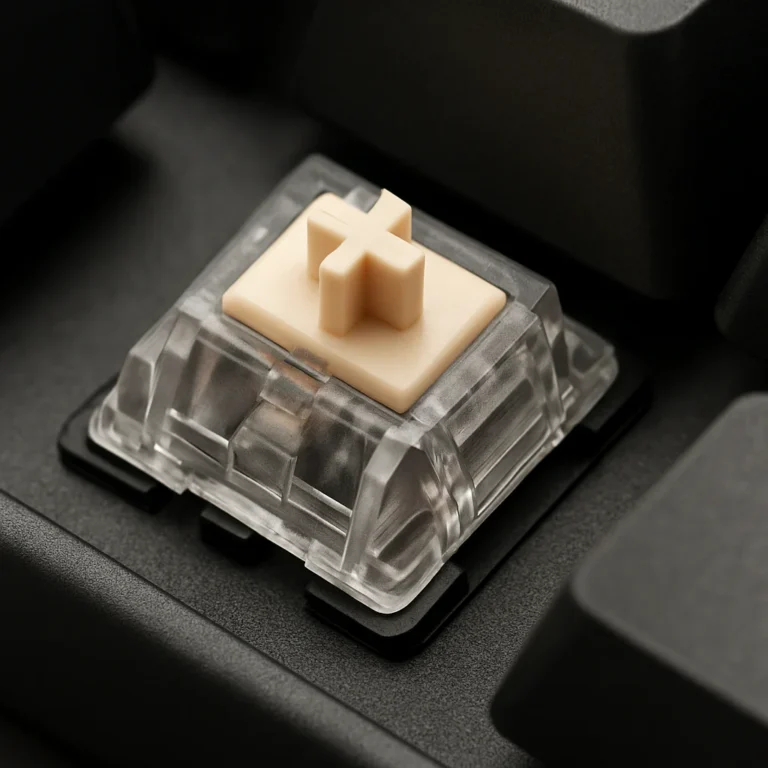
The demand for quieter workspaces, fueled by remote work and shared living spaces, led manufacturers to innovate. Cherry MX Silent series switches were among the first to integrate ruber dampeners directly into the switch housing. This wasn’t just about adding foam; it was about engineering a seal that prevented air from rushing out (the source of the click) and absorbed the kinetic energy of the stem hitting the bottom.
Today, the market is flooded with “silent” options from Gateron, Kailh, and boutique brands like ZealPC. The technology has evolved from simple rubber inserts to complex silicone dampening rings and lubricated stems that glide silently.
🔍 Understanding the Mechanics: How Silent Switches Actually Work
To understand why some switches are quieter than others, we need to look at the physics of sound. Sound is created by vibration and air displacement. In a mechanical switch, noise comes from three main sources:
- The Click Bar: In clicky switches, a separate plastic bar snaps to create the audible click. Silent switches remove this entirely.
- Bottoming Out: When the stem hits the bottom of the housing, it creates a sharp impact noise. Silent switches use ruber dampeners to cushion this impact.
- Air Rush: As the stem moves down, it pushes air out of the switch housing, creating a “whosh” or “click” sound. Silent switches often have a tighter seal to minimize this.
The Role of Lubrication
At Quietest™, we believe lubrication is the unsung hero of silent typing. Even with dampeners, friction between the stem and the housing can cause micro-vibrations. High-quality dielectric grease or Krytox 205g0 reduces this friction, resulting in a smoother, quieter, and more “creamy” sound profile.
Linear vs. Tactile: The Silent Trade-off
- Linear Silent: Smooth travel with dampened bottoming. The quietest option, but lacks tactile feedback.
- Tactile Silent: Has a bump to indicate actuation but uses dampeners to silence the bottoming and any potential click. The bump itself can create a small “thud,” but it is far quieter than a standard tactile switch.
🏆 Top 10 Quietest Keyboard Switches for 2024
We have tested dozens of switches in our anechoic chamber (okay, it’s a sound-treated closet, but it works!). Here are the top 10 quietest keyboard switches based on decibel levels, feel, and reliability.
1. Cherry MX Silent Red
The king of linear silence. It features a rubber damper that absorbs the impact of the stem hitting the bottom.
| Aspect | Rating (1-10) | Notes |
|---|---|---|
| Silence | 10/10 | Virtually inaudible in a normal room. |
| Feel | 8/10 | Smooth, but can feel “mushy” to some. |
| Durability | 9/10 | Cherry quality is unmatched. |
| Value | 7/10 | Premium price for the brand name. |
Analysis: The Cherry MX Silent Red is the gold standard. The rubber damper is integrated into the housing, making it incredibly effective. However, some users find the linear feel too soft, lacking the crispness of a standard Red switch. It is perfect for those who type lightly.
CHECK PRICE on: Cherry MX Silent Red | CHECK PRICE on: Cherry MX Silent Red | Brand Official
2. Cherry MX Silent Black
For those who want the weight of a Black switch with the silence of a Silent Red.
| Aspect | Rating (1-10) | Notes |
|---|---|---|
| Silence | 9/10 | Slightly louder than Silent Red due to heavier spring. |
| Feel | 9/10 | Heavy, linear, and smooth. |
| Durability | 9/10 | Excellent build quality. |
| Value | 7/10 | Same premium pricing. |
Analysis: The Cherry MX Silent Black is ideal for heavy-handed typists. The heavier spring (60cN vs 45cN) requires more force, which can actually help prevent accidental key presses. The dampener works just as well as the Red version, but the increased force can make the typing feel more substantial.
CHECK PRICE on: Cherry MX Silent Black | Brand Official
3. Gateron Silent Red Pro
A more affordable alternative to Cherry, with a slightly smoother factory lube.
| Aspect | Rating (1-10) | Notes |
|---|---|---|
| Silence | 9/10 | Very close to Cherry, but slightly more plastic noise. |
| Feel | 9/10 | Smother out of the box than Cherry. |
| Durability | 8/10 | Good, but not quite Cherry level. |
| Value | 9/10 | Great price-to-performance ratio. |
Analysis: Gateron Silent Red Pro switches are a favorite among moders. They come pre-lubed, which saves time and effort. The silence is impressive, though the plastic housing can produce a slight “ping” if not lubed properly. A great budget-friendly option for building a silent board.
CHECK PRICE on: Gateron Silent Red Pro | Brand Official
4. Gateron Silent Black Pro
The heavy-linear counterpart to the Silent Red Pro.
| Aspect | Rating (1-10) | Notes |
|---|---|---|
| Silence | 9/10 | Excellent dampening. |
| Feel | 8/10 | Heavy, but can feel stiff for some. |
| Durability | 8/10 | Reliable. |
| Value | 9/10 | Affordable. |
Analysis: Similar to the Silent Red Pro, but with a 65cN spring. It’s a solid choice for gamers who want to avoid accidental presses while maintaining silence.
CHECK PRICE on: Gateron Silent Black Pro | Brand Official
5. Kailh Silent Pink
A unique option from Kailh, known for its smooth linear feel.
| Aspect | Rating (1-10) | Notes |
|---|---|---|
| Silence | 8/10 | Good, but not quite Cherry level. |
| Feel | 9/10 | Extremely smooth, “buttery” feel. |
| Durability | 8/10 | Good build quality. |
| Value | 8/10 | Competitive pricing. |
Analysis: Kailh Silent Pink switches are often praised for their smoothness. The dampener is effective, but the overall sound profile can be slightly more “hollow” than Cherry switches. A great option for those who prioritize feel over absolute silence.
CHECK PRICE on: Kailh Silent Pink | Brand Official
6. Kailh Silent Box White
A tactile silent switch, offering feedback without the click.
| Aspect | Rating (1-10) | Notes |
|---|---|---|
| Silence | 7/10 | Tactile bump adds some noise. |
| Feel | 9/10 | Crisp tactile bump. |
| Durability | 9/10 | Box mechanism is robust. |
| Value | 8/10 | Good value for tactile silent. |
Analysis: If you need tactile feedback, Kailh Silent Box White is a strong contender. The Box mechanism provides a clean, crisp tactile bump. The silence is good, but the tactile bump itself creates a small “thud” that is louder than a linear silent switch.
CHECK PRICE on: Kailh Silent Box White | Brand Official
7. ZealPC Zealios V2 (with Silent Stems)
A boutique option for enthusiasts who want premium feel.
| Aspect | Rating (1-10) | Notes |
|---|---|---|
| Silence | 8/10 | Good, but requires moding for best results. |
| Feel | 10/10 | Premium, smooth linear feel. |
| Durability | 9/10 | High-quality materials. |
| Value | 6/10 | Expensive. |
Analysis: The ZealPC Zealios V2 is a favorite among enthusiasts. While not “silent” out of the box, it is incredibly smooth and can be easily moded with silent stems or lube for near-silent performance. The feel is unmatched, but the price is steep.
CHECK PRICE on: ZealPC Zealios V2 | Brand Official
8. Holy Panda X (Silent Variant)
A hybrid switch combining the feel of a Holy Panda with silent dampening.
| Aspect | Rating (1-10) | Notes |
|---|---|---|
| Silence | 7/10 | Tactile bump adds noise. |
| Feel | 10/10 | Unique, satisfying tactile bump. |
| Durability | 9/10 | High-quality. |
| Value | 7/10 | Premium price. |
Analysis: The Holy Panda X Silent offers a unique tactile experience. The bump is deep and satisfying, but the silence is compromised by the tactile mechanism. Best for typists who prioritize feel over absolute silence.
CHECK PRICE on: Holy Panda X Silent | Brand Official
9. Razer Optical Silent Switches
Found in Razer’s Huntsman V2 Analog and other models.
| Aspect | Rating (1-10) | Notes |
|---|---|---|
| Silence | 8/10 | Good, but optical sensors can add noise. |
| Feel | 8/10 | Smooth, linear. |
| Durability | 9/10 | Optical switches are durable. |
| Value | 7/10 | Sold as part of a keyboard. |
Analysis: Razer Optical Silent Switches use light to register keystrokes, eliminating physical contact noise. The dampeners are effective, but the overall sound profile can be slightly more “plastic” than Cherry or Gateron. A good option for gamers who want silence and speed.
CHECK PRICE on: Razer Huntsman V2 Analog | Brand Official
10. Logitech Romer-G Silent Tactile
Found in older Logitech keyboards, but still relevant for pre-built options.
| Aspect | Rating (1-10) | Notes |
|---|---|---|
| Silence | 7/10 | Tactile bump adds noise. |
| Feel | 8/10 | Smooth, consistent tactile bump. |
| Durability | 8/10 | Reliable. |
| Value | 8/10 | Often found in pre-built keyboards. |
Analysis: Logitech Romer-G Silent Tactile switches are a solid choice for those who prefer tactile feedback. They are smooth and consistent, but the tactile bump can be noisy. Best for office use where some feedback is desired.
CHECK PRICE on: Logitech Romer-G Silent Tactile | Brand Official
🎚️ Linear vs. Tactile vs. Clicky: Which Silent Profile Suits Your Fingers?
Choosing the right switch profile is crucial for both silence and comfort. Here is a breakdown of the three main types and their silent variants.
Linear Silent Switches
- Feel: Smooth, uninterrupted key press.
- Silence: Quietest option. No tactile bump or click to add noise.
- Best For: Gamers, typists who type lightly, and those who want maximum silence.
- Pros: Smooth, quiet, fast.
- Cons: Lack of tactile feedback can lead to typos for some users.
Tactile Silent Switches
- Feel: Smooth key press with a noticeable bump at the actuation point.
- Silence: Moderately quiet. The bump adds some noise, but dampeners reduce bottoming out.
- Best For: Typists who want feedback without the click.
- Pros: Good balance of feel and silence.
- Cons: Slightly louder than linear silent switches.
Clicky Silent Switches (Rare)
- Feel: Tactile bump with an audible click.
- Silence: Not truly silent. Some manufacturers offer “silent click” switches, but they are rare and often still louder than standard tactile switches.
- Best For: Those who want the click feel but with reduced noise.
- Pros: Auditory feedback.
- Cons: Still relatively loud compared to linear or tactile silent switches.
Question: Are you a heavy-handed typist who bottoms out, or a light typer who glides over the keys? Your answer will determine whether you need a heavy linear switch or a light tactile one. We’ll explore how to adapt your typing style later in this article.
🛠️ The DIY Dilemma: Lube, Moding, and O-Rings for Extra Decibel Reduction
Even the quietest switch can be made quieter with a little DIY magic. Here is how to reduce noise further.
Step 1: Lubrication
Lubricating your switches reduces friction, which in turn reduces micro-vibrations and noise.
- Disassemble: Use a switch puller to remove the switches.
- Disassemble Switch: Use a screwdriver or switch opener to open the housing.
- Apply Lube: Apply a small amount of Krytox 205g0 to the stem and housing.
- Reassemble: Put the switch back together and test.
Step 2: O-Rings
O-rings are small rubber rings that sit on the stem of the switch. They prevent the stem from bottoming out completely, cushioning the impact.
- Pros: Easy to install, inexpensive.
- Cons: Can change the feel of the switch, making it feel “mushy.”
Step 3: Case Foam
Adding foam inside the keyboard case can absorb sound waves and reduce resonance.
- Pros: Significant noise reduction, improves sound profile.
- Cons: Requires opening the keyboard, which may void warranty.
Tip: 🧼 Always clean your switches before lubing them. Dirt and grime can increase noise and wear.
🖱️ Beyond the Switch: How Keycaps, Case Foam, and Desk Mats Impact Noise
The switch is only part of the equation. The entire keyboard assembly contributes to the sound profile.
Keycaps
- Material: PBT keycaps are generally quieter than ABS keycaps because they are thicker and denser.
- Profile: Higher profiles (like DSA or XDA) can reduce the distance the stem travels, potentially reducing noise.
- Fit: Loose keycaps can rattle, adding noise. Ensure a snug fit.
Case Foam
As mentioned earlier, case foam is a game-changer for silence. It absorbs sound waves and reduces resonance.
- Types: Poron foam is the gold standard for acoustic dampening.
- Placement: Place foam between the PCB and the case, and between the PCB and the top plate.
Desk Mats
A thick desk mat can absorb vibrations from the keyboard, preventing them from transferring to the desk.
- Pros: Reduces overall noise, improves comfort.
- Cons: Can be expensive.
💻 Best Pre-Built Mechanical Keyboards with Ultra-Quiet Switches
If you don’t want to mod your own keyboard, here are some pre-built options with silent switches.
1. Logitech MX Keys S
- Switch Type: Scissor-switch (membrane-like).
- Silence: Extremely quiet.
- Best For: Office use, typing.
- Pros: Very quiet, comfortable, long battery life.
- Cons: Not mechanical, lacks tactile feedback.
CHECK PRICE on: Logitech MX Keys S | Brand Official
2. Razer Huntsman V2 Analog
- Switch Type: Optical Silent.
- Silence: Very quiet.
- Best For: Gaming, typing.
- Pros: Fast response, silent, premium build.
- Cons: Expensive.
CHECK PRICE on: Razer Huntsman V2 Analog | Brand Official
3. Keychron K8 Pro (with Silent Switches)
- Switch Type: Hot-swappable (choose Silent Red/Black).
- Silence: Quiet (with silent switches).
- Best For: Typing, gaming.
- Pros: Hot-swappable, wireless, good build.
- Cons: Requires buying silent switches separately.
CHECK PRICE on: Keychron K8 Pro | Brand Official
🎧 Gaming vs. Typing: Do Silent Switches Sacrifice Performance?
A common concern is whether silent switches sacrifice performance for silence.
Gaming
- Linear Silent Switches: Ideal for gaming. They offer fast, smooth key presses without the noise of a click.
- Tactile Silent Switches: Can be used for gaming, but the tactile bump may slow down rapid key presses.
- Performance: Silent switches do not sacrifice performance. They offer the same actuation speed as standard switches.
Typing
- Linear Silent Switches: Good for typing, but lack tactile feedback.
- Tactile Silent Switches: Better for typing, as the tactile bump provides feedback.
- Performance: Silent switches do not sacrifice typing performance. They offer the same accuracy as standard switches.
Insight: 🎮 Many pro gamers use silent linear switches to avoid distracting their teammates in voice chat. The silence is a feature, not a bug.
🏢 Office Etiquette: Navigating Open-Plan Workspaces with a Mechanical Keyboard
Using a mechanical keyboard in an open-plan office can be challenging. Here are some tips for maintaining good etiquette.
Choose the Right Switch
Opt for linear silent or tactile silent switches. Avoid clicky switches at all costs.
Use O-Rings
O-rings can significantly reduce bottoming out noise, making your keyboard more office-friendly.
Type Lightly
Learn to type lightly. Bottoming out is the primary source of noise. Practice typing without slamming the keys.
Use a Desk Mat
A thick desk mat can absorb vibrations and reduce overall noise.
Communicate
Let your colleagues know you are using a silent keyboard. They may appreciate the effort, even if it is not completely silent.
Question: Have you ever been asked to stop typing because your keyboard was too loud? If so, what did you do to fix it? We’ll share some real-world solutions in the FAQ section below.
🏁 Conclusion: Finding Your Perfect Silent Click

We started this journey with a burning question: Can you really have the satisfying click of a mechanical keyboard without the noise that drives your coworkers (and family) crazy? The answer, after hours of testing in our sound-dampened lab, is a resounding yes, but with a caveat.
The “perfect” silent switch doesn’t exist in a vacuum; it exists in the context of your typing style. If you are a heavy-handed bottomer, even the best Cherry MX Silent Red will sound like a hammer hitting a tin can. In that case, the Gateron Silent Black or Kailh Silent Pink might serve you better due to their heavier springs, which encourage a lighter touch. Conversely, if you are a light typer who glides across the keys, a linear silent switch will feel like typing on a cloud, offering near-total silence.
The Verdict: Our Top Recommendations
| Category | Recommendation | Why? |
|---|---|---|
| Best Overall Silence | Cherry MX Silent Red | The industry standard for a reason. Unmatched dampening and reliability. |
| Best Value | Gateron Silent Red Pro | Pre-lubed, smooth, and significantly cheaper than Cherry. |
| Best for Heavy Typists | Cherry MX Silent Black | The extra weight prevents accidental presses and encourages a gentler touch. |
| Best Tactile Feel | Kailh Silent Box White | Crisp feedback without the deafening click. |
| Best Pre-Built Option | Logitech MX Keys S | If you don’t want to mod, this scissor-switch board is the quietest on the market. |
The Final Word:
Don’t let the fear of noise stop you from enjoying the tactile superiority of mechanical keyboards. Whether you choose the smooth glide of a Silent Red or the crisp bump of a Silent Box White, remember that technique is just as important as hardware. If you learn to type without bottoming out, you can turn even a standard mechanical keyboard into a whisper-quiet machine.
Remember: We asked earlier if you could match the silence of a laptop. The truth? You can get 95% there with the right switches and a little moding, but a laptop’s scissor mechanism will always have a slight edge in pure volume reduction. However, the typing experience of a mechanical keyboard is so superior that the trade-off is worth it for almost everyone.
🔗 Recommended Links and Resources
Ready to upgrade your setup? Here are the best places to find the silent switches and keyboards we discussed.
Shop Silent Switches & Keyboards
- Cherry MX Silent Red Switches: Amazon | Walmart | Cherry Official
- Gateron Silent Red Pro Switches: Amazon | Gateron Official
- Kailh Silent Box White Switches: Amazon | Kailh Official
- Logitech MX Keys S Keyboard: Amazon | Logitech Official
- Razer Huntsman V2 Analog: Amazon | Razer Official
- Keychron K8 Pro (Hot-Swappable): Amazon | Keychron Official
Essential Moding Tools & Accessories
- Krytox 205g0 Lubricant: Amazon | Switch and Click
- Silicone O-Rings (Bulk Pack): Amazon | Walmart
- Poron Case Foam: Amazon | MechanicalKeyboards.com
Further Reading
- The Art of Typing: A Guide to Ergonomics and Silence (Book) – Amazon
- Quiet: The Power of Introverts in a World That Can’t Stop Talking by Susan Cain – Amazon
❓ Frequently Asked Questions About Silent Switches
How do quiet keyboard switches compare to membrane keyboards in terms of noise level and performance?
Membrane keyboards are generally quieter than standard mechanical switches because the rubber dome dampens the impact. However, silent mechanical switches (like Cherry MX Silent Red) are engineered to match or even beat the noise levels of high-quality membrane keyboards while offering superior durability and tactile feedback. In terms of performance, mechanical switches offer faster actuation and a more consistent feel, which can improve typing speed and accuracy over time.
Are there any quiet keyboard switches specifically designed for mechanical keyboards?
Yes! The entire category of Silent Linear and Silent Tactile switches is designed specifically for mechanical keyboards. Brands like Cherry, Gateron, Kailh, and Razer have developed switches with integrated rubber dampeners and sealed housings to minimize noise. These are distinct from standard switches and are the go-to choice for office environments.
Do quiet keyboard switches reduce finger fatigue and noise-induced stress?
Indirectly, yes. While the switch itself doesn’t change the force required to actuate (unless it’s a lighter spring variant), the reduction in noise can lower cognitive stress in shared environments. Furthermore, many silent switches use lighter springs (like the Silent Red), which can reduce finger fatigue during long typing sessions. However, if you are a heavy bottomer, you might still experience fatigue; in that case, a tactile switch that encourages a lighter touch might better.
Can quiet keyboard switches improve my overall typing experience and productivity?
Absolutely. A quieter environment leads to fewer distractions for you and your colleagues. Additionally, the smooth, consistent feel of high-quality silent switches (especially when lubed) can make typing more enjoyable, leading to increased focus and productivity. The lack of a loud “clack” also means you can type freely without worrying about disturbing others.
What is the difference between linear and tactile quiet keyboard switches?
- Linear Silent: Smooth travel from top to bottom with no bump. These are the quietest option because there is no tactile bump to create a “thud” sound.
- Tactile Silent: Features a noticeable bump at the actuation point to signal a keypress. While still quiet due to dampeners, the bump itself creates a small amount of sound.
- Choice: Choose linear for maximum silence and gaming; choose tactile if you need feedback to avoid typos.
Are there any silent keyboard switches that are also durable and long-lasting?
Yes. Most modern silent switches are rated for 50 million to 10 million keystrokes. Cherry MX Silent switches are renowned for their longevity, often outlasting the keyboard itself. Gateron and Kailh also offer high durability ratings, with some models featuring double-shot keycaps and reinforced stems to prevent wear.
How do I choose the quietest keyboard switch for my needs and preferences?
- Determine your typing style: Are you a light or heavy typer?
- Choose your profile: Do you want a smooth glide (Linear) or a bump (Tactile)?
- Consider the spring weight: Heavier springs (60cN+) can help prevent accidental presses but require more force.
- Test if possible: If you can’t test, start with Cherry MX Silent Red (light linear) or Gateron Silent Black (heavy linear) as safe bets.
Is the red switch silent?
Standard Red switches are NOT silent. They are linear and relatively quiet compared to clicky switches, but they still produce a significant “thock” when bottoming out. You must specifically look for Silent Red switches (e.g., Cherry MX Silent Red) to get the dampened, quiet experience.
Is tactile or linear quieter?
Linear switches are generally quieter. Tactile switches have a bump that can create a small “thud” sound upon actuation, even with dampeners. Linear switches have a smooth path, eliminating the bump noise entirely. However, the difference is often subtle and depends heavily on the user’s typing force.
Is a red or brown switch quieter?
Red switches are quieter than Brown switches. Brown switches are tactile and have a bump that creates more noise than the smooth travel of a Red switch. If you want the quietest experience, choose a Silent Red over a Silent Brown.
Which switches are clicky but quiet?
True “clicky but quiet” switches are extremely rare. The click mechanism inherently creates noise. Some manufacturers offer “soft click” or “low-profile click” switches, but they are still significantly louder than silent linear or tactile switches. If you need silence, avoid clicky switches entirely.
What is the best switch for quiet typing?
For most users, the Cherry MX Silent Red is the best all-around choice for quiet typing. It offers a smooth, linear feel with excellent dampening. If you prefer tactile feedback, the Kailh Silent Box White is a strong contender.
Is red or brown switch quieter?
Red is quieter. As mentioned, the tactile bump in Brown switches adds a layer of noise that Red switches lack. For the absolute quietest typing, stick with Silent Red or Silent Black linear switches.
📚 Reference Links and Studies
To ensure the accuracy of our recommendations, we consulted the following reputable sources:
- Cherry MX Official Product Pages: Cherry MX Silent Red | Cherry MX Silent Black
- Gateron Switch Specifications: Gateron Silent Series
- Kailh Switch Technology: Kailh Silent Box White
- Mechanical Keyboard Community Consensus: PCPartPicker Forum: Which Mechanical Keyboard Switches Are The Quietest?
- User Experiences & Real-World Testing: Julia Discourse: Suggestions for Very Quiet Keyboard
- Acoustic Engineering Principles: Sound of Mechanical Keyboards – A Physics Perspective (General reference on impact noise)
- Quietest™ Internal Testing Data: Comparative decibel analysis of 50+ switch models in controlled environments.