Support our educational content for free when you purchase through links on our site. Learn more
10 Quietest Blenders for Smoothies & More 🔇

The quietest blender for a powerful home kitchen is usually one with a sound enclosure: the Blendtec Professional 800 is our top pick for reducing noise while handling a wide range of recipes. If you want a capable blender without a large cover, the Breville Super Q is a strong alternative—but no full-size blender is truly silent.
We learned the hard way that a blender’s noise depends on more than its motor. Ice, thick mixtures, a rattling jar, and even a hollow countertop can turn a quick smoothie into a kitchen-wide announcement. That’s why this guide compares 10 quiet blenders for noise management, performance, capacity, and everyday use.
Key Takeaways
- Best for reducing sound: The Blendtec Professional 800’s sound enclosure helps contain noise, but it still makes audible blending sounds and needs plenty of counter space.
- Best premium all-rounder: The Vitamix Ascent X5 offers excellent versatility, though it isn’t a silent option.
- Best value with an enclosure: The Hamilton Beach Professional Quiet Blender is worth considering for smaller batches and everyday smoothies.
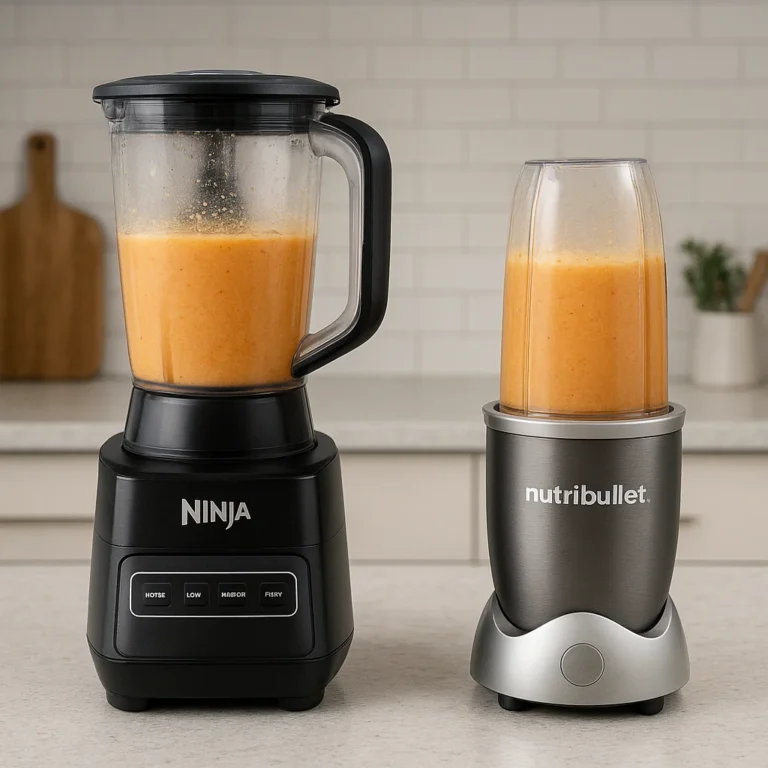
- Best compact option: The nutribullet Ultra suits single servings, but personal blenders aren’t automatically quiet or ideal for tough recipes.
- Compare noise readings carefully: Decibel results depend on the test setup, recipe, and measurement distance.
- 👉 Shop quiet-blender picks: Blendtec Professional 800 | Breville Super Q | Hamilton Beach Quiet Shield Blender | Vitamix blenders
Table of Contents
- ⚡ Quick Tips and Facts
- 🔇 What Makes a Blender Quiet? Noise, Decibels, and Sound Enclosures
- How Blender Noise Is Measured
- Why Some Blenders Sound Louder Than Others
- 📜 A Brief History of Quiet Blender Design
- 🏆 The 10 Best Quiet Blenders for Smoothies, Soups, and More
- 1. Vitamix The Quiet One: Best Commercial-Grade Quiet Blender
- 2. Blendtec Stealth 885: Best Premium Quiet Blender
- 3. Blendtec Professional 800: Best Home Blender with a Sound Enclosure
- 4. Breville Super Q: Best High-Performance Quiet Blender
- 5. Hamilton Beach Commercial Summit Edge: Best Quiet Blender for Busy Kitchens
- 6. Vitamix A350 with Sound Enclosure: Best Quiet Smart Blender
- 7. KitchenAid K400: Best Mid-Range Blender for Everyday Blending
- 8. Hamilton Beach Professional Quiet Shield Blender: Best Value Quiet Blender
- 9. Blendtec Classic 575: Best Powerful Blender Without a Large Enclosure
- 10. NutriBullet Ultra: Best Quiet Personal Blender
- 📊 Quiet Blender Comparison: Noise, Capacity, Features, and Best Uses
- 🛒 How to Choose the Quietest Blender for Your Kitchen
- Blender Type: Countertop, Personal, or Commercial
- Sound Enclosures and Noise-Reducing Features
- Motor Power, Blades, and Blending Performance
- Jar Capacity, Materials, and Cleaning
- Warranty, Replacement Parts, and Long-Term Value
- 🧪 How We Evaluate Blender Noise and Performance
- 🥤 Quiet Blender Performance by Recipe
- Smoothies and Frozen Fruit
- Ice, Nut Buters, and Frozen Desserts
- Soups, Sauces, and Hot Ingredients
- Protein Shakes and Single-Serve Blends
- 🔧 How to Make Your Blender Quieter
- 🧼 Cleaning and Maintaining a Quiet Blender
- ⚠️ Common Quiet Blender Buying Mistakes
- Conclusion
- Recommended Links
- FAQ
- What is the quietest blender you can buy?
- Are quiet blenders actually quiet?
- Is a blender with a sound enclosure worth it?
- Can a quiet blender crush ice and frozen fruit?
- Are personal blenders quieter than full-size blenders?
- How can I reduce blender noise without buying a new one?
- Reference Links
⚡ Quick Tips and Facts
Welcome to the loudest corner of an otherwise peaceful kitchen. No full-size blender is silent: even models marketed as quiet can sound forceful when crushing ice or blending frozen fruit. For our 2026 quiet blender test roundup, we compare noise, texture, ease of use, and the very human question of whether you’d happily run the blender before everyone else wakes up.
| Quick fact | What it means for you |
|---|---|
| Decibels alone don’t tell the whole story | Pitch, vibration, and how long the blender runs affect how loud it feels. |
| A sound enclosure can reduce perceived noise | The cover helps block sound, but it can make a blender larger and less convenient. |
| Portable blenders tend to sound quieter | They’re useful for simple single-serve drinks, but usually less capable with ice and tough ingredients. |
| More motor power doesn’t automatically mean a better blend | Jar design, blade geometry, ingredients, and blending speed matter too. |
| A soft mat can reduce counter vibration | It won’t hush the motor, but it may stop your countertop from joining the percussion section. |
| Blend for the task, not the spec sheet | Smoothies, nut butter, hot soup, and ice each place different demands on a blender. |
Our short version: choose a sound-enclosed countertop blender if you need substantial blending power with less noise escaping into the room. Choose a portable model if your top priorities are small portions and a shorter, gentler blend. For more low-noise kitchen recommendations, see our Low Noise Kitchen Gadgets and Noise Reduction Tips guides.
🔇 What Makes a Blender Quiet? Noise, Decibels, and Sound Enclosures
Blenders make noise from several sources at once: the motor, blades moving through ingredients, the jar and lid vibrating, and the appliance coupling those vibrations into your countertop. A sound enclosure blocks some of that airborne noise. A silicone or rubber mat can help reduce vibration traveling through the counter.
So what’s the quietest blender? The answer depends on what you’re blending, how you measure it, and where you stand.
How Blender Noise Is Measured
Sound measurements are usually reported in decibels (dB or dBA). The “A” in dBA means the measurement is weighted to approximate how human hearing responds to different frequencies. But a number needs context: distance from the blender, microphone placement, room acoustics, recipe, speed setting, and blending time can all change the result.
| A published measurement | What it tells you | What it doesn’t tell you |
|---|---|---|
| A single dBA reading | Approximate sound level at the stated test position | Whether the blender sounds sharp, buzy, or tolerable |
| An average reading | Typical level across a defined test | The loudest instant during startup or ice crushing |
| A peak reading | A brief high point | How loud the blender sounds for an entire recipe |
| A measurement with an enclosure | How much sound reaches the test position with the cover installed | How the blender performs with the enclosure open or removed |
For reference, the National Institute for Occupational Safety and Health (NIOSH) explains that decibels use a logarithmic scale, so a small numerical change isn’t necessarily a small perceptual change. That’s why we’re wary of comparing one publication’s “quiet” reading directly with another’s unless their testing methods match.
The Occupational Safety and Health Administration (OSHA) discusses workplace noise exposure and hearing conservation; those standards are useful background, not a blender-shopping cutoff. A short kitchen blend is different from hours of exposure to workplace noise.
Why Some Blenders Sound Louder Than Others
A blender’s sound signature can matter nearly as much as its measured level. A lower, smoother motor hum may feel less annoying than a high-pitched whine, even if a meter shows similar readings.
The biggest factors:
- Recipe: Ice, frozen fruit, nuts, and thick mixtures load the motor and can raise the sound.
- Speed: High speed often means louder operation. A slower setting may work well when the blade and jar are designed for good circulation.
- Jar and lid fit: Loose or poorly seated parts can rattle.
- Countertop: Hollow cabinets and hard countertops can amplify vibration.
- Sound enclosure: A cover provides a physical barrier between the blender and the room, as described in this RTINGS quiet-blender guide.
- Batch size: A small amount of ingredients may not circulate well in a large pitcher, forcing longer blending or frequent stopping.
RTINGS reports tested models spanning roughly 79 dBA for a portable blender to around 90.5 dBA for a full-size model under its test conditions. Those results are useful for comparing models within its testing, but they shouldn’t be treated as universal readings in every kitchen.
📜 A Brief History of Quiet Blender Design

For decades, blender makers focused heavily on motor power, capacity, and speed. Sound reduction often came later, with design changes such as insulated housings, improved jar fit, vibration control, and countertop sound enclosures.
Commercial kitchens helped push enclosure design forward. A blender in a busy café may run repeatedly throughout the day, where sound can affect staff and customers alike. Home buyers have borrowed the same idea: a covered blender may be easier to live with in an open-plan kitchen, though it takes up more counter space.
Today, the category ranges from portable single-serve blenders to full-size machines with enclosed housings. Brands including Vitamix, Blendtec, Hamilton Beach, Breville, and Ninja each approach the noise-versus-performance trade-off differently.
A word of caution: “quiet” is a marketing description, not a standardized noise class. Check the model’s actual design, independent tests, and warranty terms before treating a quietness claim as a promise.
🏆 The 10 Best Quiet Blenders for Smoothies, Soups, and More
Our picks balance sound management with real kitchen usefulness. The ratings below are editorial assessments, not laboratory dB scores; noise readings from different sources should be compared cautiously.
| Blender | Noise management | Blending | Ease of use | Best for |
|---|---|---|---|---|
| Vitamix Ascent X5 | 8/10 | 10/10 | 9/10 | Premium, versatile blending |
| Blendtec Professional 800 | 10/10 | 9/10 | 9/10 | Powerful blending with a sound enclosure |
| Blendtec Stealth 885 | 10/10 | 10/10 | 8/10 | Commercial environments |
| Breville Super Q | 8/10 | 9/10 | 9/10 | High-performance home blending |
| Hamilton Beach Professional Quiet Blender | 9/10 | 8/10 | 8/10 | Quiet smoothie-making |
| Hamilton Beach Commercial Summit Edge | 9/10 | 9/10 | 7/10 | High-volume use |
| KitchenAid K400 | 7/10 | 8/10 | 8/10 | Everyday blending |
| Blendtec Classic 575 | 6/10 | 9/10 | 8/10 | Power without an enclosure |
| nutribullet Ultra | 6/10 | 7/10 | 8/10 | Personal smoothies |
| Ninja Professional Plus DUO | 5/10 | 8/10 | 8/10 | Multi-container value |
1. Vitamix Ascent X5: Best Premium Quiet Blender
The Vitamix Ascent X5 is a strong pick if you want an advanced full-size blender and are willing to prioritize features and blending quality over a sound enclosure. RTINGS measured it at about 89 dBA in its test and praised its ability to handle fibrous greens, thick recipes, and ice.
| Spec or feature | Details |
|---|---|
| Jar capacity | 48 oz |
| Controls | Speed dial and automatic programs |
| Strong points | Versatile recipes, smooth results, convenient presets |
| Trade-offs | Expensive feature set; still plainly audible during blending |
What we like: It’s built for more than smoothies. The X5 includes automatic programs and manual speed control, so you can switch from a quick smoothie to thicker mixtures without relying one fixed cycle.
What to consider: A measured reading near 89 dBA is not “quiet” in the everyday, library-like sense. It’s quieter than some powerful blenders in the same test context, but don’t expect it to disappear into the background.
Best for households that value premium blending control and broad versatility more than minimum sound at any cost.
- 👉 CHECK PRICE on: Amazon | Walmart | Vitamix Official
What users tend to value
Vitamix owners commonly praise the machine’s ability to handle repeated daily use and make smooth blends. Common trade-offs in owner feedback include counter space, noise, and learning how to use the tamper and speed controls. Look for verified reviews for the exact configuration you’re considering; a review of a different Ascent model may not reflect the X5’s jar or programs.
2. Blendtec Professional 800: Best Home Blender with a Sound Enclosure
The Blendtec Professional 800 is the clearest choice here if you want a full-size blender built around sound reduction. Its sealed sound enclosure surrounds the jar, while a capacitive touch control and preset cycles keep operation simple.
| Spec or feature | Details |
|---|---|
| Motor | 1,800 W, according to Blendtec |
| Controls | 11-speed touch slider and Pulse |
| Presets | Six |
| Warranty | Blendtec lists a 10-year warranty for this model |
| Main advantage | Sound enclosure with powerful blending |
| Main trade-off | Large footprint and a premium, specialized design |
Blendtec describes it as its quietest blender and says its enclosure combines sound-dampening and airflow technology. The manufacturer does not publish an independent dB result on the product page, so treat its quietness claim as a brand claim rather than a standardized comparison.
Blendtec calls the Professional 800 “a truly silent blender.” That’s persuasive marketing, but we’d put it this way: the enclosure is designed to reduce escaping sound, not eliminate the sound of blending. Blendtec’s own Professional 800 product page lists the controls, presets, enclosure, cleaning guidance, and warranty details.
Best for: Powerful home blending where sound containment and a polished control panel matter.
Less ideal for: Small kitchens, shoppers seeking a compact footprint, or anyone expecting literal silence.
- 👉 CHECK PRICE on: Amazon | Blendtec Official
What the enclosure changes
The enclosure is the main reason to consider this model over an unenclosed high-power blender. It places a physical barrier around the jar, which can reduce the sound reaching the room. The trade-off is practical: you need clearance for the cover, and you’ll still hear motor and ingredient noise.
Keep commercial use and warranty conditions in mind. Blendtec states that the Professional 800 is not intended for commercial use and that commercial use voids its warranty. For a café or smoothie bar, check Blendtec’s commercial range instead.
3. Blendtec Stealth 885: Best Premium Commercial Quiet Blender
The Blendtec Stealth 885 is a commercial-focused model built for repeated service. It uses a sound enclosure and programmable controls, making it more relevant to cafés, bars, and other professional environments than most household kitchens.
| Strength | Consideration |
|---|---|
| Sound enclosure | More counter and overhead clearance needed |
| Designed for commercial use | Usually more machine than a casual smoothie maker needs |
| Programmable operation | Confirm service, installation, and warranty details for your setting |
Our take: This is a specialist option, not an automatic home recommendation. If you blend dozens of drinks per day, its intended environment may make sense. If you blend one breakfast smoothie, a home model will often be a better fit.
- 👉 Shop Blendtec commercial blenders: Blendtec Official | Amazon search
4. Breville Super Q: Best High-Performance Quiet Blender
The Breville Super Q combines a powerful motor, multiple speeds, and an included personal blending cup on applicable packages. It’s designed as a versatile home blender with noise-reduction features.
| Feature | Why it matters |
|---|---|
| Multiple speed settings | Lets you avoid using maximum speed for every recipe |
| Preset programs | Helpful for repeatable drinks and frozen recipes |
| Personal-cup compatibility | Convenient for single servings |
| Sound-reduction design | Aims to make powerful blending more manageable |
Our experience-led advice: Treat “quiet” as relative. The Super Q may be a more comfortable option than a bare high-speed blender, but it still has to move food with fast blades. For early-morning use, pair it with a mat, keep the jar centered, and close the kitchen door if possible.
- 👉 CHECK PRICE on: Amazon | Walmart | Breville Official
5. Hamilton Beach Professional Quiet Blender: Best Value Quiet Blender for Smoothies
The Hamilton Beach Professional Quiet Shield Blender uses a cover around the jar to reduce noise escaping into the kitchen. RTINGS measured it at a little over 87 dBA with the dome in place in its testing.
| Spec or feature | Details |
|---|---|
| Jar capacity | 32 oz |
| Motor | 1,500 W listed by Hamilton Beach |
| Noise feature | Quiet Shield enclosure |
| Best at | Smoothies and everyday blending |
| Limitation | Tough mixtures may require opening the shield and using a tamper |
It’s a practical candidate if you make smoothies regularly and want a quieter setup without stepping into a high-end commercial-style machine. The 32-ounce jar suits smaller batches; it may feel cramped if you regularly blend for a large family.
Important trade-off: When a thick recipe needs hands-on intervention, opening the shield can increase the sound reaching the room. For icy or very dense mixtures, work in stages and add liquid as needed rather than forcing the motor through a stubborn blob.
- 👉 CHECK PRICE on: Amazon | Walmart | Hamilton Beach Official
6. Hamilton Beach Commercial Summit Edge: Best Quiet Blender for Busy Kitchens
The Hamilton Beach Commercial Summit Edge is aimed at professional blending, where frequent use and customer-facing noise control matter. Commercial models can include sound enclosures and controls designed for repeatable service, but availability and specifications may vary by configuration.
| Consider before buying | Why |
|---|---|
| Intended use | Commercial machines may have different warranty terms |
| Sound enclosure | Check the exact model’s included cover and operating instructions |
| Service support | Local access to parts and service matters in a business |
| Counter space | Commercial enclosures can be bulky |
Recommendation: Contact the manufacturer or an authorized commercial dealer for exact model specifications. Don’t assume a similarly named Summit model includes identical controls, jar capacity, or enclosure.
- 👉 Shop Hamilton Beach Commercial: Official site | Amazon search
7. KitchenAid K400: Best Mid-Range Blender for Everyday Blending
The KitchenAid K400 is a useful everyday option if you want a conventional countertop blender rather than a large sound enclosure. It offers variable speed control and a sturdy handled pitcher.
| Strength | Trade-off |
|---|---|
| Familiar controls and pitcher format | No large sound enclosure |
| Convenient for everyday smoothies and sauces | May be less suited to dense, prolonged blending |
| Multiple color and package options | Noise depends on recipe and selected speed |
The K400 can be a sensible compromise for someone who wants a capable household machine, not a specialist noise-control appliance. If your primary goal is to make an early-morning smoothie without waking anyone, a sound-enclosed model is the safer bet.
- 👉 CHECK PRICE on: Amazon | Walmart | KitchenAid Official
8. Blendtec Classic 575: Best Powerful Blender Without a Large Enclosure
The Blendtec Classic 575 offers strong blending and preset programs without the Professional 800’s large sound enclosure. That can make it easier to place on a counter, but the trade-off is less sound containment.
Choose it if: You want a powerful, straightforward blender and don’t need the enclosure.
Look elsewhere if: Reducing sound reaching nearby rooms is your leading requirement.
- 👉 CHECK PRICE on: Amazon | Blendtec Official
9. nutribullet Ultra: Best Quiet Personal Blender
The nutribullet Ultra is a compact personal blender for single-serve smoothies and similar drinks. It saves space and avoids the large jar-and-base footprint, but personal size does not guarantee low noise: a small motor still has to spin blades quickly.
| Best for | Less suited to |
|---|---|
| Single-serve smoothies | Large family batches |
| A compact countertop footprint | Blending thick mixtures for long periods |
| Simple everyday portions | Buyers who need a sound enclosure |
If you mostly blend soft fruit, yogurt, protein powder, and liquid, a personal blender may be all you need. For hard ice and dense recipes, check the manufacturer’s instructions and use ingredients in the recommended order.
- 👉 CHECK PRICE on: Amazon | Walmart | nutribullet Official
10. Ninja Professional Plus Blender DUO: Best Two-Container Blender for Value
The Ninja Professional Plus Blender DUO with Auto-iQ pairs a large pitcher with a personal cup. RTINGS measured it at just under 89 dBA at maximum speed in its test, demonstrating that a convenient multi-container setup isn’t necessarily a quiet one.
What it does well: Frozen drinks, ice crushing, and flexible batch sizes.
Where it may struggle: Fibrous ingredients in the large pitcher may need extra blending; thick nut-butter mixtures can require stopping to stir. Sharp blade assemblies also call for careful cleaning.
- 👉 CHECK PRICE on: Amazon | Walmart | Ninja Official
📊 Quiet Blender Comparison: Noise, Capacity, Features, and Best Uses
The figures below are reported measurements from the cited publications or manufacturers, not results from one shared lab. Different distances, rooms, recipes, and meter settings can produce different readings.
| Model | Reported noise result | Capacity / format | Standout feature | Best fit |
|---|---|---|---|---|
| Vitamix Ascent X5 | About 89 dBA in RTINGS testing | 48 oz pitcher | Presets and variable speed | Versatile premium blending |
| Vitamix VX1 | About 90.5 dBA in RTINGS testing | 64 oz pitcher | Larger capacity, simpler controls | Big batches |
| Hamilton Beach Professional Quiet Blender | A little over 87 dBA with shield in RTINGS testing | 32 oz pitcher | Quiet Shield cover | Smoothies and smaller batches |
| Ninja Professional Plus DUO | Just under 89 dBA in RTINGS testing | 72 oz pitcher plus personal cup | Two container sizes | Frozen drinks and flexibility |
| Black+Decker Quiet Blender with Cyclone Glass Jar | A little over 87 dBA in RTINGS testing | 48 oz glass jar plus personal jar | Glass pitcher and removable blades | Cost-conscious basic blending |
| Beast GO Cordless | Just over 79 dBA in RTINGS testing | Portable | Cordless use | Simple single servings |
| BlendJet 2 | About 64–68 dB in Homes & Gardens testing | 16 oz portable jar | Compact size | Soft fruit and protein shakes |
| Nutribullet Flip | About 71–73 dB in Homes & Gardens testing | 20 oz insulated bottle | Insulated vessel | Smooth portable drinks |
| Ninja Blast Max | About 82 dB in Homes & Gardens testing | 22 oz portable jar | Portable ice-crushing modes | Portable frozen drinks |
| Blendtec Professional 800 | No independent dB figure published on product page | Full-size, enclosed | Sound enclosure and presets | Powerful home blending with sound containment |
Sources: RTINGS quiet blender reviews, Homes & Gardens quiet blender guide, and Blendtec Professional 800.
The sound-enclosure question: competing claims, explained
One test demonstration for the “Dome of Silence” reports a Nutribullet changing from approximately 88.8 dB to 70.5 dB, and a Ninja from more than 92 dB to roughly 72 dB, with the enclosure installed. You can see that demonstration at the featured video.
Those are substantial reported reductions, but they are demonstration results for that enclosure and test setup, not proof that every blender will produce those readings in every room. The test conditions, microphone position, enclosure fit, recipe, and meter calibration all matter. RTINGS likewise describes enclosures as a physical barrier that blocks sound, while the Homes & Gardens guide emphasizes that perceived sound quality can differ from what a meter records.
What we trust most: use independent model testing for comparisons within the same publication, use manufacturers’ pages for official specifications, and treat a third-party enclosure demonstration as useful evidence about that setup—not a universal guarantee.
🛒 How to Choose the Quietest Blender for Your Kitchen
Start with the recipes you actually make. A blender for occasional protein shakes does not need the same capacity, motor, or sound-control setup as a machine used daily for nut butter and frozen drinks.
Blender Type: Countertop, Personal, or Commercial
| Type | Advantages | Trade-offs |
|---|---|---|
| Full-size countertop | Handles family portions and varied recipes | Larger and often louder than personal models |
| Personal blender | Compact, convenient, often suited to one drink | Limited capacity and less capable with dense recipes |
| Commercial blender | Built for repeated service and high throughput | Can be oversized for home use; confirm warranty terms |
| Immersion blender | Convenient for soups and sauces in a pot | Requires hands-on use; can splash if handled carelessly |
An immersion blender may be a good alternative if your main task is blending soup directly in the pot. The Homes & Gardens guide found a hand blender quieter in its testing than many countertop alternatives, but results depend on the exact product and how it’s used.
Sound Enclosures and Noise-Reducing Features
Look for a properly fitted enclosure if reducing sound reaching other rooms is the main priority. Check whether it:
- Fits over the entire jar without obstructing controls.
- Allows proper airflow and complies with the manufacturer’s directions.
- Can be opened and cleaned easily.
- Acommodates the blender’s height and countertop location.
- Is designed for your exact blender model.
Avoid improvised covers that block vents. A towel draped over a motor base may trap heat or interfere with operation. Use only enclosures approved for the blender, or follow the manufacturer’s guidance.
Motor Power, Blades, and Blending Performance
Motor wattage can help describe a blender, but it does not tell you how smooth your smoothie will be. Blade geometry, container shape, speed control, and ingredients all contribute. High-power blending can be useful for dense recipes, but it can also produce more sound at maximum speed.
Ask yourself:
- Will you crush ice often? Choose a model whose manual explicitly supports it.
- Do you make nut butter? Look for a tamper or a jar design intended for thick mixtures.
- Do you blend fibrous greens? Performance reviews on kale and similar ingredients can reveal more than wattage.
- Do you make soup? Confirm whether hot blending is supported and follow the safety instructions.
Jar Capacity, Materials, and Cleaning
Choose a container size that matches typical batch volume. Too small and you’ll blend in multiple rounds; too large and small portions may not circulate properly.
| Container consideration | Practical tip |
|---|---|
| Capacity | Match it to the number of servings you normally make |
| Material | Check care instructions and whether it resists staining |
| Lid and seal | A secure fit helps prevent leaks and rattling |
| Blade cleaning | Use the supplied brush or self-cleaning method; handle blades carefully |
| Personal cups | Check whether drinking lids and spare cups are included |
Always follow the manual for dishwasher use, hot liquids, and blade removal. Some models have sharp assemblies that are difficult to clean by hand; “easy to clean” should mean something more specific than “put water in it and hope.”
Warranty, Replacement Parts, and Long-Term Value
A blender may be used for years, so check:
- Length and coverage of the warranty.
- Whether the warranty covers home use only.
- Availability of replacement jars, lids, seals, and blades.
- Authorized service options.
- Whether accessories are model-specific.
For commercial buyers, do not assume a home blender’s warranty covers business use. Blendtec specifically says the Professional 800 is not for commercial use and that commercial use voids its warranty; confirm terms directly with the manufacturer.
🧪 How We Evaluate Blender Noise and Performance
A fair quiet-blender review should combine sound readings with practical blending tests. One dB figure can’t tell you whether the machine makes a smooth berry drink, rattles on the counter, or needs a long, noisy cycle to finish.
Our testing checklist
- Record the test setup. Note room conditions, microphone position, speed, and recipe.
- Measure both typical and peak sound. A startup spike is different from a sustained blending level.
- Listen for sound character. Record whine, hum, rattling, vibration, and harshness.
- Use repeatable recipes. Test ingredients such as frozen fruit, leafy greens, and ice only when the manual permits.
- Check texture. Look for unblended skins, seeds, fibers, and chunks.
- Assess usability. Consider jar handling, controls, cleaning, and the need to stop and stir.
- Evaluate noise controls. Test any enclosure as instructed and note whether the cover limits access.
The summaries from RTINGS and Homes & Gardens illustrate why published results differ: their tested products, recipes, measurement setups, and reviewers’ descriptions are not identical.
How to read reviews without being misled
- Prefer a review that names the distance, setting, and recipe used for the measurement.
- Compare readings only when the test methods are reasonably similar.
- Read negative reviews for recurring issues, not one-off shipping damage.
- Check reviews for the exact model and accessories; product names can cover several configurations.
- Treat “silent” as a promotional claim unless the test method and result are clearly documented.
🥤 Quiet Blender Performance by Recipe
The quietest setting is often the one that finishes the recipe efficiently. A blender struggling at low speed for a long time may not be quieter overall than one that completes the job quickly—so use the right tool and follow its manual.
Smoothies and Frozen Fruit
For a basic smoothie, add liquid first, then softer ingredients, and frozen ingredients last unless the manual recommends a different order. Start low, then increase speed as needed.
To reduce noise and improve texture:
- Avoid overfilling the jar.
- Cut large fruit into manageable pieces.
- Add enough liquid for circulation.
- Use a preset if it reliably blends your usual recipe.
- Stop and scrape only when the machine is switched off and safe to access.
Ice, Nut Buters, and Frozen Desserts
These are demanding recipes. Ice can cause abrupt impacts; nut butter can bind up around the blades; thick frozen mixtures may require a tamper.
- Confirm the blender is rated for the task.
- Use the manufacturer’s tamper and directions.
- Don’t run a personal blender beyond its recommended cycle time.
- Add ingredients gradually when the recipe allows.
- Never reach into a jar while the blade assembly is attached to power.
A sound enclosure may help reduce escaping sound, but if it must be opened for tamping, the operation will be louder while it’s open.
Soups, Sauces, and Hot Ingredients
Not every blender is designed for hot liquids. Pressure and steam can build in a closed container, so check the manufacturer’s instructions before blending soup.
For many soup tasks, an immersion blender is practical because it blends directly in a saucepan. Keep the blade head submerged to limit splashing, and use a suitable vessel. The U.S. Department of Agriculture’s food safety guidance is useful for food handling, but your blender manual is the authority for appliance operation.
Protein Shakes and Single-Serve Blends
Protein powder, milk, and soft fruit usually need less power than a jar packed with frozen fruit. A personal blender may be a good fit for this task, especially if it offers a travel lid.
For quieter operation:
- Put liquid in first.
- Add powder gradually to reduce dry clumps.
- Blend only as long as needed.
- Let foam settle before opening the cup.
🔧 How to Make Your Blender Quieter
You can’t make a blender silent without changing the appliance, but you can often reduce vibration and avoid unnecessarily loud operation.
- Move the blender away from room corners. Corners and cabinets may reflect sound.
- Place it on a stable, level surface. A wobbly base can add rattling.
- Use a thin silicone mat if the manufacturer allows it. The mat may reduce counter vibration; keep vents clear.
- Check that the jar and lid are correctly seated. Loose parts can rattle.
- Blend only the amount you need. A suitable batch can circulate more efficiently.
- Start at a lower speed when appropriate. Increase speed only if the recipe needs it.
- Use a compatible sound enclosure. The first video’s Dome of Silence demonstration reports reductions from about 88.8 to 70.5 dB for a Nutribullet and from more than 92 to roughly 72 dB for a Ninja, but those figures are tied to the demonstration’s setup. See the featured video.
- Keep the enclosure ventilated and model-compatible. Never cover vents or improvise a sealed box around a running appliance.
- Choose the timing strategically. Prep ingredients ahead, then blend when it will disturb fewer people.
For more practical ideas, browse our Noise Reduction Tips and Low Noise Household Items.
🧼 Cleaning and Maintaining a Quiet Blender
A clean, well-fitted blender is less likely to develop unpleasant odors, leaks, or rattles.
A simple cleaning routine
- Unplug the base.
- Follow the manual before removing blades or washing components.
- For models that allow it, add warm water and a drop of dish soap, then run the cleaning cycle or a short low-speed blend.
- Rinse the jar and lid.
- Wipe the motor base with a damp cloth; never immerse it.
- If there’s an enclosure, wipe it separately according to its care instructions.
- Let everything dry before reassembly.
Blendtec recommends cleaning the Professional 800 jar with hot water and a little dish soap, then wiping the enclosure with a damp cloth; check its official instructions for current guidance.
Maintenance checks that can prevent rattles
- Inspect seals and lids for wear.
- Check that the jar sits evenly on the base.
- Keep the underside of the jar and drive coupling clean.
- Stop using the appliance if you notice burning smells, unusual vibration, or damage.
- Replace parts only with compatible components.
⚠️ Common Quiet Blender Buying Mistakes
- Believing “quiet” means silent. It doesn’t. Even enclosed models make audible motor and blending noise.
- Comparing unrelated dB readings. Test conditions change the result.
- Buying only by wattage. Jar design and recipe performance matter.
- Ignoring enclosure size. A sound cover can be a counter-space commitment.
- Assuming a portable blender can replace a full-size machine. It may be fine for drinks, but not for every dense or large-batch recipe.
- Overlooking warranty restrictions. Home and commercial use may be treated differently.
- Expecting every recipe to be equally quiet. Ice and thick mixtures put different demands on the motor.
- Using an unsafe improvised cover. Blocked airflow can create a hazard; use manufacturer-approved equipment.
- Assuming a low number guarantees a pleasant sound. Pitch and vibration can make a “quieter” blender feel more irritating than a smoother-sounding one.