Support our educational content for free when you purchase through links on our site. Learn more
Can I Make My Garage Door Opener Quieter? 9 Fixes 🔇

Can I make my garage door opener quieter? Yes—often without replacing it. Start by finding the source: loose hardware, dry rollers, a noisy chain, or vibration traveling through the ceiling can all make the opener seem louder than it is.
We’ve heard garage owners blame the motor, only to discover that one rattling bracket was turning the upstairs ceiling into a giant speaker. A little careful diagnosis can save you from buying a new opener when the real fix is simpler.
Key Takeaways
- Find the source before buying parts: noise may come from the door, opener, mounting hardware, or building structure.
- Start with safe maintenance: clean the tracks, check accessible fasteners, and lubricate only parts approved by the manufacturer.
- Nylon rollers, vibration-isolating mounts, and a belt-drive opener may reduce noise, but won’t fix a damaged or unbalanced door.
- Never adjust springs or cables yourself. Call a qualified garage-door technician for high-tension parts, binding, or sudden loud bangs.
- For rooms near the garage, reduce noise at its source first, then consider vibration control and sound absorption.
Table of Contents
- ⚡️ Quick Tips and Facts
- 🔊 Why Is My Garage Door Opener So Loud?
- Normal operating sounds vs. warning signs
- How the opener type affects noise
- 🏠 Garage Door Opener Noise: How the System Works
- The opener, door, tracks, rollers, and springs
- Why vibrations travel through your garage
- 🔍 Find the Source of the Noise Before You Fix It
- Rattling, grinding, squeaking, and banging sounds
- A safe, step-by-step noise inspection
- 🛠️ 9 Ways to Make a Garage Door Opener Quieter
- 1. Tighten loose nuts, bolts, and brackets
- 2. Lubricate the right garage door parts
- 3. Replace worn rollers with nylon rollers
- 4. Reduce vibration with opener mounting pads
- 5. Check and adjust the garage door tracks
- 6. Balance the door and inspect its springs
- 7. Quiet a noisy opener chain or belt
- 8. Add sound absorption and vibration control
- 9. Upgrade to a quieter garage door opener
- 🧴 Garage Door Lubrication: What to Use and What to Avoid
- ⚙️ Belt Drive vs. Chain Drive vs. Screw Drive Noise
- 🏡 How to Reduce Garage Door Noise in Rooms Above the Garage
- 🛑 Garage Door Safety: Repairs to Leave to a Professional
- 🔧 When to Repair or Replace a Noisy Garage Door Opener
- 🧰 Quiet Garage Door Maintenance Checklist
- 💸 What Affects the Cost of Quieting a Garage Door?
- ✅ Conclusion
- 🔗 Recommended Links
- ❓ FAQ
- Can I make my garage door opener quieter without replacing it?
- Why is my garage door louder in cold weather?
- Will lubricating the tracks make my garage door quieter?
- Are belt-drive garage door openers quieter than chain-drive models?
- Can I make a noisy garage door quieter with insulation?
- How often should I maintain my garage door opener?
- When should I call a garage door technician?
- 📚 Reference Links
⚡️ Quick Tips and Facts
Yes, you can often make a garage door opener quieter without replacing it. First identify whether the sound comes from the opener, the door hardware, or vibration traveling into the house. For model comparisons, see our guide to the quietest garage door openers.
| What you hear | Common causes | A sensible first step |
|---|---|---|
| Rattling or buzzing | Loose bolts, brackets, or opener mounts | Inspect and snug accessible hardware |
| Squeaking or squealing | Dry hinges, rollers, or springs | Use garage-door lubricant on approved moving parts |
| Grinding or scraping | Worn components, misalignment, or a struggling opener | Stop and arrange an inspection if it persists |
| Loud vibration in the ceiling | Opener vibration transferring through its mounting | Check mounting hardware; consider isolation pads |
| A heavy bang at the end of travel | Door impact, worn seals, or incorrect travel settings | Check the door and bottom seal; don’t adjust springs yourself |
- Start with the door, not the motor. A noisy door can make a perfectly serviceable opener sound worse.
- Keep lubricant off the tracks. Clean tracks with a cloth; lubricate the moving parts recommended in your opener and door manuals.
- Nylon rollers and a belt-drive opener can reduce noise, but neither will fix a damaged spring, an unbalanced door, or loose mounting hardware.
- Garage-door springs are under high tension. Don’t adjust, remove, or repair them yourself. The U.S. Consumer Product Safety Commission advises keeping garage doors and openers properly maintained and using professional service when repairs involve hazardous components.
At Quietest™, we think of noise as a path: a sound starts at a moving part, then travels through the opener bracket, framing, and sometimes straight into the bedroom above. The trick is to find where that path begins—and that’s not always where the sound seems loudest.
🔊 Why Is My Garage Door Opener So Loud?
A garage door opener is only one part of a system. The opener moves the door, but the door’s rollers, hinges, springs, tracks, fasteners, and mounting structure all contribute to what you hear. A clatter blamed on the motor may actually be a loose hinge. A hum that seems modest in the garage can become a ceiling-wide rumble upstairs.
Normal operating sounds vs. warning signs
A motor hum, roller rumble, and brief mechanical clicks can be normal. A sudden change in sound is more useful than loudness alone. If the opener has become noisier over days or weeks, inspect for a new fault rather than assuming the motor is simply aging.
| Sound | Possible explanation | What to do |
|---|---|---|
| Steady motor hum | Normal operation, or an opener working harder than usual | Check that the door moves smoothly by hand only if safe and permitted by the manual |
| Repetitive rattle | Loose hardware, a vibrating cover, or a loose chain | Inspect visible fasteners; consult the opener manual |
| Squeak | Dry hinge, roller, or spring contact | Apply the correct lubricant to the relevant component |
| Grinding, crunching, or scraping | Damaged roller, track problem, or failing mechanism | Stop using the system if the door binds or the sound is severe |
| Loud bang or pop | Spring, cable, or door issue | Keep clear and call a qualified garage-door technician |
| Reversing, jerking, or struggling | Obstruction, balance problem, or opener issue | Check for obvious obstructions; don’t defeat safety features |
A sound meter can help you compare “before” and “after,” but phone readings are not laboratory measurements. Microphone quality, distance, room reflections, and phone apps all affect results. In the first YouTube video, the presenter reports a maximum level changing from 82 dB to 73 dB and an average from 58 dB to 47 dB after maintenance. That’s a useful demonstration of one door’s improvement, not a guaranteed result for every garage.
How the opener type affects noise
Drive type matters, but it’s not the whole story. A worn roller or a rattling mounting bracket can make a quiet-drive opener sound surprisingly rough.
| Opener type | Typical sound character | Advantages | Trade-offs |
|---|---|---|---|
| Chain drive | More mechanical clatter and vibration | Common, durable design | Can transmit vibration through a ceiling-mounted bracket |
| Belt drive | Generally smoother and quieter | Often a good fit for garages near bedrooms | Door and mounting noise may remain |
| Screw drive | Sound depends on design and upkeep | Fewer moving parts in some designs | Can be noisy if the mechanism needs service or is poorly matched to the door |
| Direct drive / wall-mounted options | Can reduce ceiling-mounted motor vibration | May suit specific garage layouts | Compatibility and door balance still matter |
LiftMaster describes belt-drive options as a quieter choice on its garage door opener product pages. That’s a useful general comparison, but don’t treat “belt drive” as a promise of silence: a noisy door, weak mounting, or room acoustics can still dominate.
🏠 Garage Door Opener Noise: How the System Works
The opener pulls or pushes a door that may weigh well over a hundred pounds, depending on its size and construction. Springs counterbalance much of that load; rollers guide the door; hinges connect its sections. If any part is worn, loose, misaligned, or poorly lubricated, noise can spread through the entire system.
The opener, door, tracks, rollers, and springs
Think of the door as a moving assembly, not a motor with a door attached. Each part has a job, and each can create sound:
- Opener motor and drive: produces the operating hum and moves the trolley or drive mechanism.
- Trolley and opener arm: connect the opener to the door and may rattle if loose or worn.
- Rollers: travel along the tracks; worn or damaged rollers may squeak, rumble, or scrape.
- Hinges: pivot as sectional doors bend around the track curve.
- Tracks: guide the rollers. They need to be clean and correctly aligned, not greased like a hinge.
- Springs and cables: counterbalance the door. These are high-tension components and are not DIY repair parts.
- Mounts and framing: carry vibration into ceilings and walls.
The door should move smoothly and stay appropriately balanced. The International Door Association offers consumer guidance and access to professional door dealers; for component-specific maintenance, follow the door and opener manufacturers’ manuals.
Why vibrations travel through your garage
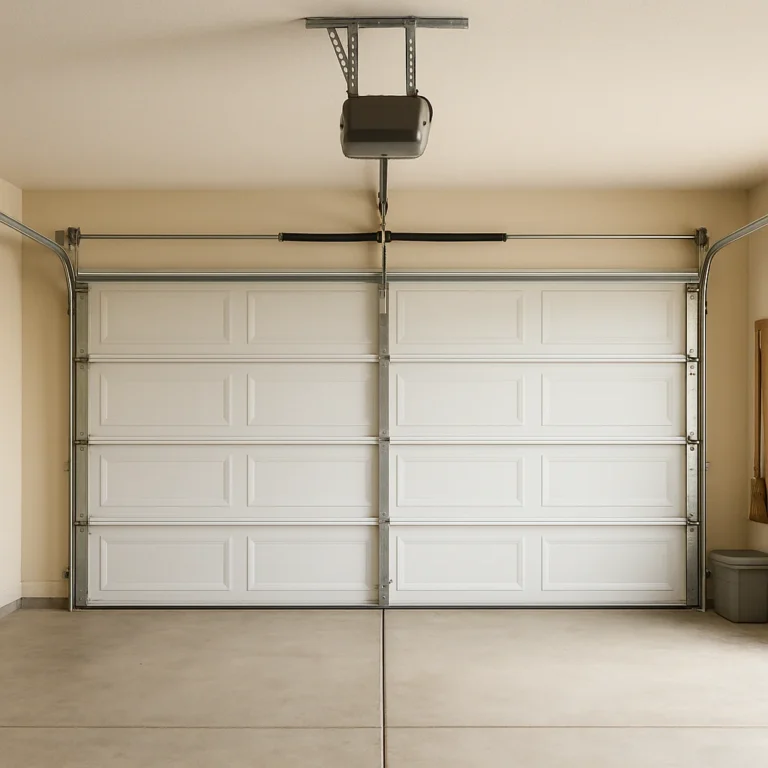
Sound can reach a room in two main ways: through the air and through the building structure. If the opener’s metal brackets are rigidly attached to joists, vibration can travel into the framing and radiate from a ceiling or wall. This is why an upstairs room may hear a low rumble even when the garage itself doesn’t seem exceptionally loud.
| Noise path | What you may notice | Possible response |
|---|---|---|
| Airborne sound | Motor and door noise audible in the garage | Maintain the door and consider acoustic treatment |
| Structure-borne vibration | Ceiling, wall, or nearby room seems to resonate | Check mounting integrity and consider compatible vibration-isolation pads |
| Door-to-floor impact | A thump as the door closes | Inspect the bottom seal and door travel; have settings checked if needed |
| Room resonance | Particular tones seem amplified upstairs | Address the source first, then consider insulation or sound absorption |
Isolation pads are not a cure for an unstable or incorrectly mounted opener. The unit must remain securely supported according to its manufacturer’s instructions. A mounting change that compromises support is not a noise fix; it’s a safety problem.
🔍 Find the Source of the Noise Before You Fix It
Before buying parts, listen carefully. Does the noise happen only while the door moves? Does it come from the opener head, the tracks, or the ceiling? Does it happen at one spot in the door’s travel? These details help separate a simple maintenance issue from a repair that needs a technician.
Rattling, grinding, squeaking, and banging sounds
Try to match the noise to its timing:
- Noise from the opener head throughout operation: possible motor, drive, or mounting issue.
- Noise at one point in the door’s travel: possible roller, track, or hinge problem.
- Noise only as the door reaches the floor: possible impact, seal, or travel-setting issue.
- Noise that changes when the door is halfway open: could point to door balance or a particular moving component.
- A sharp bang, cable movement, or visibly crooked door: stop operation and call a professional.
A practical diagnostic trick from our listening work: stand at a safe distance in several spots—near the opener, beside the tracks, and in the room above—while someone else operates the door. Don’t touch or approach moving parts. The loudest location may reveal where vibration is radiating, not where the fault began.
A safe, step-by-step noise inspection
- Listen to one full cycle. Note whether the sound occurs during opening, closing, or both.
- Check for obvious obstacles. Remove items near the door and tracks without reaching into the moving mechanism.
- Look for visible damage. From a safe position, check for bent tracks, frayed cables, loose-looking brackets, cracked rollers, or a crooked door.
- Inspect accessible fasteners. If the manufacturer’s manual permits, snug loose nuts and bolts with the correct tool. Don’t overtighten or dismantle parts.
- Review the owner’s manual. Opener brands such as Chamberlain and LiftMaster provide model-specific support and manuals.
- Stop if the door binds, drops, jerks, or looks unbalanced. Those symptoms call for professional service.
✅ Safe to observe: sound, visible dirt, obvious obstructions, and accessible loose hardware.
❌ Leave to a pro: springs, cables, drums, bottom brackets, track realignment under tension, and opener force or safety adjustments you don’t understand.
🛠️ 9 Ways to Make a Garage Door Opener Quieter
These steps move from low-risk checks to bigger upgrades. Fix the source before spending money on a new opener. A belt-drive upgrade won’t cure a damaged roller, and lubricant won’t repair a broken spring.
1. Tighten loose nuts, bolts, and brackets
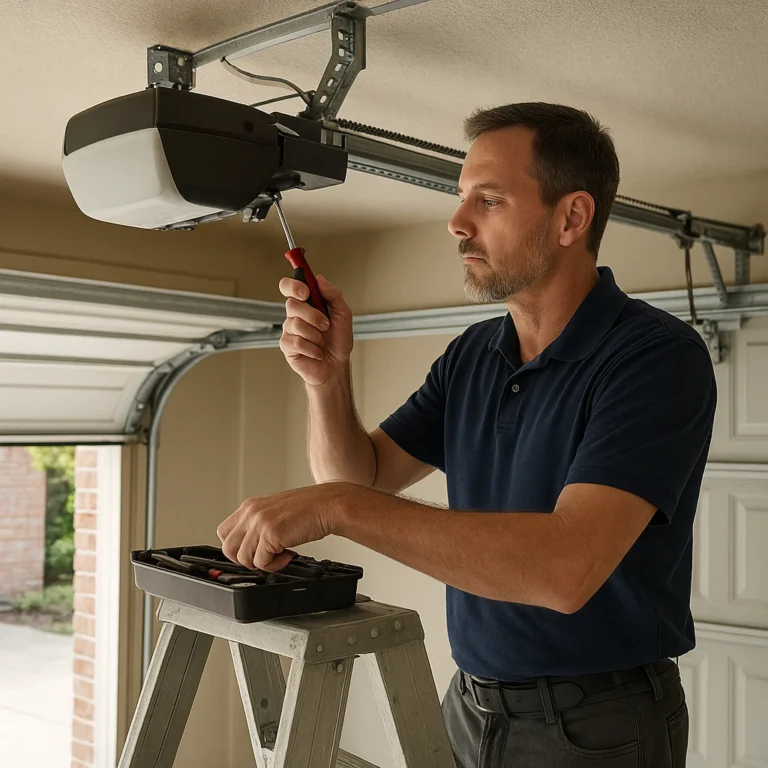
Vibration can gradually loosen accessible fasteners on door hinges, supports, and opener brackets. With the door closed and the opener disconnected only as directed by its manual, inspect visible hardware. Tighten loose fasteners carefully with the correct tool.
- Do: check for obvious looseness and follow the manufacturer’s instructions.
- Don’t: overtighten, remove structural fasteners, or touch spring and cable hardware.
- Call a technician: if a bracket is bent, cracked, pulling away from the framing, or supporting a moving track.
A little rattle can sound like a much bigger mechanical problem, especially when the ceiling acts like a drum. But if tightening visible hardware doesn’t help, don’t keep chasing the sound with more force.
2. Lubricate the right garage door parts
Use a product labeled for garage doors, and follow the opener and door manuals. Depending on the product and manufacturer, lubrication may be appropriate for roller bearings, hinges, springs, and some drive components.
The presenter in the first YouTube video recommends silicone lubricant or white lithium grease for the relevant parts and warns against WD-40, describing it as “more of a degreaser instead of a lubricant.” That advice is broadly useful for routine door lubrication, but product formulations and manufacturer instructions vary. Check your specific opener manual before applying anything to its rail, belt, or chain.
Do not lubricate the tracks themselves unless your manufacturer specifically instructs you to. Lubricant on the running surfaces can collect dirt and interfere with roller movement. Wipe off excess lubricant so it doesn’t drip or attract grime.
3. Replace worn rollers with nylon rollers
Metal rollers can be noisy, especially if their bearings are worn or they’ve become rusty. Nylon rollers are often quieter in operation, but they must be compatible with the door and track. A roller replacement can involve components near high-tension hardware, so it’s not a suitable DIY task for every door.
Consider a professional replacement if rollers are cracked, woble, bind, or require removing brackets near the bottom of the door. A technician can also check alignment and bearings rather than simply swapping parts.
For general noise-reduction ideas around the house, browse Quietest’s Noise Reduction Tips and Low Noise Household Items.
4. Reduce vibration with opener mounting pads
Purpose-designed isolation pads or mounts can reduce vibration transfer from a ceiling-mounted opener into the structure. The opener still needs a firm, secure installation, and the mounting hardware must be compatible with its weight and design.
- Check the opener manual and mounting requirements first.
- Use hardware intended for garage-door opener vibration isolation.
- Have a professional install or assess it if the opener is loose, misaligned, or mounted to questionable framing.
The Dulle Doors guide to a quieter garage door also recommends rubber vibration-isolation pads. That’s a reasonable option when structural vibration is the main complaint—not a substitute for repairing a loose or unsafe mount.
5. Check and adjust the garage door tracks
Tracks should be clean and properly aligned. Wipe dirt from them with a cloth, and look for dents or obstructions. Don’t bend, loosen, or reposition a track yourself to chase noise; track alignment affects safe door travel.
If rollers scrape, the door hesitates, or the track looks bent or uneven, arrange service. A technician can check whether the door, rollers, and tracks are aligned as a system.
6. Balance the door and inspect its springs
A properly counterbalanced door should not force the opener to do all the lifting. If it moves unevenly, falls, feels unusually heavy, or strains the opener, stop using it and call a qualified technician. Spring adjustment can release dangerous stored energy.
The CPSC garage-door safety guidance is a useful reminder that garage doors are heavy moving systems, not ordinary household hinges. Do not adjust torsion springs or cables yourself.
7. Quiet a noisy opener chain or belt
A loose or dry chain may rattle, while a belt-drive unit can still vibrate if its mount is loose or the door is noisy. Check the opener manual for the correct maintenance procedure; chain tension and lubrication requirements vary by model.
- Chain drive: inspect for unusual slack or clatter; don’t guess at tension.
- Belt drive: don’t apply lubricant unless the manual explicitly requires it.
- Rail and trolley: clean and maintain only as instructed for that opener.
If the drive makes a grinding noise, slips, or behaves inconsistently, use the manufacturer’s troubleshooting guide or call for service rather than repeatedly operating it.
8. Add sound absorption and vibration control
If the door and opener are working correctly but the garage still sounds harsh, acoustic treatment may help reduce reflected sound. Soft, fire-appropriate materials can absorb some airborne noise; vibration isolation targets sound traveling through the structure. They do different jobs.
| Treatment | Helps with | Won’t fix |
|---|---|---|
| Sound-absorbing panels | Echo and reflected airborne sound | Mechanical faults or structural vibration |
| Garage-door insulation | Heat transfer and some airborne sound | A loud motor, worn rollers, or unsafe door |
| Vibration-isolating mounts | Some structure-borne vibration | Noise caused by damaged components |
| Sealing gaps | Airborne sound leakage and drafts | Vibration through framing |
Choose products suitable for garage conditions and keep materials clear of moving hardware, opener ventilation, sensors, and fire-safety equipment.
9. Upgrade to a quieter garage door opener
If the opener is old, unreliable, or still loud after the door is properly serviced, a quieter model may be worthwhile. A belt-drive opener is a common choice for homes with a room above or beside the garage. Compare the unit’s compatibility, lifting capacity, safety features, backup options, and installation requirements—not just its drive type.
| Consideration | What to check |
|---|---|
| Door type and weight | Match the opener to the door and manufacturer guidance |
| Noise location | A quieter motor may not resolve door or mounting noise |
| Safety features | Confirm photoelectric sensors and reversing functions work |
| Smart features | Decide whether app control and monitoring matter to you |
| Installation | Verify ceiling clearance, power, and mounting support |
| Warranty and service | Review coverage and local technician availability |
We’ve heard homeowners describe the change from chain drive to belt drive as “night and day,” especially when bedrooms sit above the garage. Others replace the opener and still hear the same roller rumble. That difference usually comes down to diagnosing the source before choosing the upgrade.
- 👉 Shop LiftMaster belt-drive openers: Amazon | LiftMaster Official
- 👉 Shop Chamberlain belt-drive openers: Amazon | Chamberlain Official
- 👉 Shop Genie belt-drive openers: Amazon | Genie Official
🧴 Garage Door Lubrication: What to Use and What to Avoid
Lubrication can quiet dry friction, but using the wrong product—or applying it to the wrong surface—can make a mess and attract debris. Check your owner’s manual first; the right lubricant depends on the component and model.
| Component | Typical guidance | Caution |
|---|---|---|
| Hinges and roller bearings | Use garage-door lubricant when permitted | Apply sparingly; wipe excess |
| Torsion spring | Lubricate only as directed and from a safe position | Don’t adjust or handle the spring |
| Chain drive | Follow the exact opener manual | Requirements vary by model |
| Belt drive | Usually do not lubricate unless instructed | Lubricant can damage some belt materials |
| Tracks | Clean, don’t routinely grease | Grease can collect dust and grit |
The video presenter recommends Blaster Garage Door Lubricant, 3-IN-ONE Professional Garage Door Lubricant, or a suitable silicone lubricant, and also mentions white lithium grease. Treat these as product examples—not universal instructions. Always confirm compatibility.
A careful lubrication routine
- Read the opener and door manuals.
- Close the door and keep people, pets, and hands away from moving parts.
- Wipe visible dirt from the parts you’re permitted to lubricate.
- Apply a small amount only to approved moving contact points.
- Wipe away drips and excess product.
- Operate one cycle and listen again.
- Stop if you hear grinding, see binding, or notice the door moving unevenly.
The presenter reports a reduction in the video’s measured average from 58 dB to 47 dB after a maintenance routine. That result supports the idea that servicing can help, but the measurement belongs to that specific door, recording setup, and set of maintenance steps. It isn’t a promise that your door will drop by the same number of decibels.
⚙️ Belt Drive vs. Chain Drive vs. Screw Drive Noise
There’s no universal winner for every garage. A belt-drive opener is often the quieter pick, while a chain-drive unit can be a practical option where noise is less important. Screw-drive noise and upkeep depend on the specific model and installation.
| Drive type | Noise profile | Best suited to | Check before choosing |
|---|---|---|---|
| Belt | Typically smoother and quieter | Garages next to living areas or bedrooms | Door compatibility, belt material, model features |
| Chain | More audible mechanical movement | Garages where value and durability matter more than quiet | Chain maintenance and vibration transfer |
| Screw | Varies by design and operating condition | Specific door setups and compatible systems | Manufacturer guidance and local support |
| Wall-mounted/direct drive | Can reduce ceiling-unit vibration | Garages with suitable torsion systems and space | Door configuration and installation requirements |
A quieter drive can make a real difference, but the rest of the door still makes noise. If a chain-drive opener is loud because its chain is loose, it may improve with correct service. If a belt-drive opener rattles against a weak bracket, changing drive types won’t address the mounting problem.
🏡 How to Reduce Garage Door Noise in Rooms Above the Garage
When a bedroom sits above the garage, even moderate mechanical noise can seem amplified at night. Work through the sound path in order: service the door, reduce vibration transfer, then improve the room’s acoustic separation.
Start at the source
- Repair or service noisy rollers, hinges, tracks, and opener components.
- Confirm the door is moving smoothly and the opener is securely mounted.
- Consider a belt-drive opener if the existing chain drive is a major source of noise.
- Ask a technician whether vibration isolation is appropriate for your mounting setup.
Then address the room
Insulation, air sealing, and suitable sound-absorbing materials can help with airborne sound and room resonance. They won’t correct a damaged door or stop vibration traveling through structural framing. If the room is still noisy after mechanical service, a building professional can assess the ceiling assembly and recommend materials that meet local fire and building requirements.
Quietest also covers practical ways to reduce household sound in Noise Reduction Tips and quieter home products in Low Noise Household Items. The right fix depends on whether you hear a motor hum, a door rattle, or a low-frequency ceiling rumble.
🛑 Garage Door Safety: Repairs to Leave to a Professional
Garage doors are heavy, and their springs and cables can store dangerous energy. Noise reduction never justifies bypassing a safety feature or working on a loaded spring.
Call a qualified garage-door technician if you notice:
- A broken, stretched, or frayed cable
- A spring that is broken, separated, or visibly damaged
- A door that is crooked, dropping, or suddenly heavy
- A roller or bracket near a spring that needs removal
- A track that is bent, loose, or pulling away from its support
- An opener that reverses unpredictably or fails a safety test
- Grinding, popping, or loud banging that continues after basic visual checks
Never disable photoelectric sensors, force the door closed, or adjust opener force settings to mask a mechanical fault. Follow the CPSC’s garage-door safety guidance and your opener’s own manual.
🔧 When to Repair or Replace a Noisy Garage Door Opener
Age can be a clue, but condition matters more. Dulle Doors suggests considering replacement for openers around 10–15 years old, especially when noise and wear are accompanied by reliability problems. That’s a useful rule of thumb, not a universal expiration date: usage, maintenance, parts availability, and safety features all matter.
| Situation | Repair or maintain | Consider replacement |
|---|---|---|
| Loose hardware or dry moving parts | ✅ Usually start here | ❌ Not usually the first step |
| Door itself is noisy or unbalanced | ✅ Service the door first | ❌ A new opener won’t fix the door |
| Opener works but vibration reaches rooms | ✅ Check mounting and isolation | ⚠️ Upgrade only if the unit is also unsuitable |
| Repeated breakdowns or unreliable operation | ⚠️ Get a professional diagnosis | ✅ Compare replacement options |
| Older unit lacks desired safety or convenience features | ⚠️ Check model and repair support | ✅ A current model may be sensible |
| Grinding motor or failing drive | ✅ Ask about repair feasibility | ✅ Replace if repair is impractical or the unit is near end of service |
For product comparisons, start with the Quietest garage door opener guide and compare manufacturer specifications directly. Don’t choose on noise claims alone: a correctly installed, compatible opener operating a well-maintained door is the quieter system.
🧰 Quiet Garage Door Maintenance Checklist
A regular visual check can catch small problems before they become loud ones. Follow the manufacturer’s maintenance schedule; the Dulle Doors guide recommends lubrication every six months, but your opener and door manuals take priority.
Monthly or seasonal listening check
- Listen for new squeaks, rattles, grinding, or banging.
- Look for visible debris or obstructions around the door.
- Check that safety sensors are clean and unobstructed.
- Stop using the door if it becomes crooked, jerky, or unusually heavy.
As directed by the manufacturer
- Clean tracks without coating them in lubricant.
- Lubricate approved parts with a compatible product.
- Check accessible bolts and brackets for looseness.
- Test opener safety functions according to the manual.
- Arrange professional servicing for springs, cables, balance, or track alignment.
A short maintenance routine is not just about sound. It can also help reveal wear before the opener has to work harder than it should.
💸 What Affects the Cost of Quieting a Garage Door?
The work required depends on the cause. A simple maintenance visit is different from replacing rollers, correcting a track, isolating a mounting point, or installing a new opener. We’re not listing prices because local labor, door design, and parts vary, but these factors influence what a professional recommends:
- Noise source: door hardware, opener drive, or structural vibration
- Door condition: balance, alignment, rollers, hinges, springs, and cables
- Opener compatibility: door weight, drive type, mounting, and electrical setup
- Access and installation complexity: ceiling height, framing, and available clearance
- Sound transmission: whether bedrooms or living spaces sit near or above the garage
- Safety-related repairs: spring and cable work requires trained service
Ask for a diagnosis that separates the source of the noise from optional upgrades. A good recommendation should explain why a repair, isolation treatment, or replacement addresses the specific sound you hear.